 Whalesbook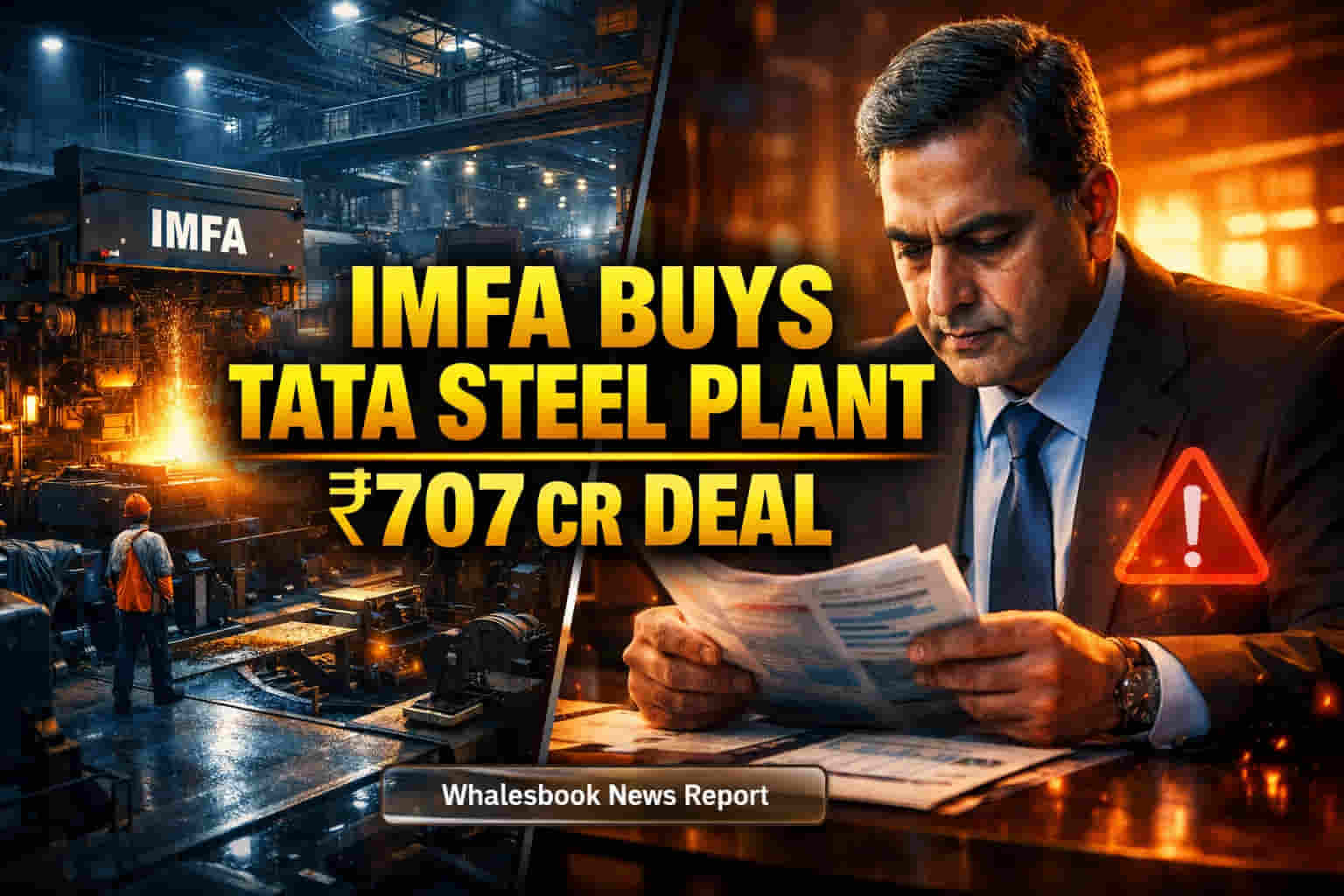


THE SEAMLESS LINK
The successful conclusion of the Tata Steel plant acquisition marks a significant inflection point for Indian Metals & Ferro Alloys (IMFA), reinforcing its strategic expansion initiatives. This transaction, funded by the company's robust internal accruals, is poised to capitalize on the projected growth trajectory of India's stainless steel sector, a primary consumer of ferrochrome. The enhanced scale and operational synergies are expected to bolster IMFA's competitive standing both domestically and internationally, albeit within a market characterized by fluctuating commodity prices and evolving global trade dynamics.
The Core Catalyst
The acquisition of Tata Steel's ferrochrome facility in Kalinganagar, Odisha, for ₹707.26 crore (including base consideration, GST, and net working capital adjustments) was finalized on February 27, 2026. This move instantly elevates IMFA's total installed capacity to exceed 0.5 million tonnes per annum, establishing it as India's preeminent ferrochrome manufacturer and the sixth largest globally. The newly acquired plant, with an existing capacity of 100,000 tonnes per annum expandable to 150,000 tonnes, is strategically located near IMFA's captive chrome ore mines, promising significant cost savings and operational efficiencies through integration synergies. The company's strong financial health, evidenced by its reliance solely on internal accruals for the transaction, signals a confident financial footing to absorb such strategic expansions. IMFA's market capitalization hovers around ₹6,800-6,900 crore with a trailing twelve-month P/E ratio between 17.6 and 18.6, reflecting investor confidence in its growth prospects.
The Analytical Deep Dive
The Indian ferrochrome market is projected to grow at a Compound Annual Growth Rate (CAGR) of 8.6%, driven primarily by the rising domestic production of stainless steel, expansion in the automotive sector, and increasing infrastructure development. IMFA's acquisition strategically positions it to capture a larger share of this expanding market. Historically, IMFA's stock has demonstrated robust performance, with a 1-year gain of approximately 59% to 103%. Its integrated operational model, encompassing captive mining and power generation, provides a structural advantage over competitors like Maithan Alloys, Jayaswal Neco Industries, and others, who may face higher input costs or less control over their supply chain. While IMFA currently exports a significant portion of its production, the increasing domestic demand for stainless steel, fueled by urbanization and manufacturing initiatives like 'Make in India,' suggests a potential shift towards greater domestic sales, which could offer improved margins.
The Forensic Bear Case
Despite IMFA's strategic advancements, the ferrochrome sector faces inherent challenges. Muted demand from the stainless steel industry, coupled with potential price pressures from global suppliers like China and South Africa, could impact profitability. High production costs due to expensive raw materials and coking coal, along with environmental compliance concerns, remain persistent issues for the industry. Furthermore, the sustainability of special tariffs, if any, on imported inputs or domestic products is a point of vulnerability. While IMFA's internal funding strategy is commendable, the integration of the acquired plant and the full realization of synergies will be critical. Any slowdown in global or domestic stainless steel demand, or increased competition from cost-advantaged producers, could hinder the expected returns from this significant capital outlay.
The Future Outlook
Analyst sentiment towards IMFA is largely positive, with consensus recommendations leaning towards 'Buy' or 'Strong Buy'. Price targets from various analysts range between ₹1,500 and ₹1,900, suggesting an average upside potential of 30-45%. The acquisition is widely seen as a catalyst for growth, supported by IMFA's ongoing expansion projects and its entry into the ethanol production sector. The company is expected to leverage its enhanced capacity to meet the rising domestic demand for ferrochrome as India's industrial output continues to expand. However, the company's ability to navigate global price volatility, manage raw material costs, and successfully integrate its new asset will be key determinants of its future performance.