

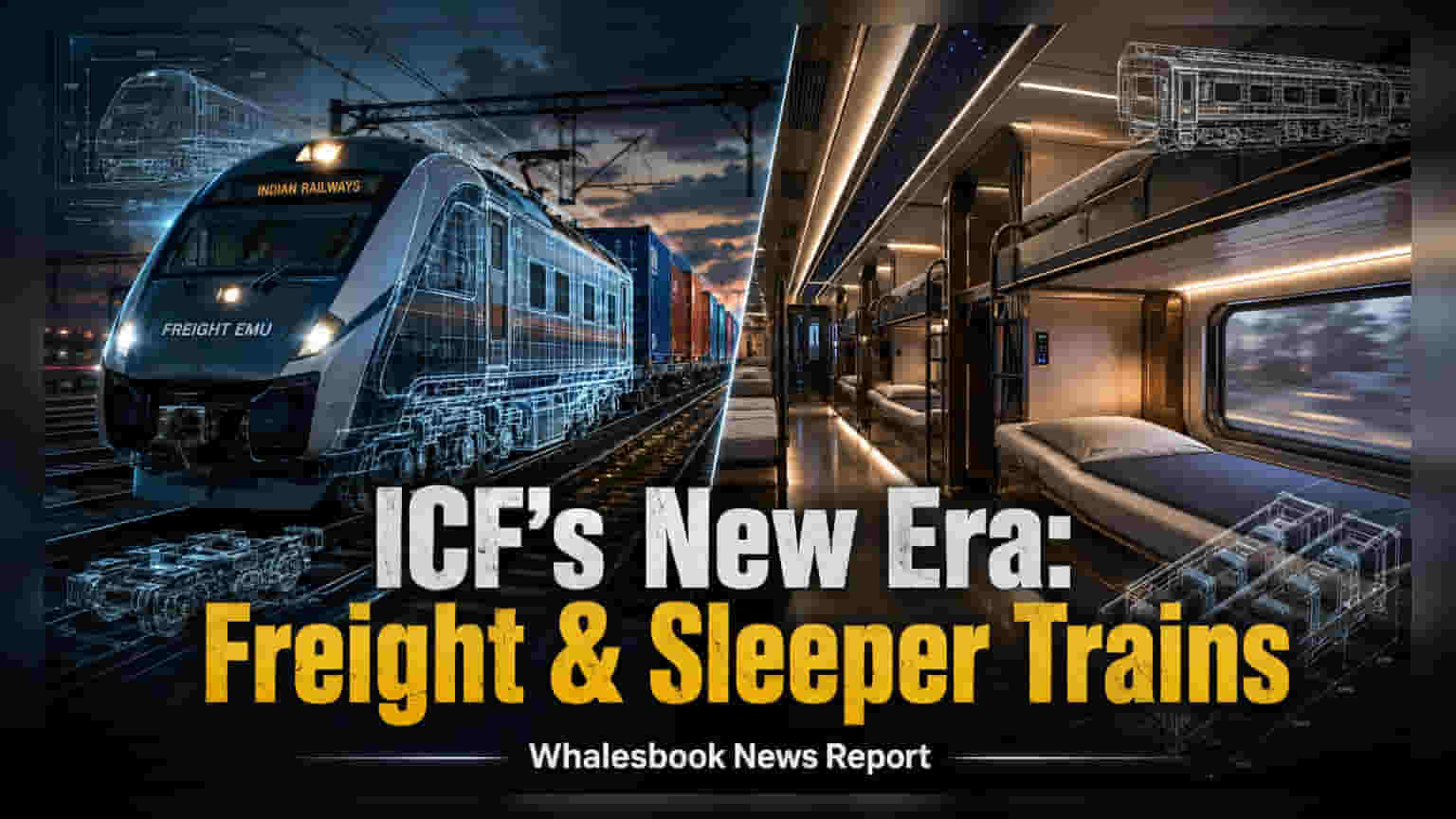
The state-owned Integral Coach Factory (ICF) is developing Freight EMU trainsets to modernize cargo transport and is finalizing the 24-car Vande Bharat Sleeper rollout. This shift toward advanced indigenous technology impacts the broader railway equipment ecosystem, potentially increasing demand for private-sector component suppliers and specialized manufacturing partners.
The Integral Coach Factory (ICF), a key state-owned manufacturing facility under the Indian Railways, is expanding its industrial scope by moving into the development of Freight Electric Multiple Unit (Freight EMU) trainsets. This diversification marks a strategic shift for the Chennai-based unit, moving beyond its traditional focus on passenger coaches to address the requirements of the freight and logistics sector.
By leveraging existing EMU technology for freight, ICF aims to improve the efficiency of goods transportation, specifically for high-value items like white goods, which require faster and more reliable transit times than traditional freight wagons. This initiative is part of a larger push by the Indian Railways to modernize its rolling stock through indigenous manufacturing capabilities.
In addition to the freight segment, ICF is advancing its flagship passenger projects. The facility is preparing for the production of the 24-car Vande Bharat Sleeper trainset. Technical documentation, including structural and fabrication designs, coach-to-coach interface details, and equipment layouts, has been finalized, setting the stage for upcoming production cycles. Simultaneously, the Amrit Bharat initiative continues to move forward, with plans to integrate a mix of air-conditioned and non-AC coaches to cater to diverse travel needs.
For the broader Indian market, the expansion of ICF’s product portfolio has meaningful implications for the railway supply chain. While ICF itself is not a publicly listed company, its manufacturing targets drive significant demand for components from private companies. These include firms involved in propulsion systems, traction motors, interior paneling, and specialized signaling equipment. As ICF scales production—having achieved an output of 3,405 coaches in the 2025-26 fiscal year—private vendors participating in the 'Make in India' railway program may see steady demand for high-tech components.
However, the transition to newer, more complex trainset technologies involves inherent operational risks. The successful rollout of the 24-car Vande Bharat Sleeper and the new Freight EMU fleet depends heavily on the timely supply of critical parts from various vendors. Any disruption in this specialized supply chain can lead to project delays. Additionally, as the factory scales up production of advanced rolling stock, it faces the challenge of maintaining quality control and integrating high-end technology into a massive, government-led manufacturing setup.
Investors and industry observers will likely track the commissioning timelines for the new freight trainsets and the commercial introduction of the 24-car sleeper variants. These milestones will serve as indicators of whether the manufacturing infrastructure can support the shift toward more complex, high-speed, and specialized railway assets.