 Whalesbook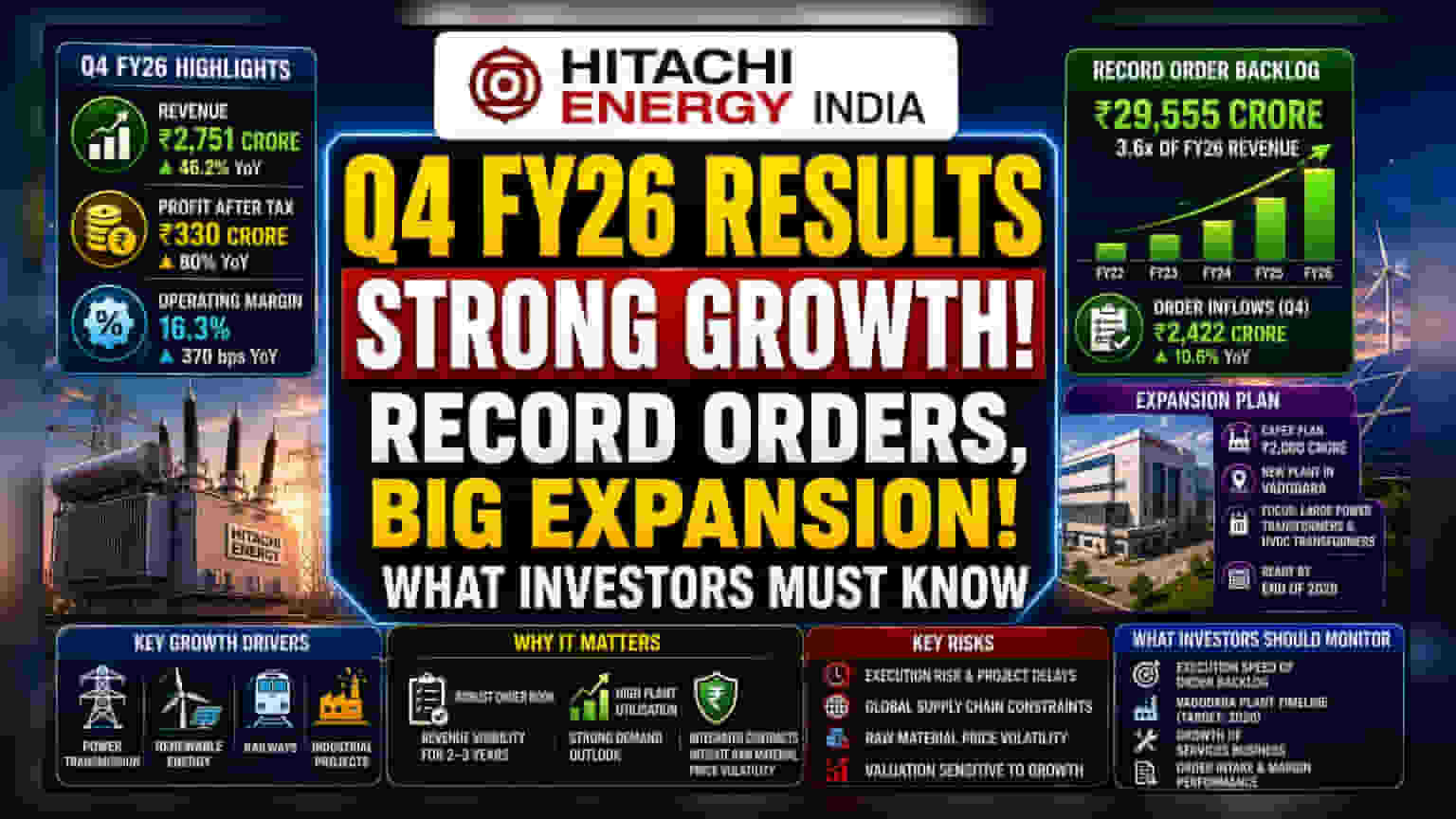


Hitachi Energy India reported a strong finish to fiscal 2026, with revenue climbing 46% and profits surging 80%. A record order book of Rs 29,555 crore signals long-term growth, supported by a new Rs 2,000 crore investment in transformer manufacturing to meet rising demand from data centers and power projects.
What Happened
Hitachi Energy India reported strong financial results for the fourth quarter of the fiscal year 2026. The company saw its revenue from operations rise by 46.2% year-on-year to Rs 2,751 crore. Profitability also improved significantly, with profit after tax (PAT) increasing by 80% to Rs 330 crore compared to the same period last year. The company’s growth was driven by consistent demand across its key sectors, including power transmission, renewable energy, railways, and industrial projects.
Record Orders and Revenue Visibility
One of the most significant takeaways from the results is the company's order backlog. It reached a record high of Rs 29,555 crore by the end of March 2026. This figure is substantial because it represents about 3.6 times the revenue generated in the full fiscal year. For investors, this provides a clear picture of potential revenue for the next two to three years. Even though there were some delays in transmission order bookings during the quarter, total order inflows remained healthy at Rs 2,422 crore, showing a 10.6% increase over the previous year.
The New Expansion Plans
To keep up with this growth, the company announced a new capital spending plan of Rs 2,000 crore. This brings the total recent planned investment to nearly Rs 4,000 crore. The funds are earmarked for a new manufacturing facility in Vadodara, which will focus on large power transformers and high-voltage converter transformers. This facility is expected to be ready by the end of 2028. The company is making this move because existing plants are already running at high levels of utilization, and demand from data centers and power infrastructure is expected to rise sharply in the coming years.
Understanding Profitability
Operating margins for the company improved to 16.3%, up by 370 basis points compared to the same quarter last year. This improvement was largely due to better efficiency and the ability to control costs despite higher production levels. The company has also been using integrated contracts that allow it to pass on the costs of raw materials, which helps protect profit margins when commodity prices are volatile.
Risks and Execution Challenges
While the growth numbers are positive, there are risks investors should consider. The primary challenge for the company is execution risk. With such a large order backlog, the company must ensure it can complete projects on time without cost overruns. Global supply chain constraints for heavy electrical equipment can sometimes lead to delays. Additionally, while the company has strategies to manage raw material price changes, any sudden or extreme spike in the cost of metals like copper or steel could still put pressure on margins if not managed correctly. Investors should also be aware that, like many other companies in the power and infrastructure sector, the stock often trades at a valuation that assumes continued high growth, making it sensitive to any slowdown in project commissioning or order intake.
What Investors Should Monitor
Looking ahead, the most important factor for investors will be the speed at which the company executes its current order book. The timeline for the new manufacturing facility in Vadodara will also be a key monitorable to ensure it remains on track for its 2028 operational date. Additionally, tracking the growth of the services business, which the company expects to eventually form a larger part of its portfolio, will provide insight into the quality and sustainability of long-term profits.