 Whalesbook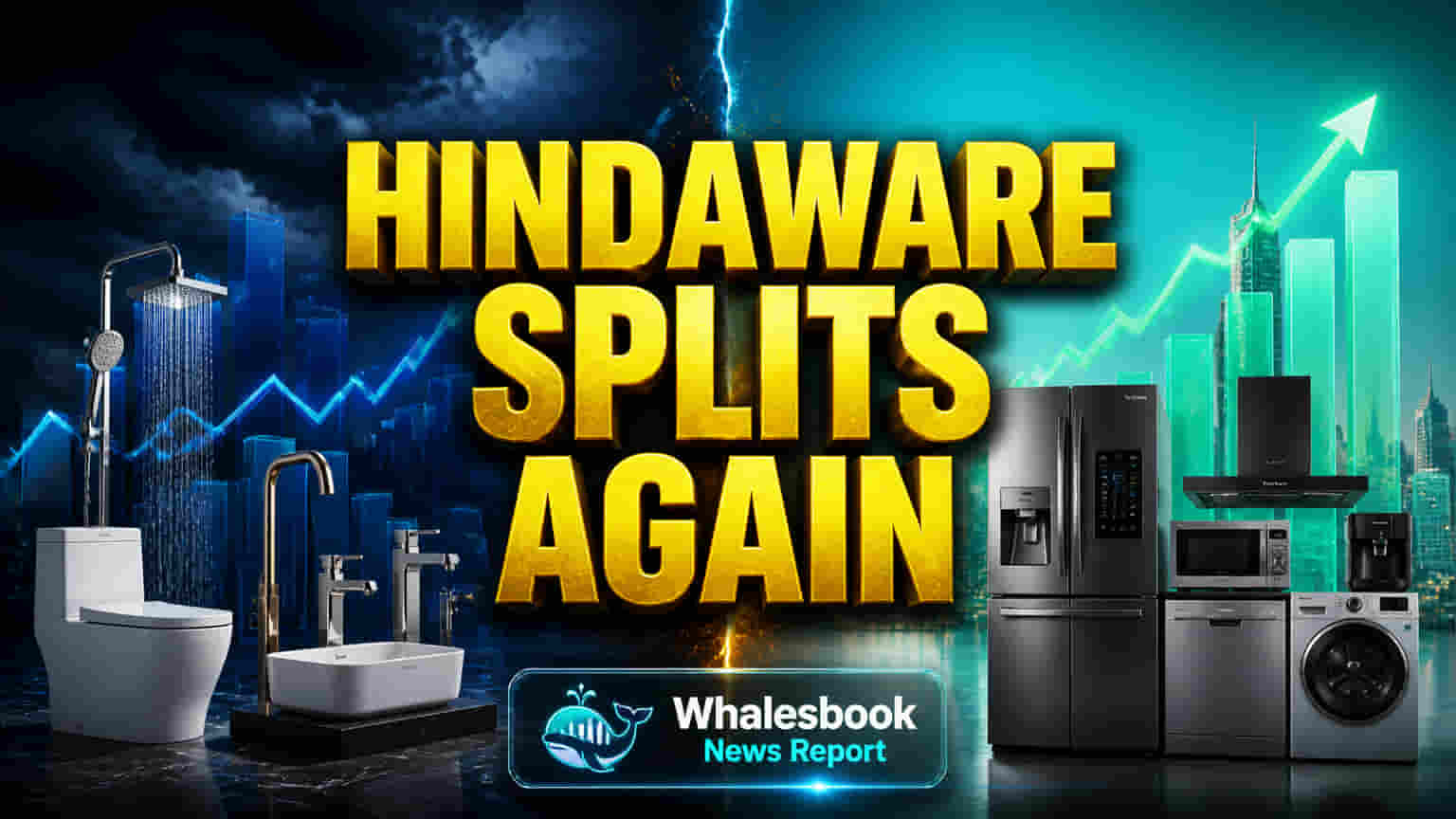


HHIL's Strategic Demerger Aims for Focused Value
The planned separation of Hindware Home Innovations' (HHIL) Building Products Division (BPD) and Consumer Products Division (CPD) into independent listed companies is an effort to improve shareholder value. This comes after a difficult period where both HHIL and its related company, AGI Greenpac, have significantly lagged behind broader market indices.
Reasons for the Split
HHIL's stock performance, mirroring AGI Greenpac's recent struggles, has dampened investor confidence. Since late 2023, the Nifty 500 has gained about 34%, while HHIL shares have dropped around 52% and AGI Greenpac has fallen roughly 41%. This poor performance suggests the market believes the combined company's value is held back by its different business areas. The demerger is a key strategy to separate a profitable bathware and pipes business from a consumer division that has often lost money. Investors will watch how the new, separate companies perform and are valued.
Understanding the Segments
The decision to split the Building Products Division (BPD) and Consumer Products Division (CPD) is driven by their very different ways of operating. The BPD, which includes Hindware sanitaryware, faucets, and Truflo pipes, is a manufacturing business tied to the real estate market and reliant on its dealer network. For the nine months ending December 31, 2024 (9MFY25), this division generated revenues of about ₹1,611 crore with an EBITDA margin of 9.8%. The CPD, selling kitchen appliances like chimneys and hobs, is a less capital-intensive, retail-focused business for homes. This segment reported ₹237 crore in revenue for the nine months ending March 31, 2025 (9MFY26), with a 7.2% EBITDA margin, though it reported net losses in fiscal years 2024 and 2025. Historically, the profitable BPD supported the money-losing CPD, which weighed down the company's overall valuation.
Competitors in the building materials sector, like Kajaria Ceramics and Cera Sanitaryware, typically trade at higher valuation multiples, with P/E ratios ranging from 40x to 50x, reflecting their focused operations and consistent profitability. Pipe manufacturers often see P/E multiples in the high 30s. The consumer durables sector, where the demerged HHIL Limited will operate, shows varied valuations; for instance, V-Guard Industries trades at a P/E of approximately 55x. Macroeconomic factors like interest rates, which affect real estate demand, and consumer spending power, which influences purchases, will impact both companies. While India's real estate market is holding up, the consumer goods sector faces pressure from inflation and changing household spending.
Risks and Concerns
However, the demerger faces significant risks. The prior HSIL demerger, which saw AGI Greenpac perform surprisingly well, might not be a good guide for this situation. A main worry is the continued lack of profit in the consumer products division (CPD). Despite management's restructuring efforts, like stopping unprofitable products and taking a ₹49 crore charge in Q1 FY26, the long-term success and profitability of this segment in a tough market are unclear. Also, the BPD, though profitable now, is highly sensitive to real estate market swings. HHIL's reliance on dealers for the BPD could be a disadvantage against rivals with broader sales methods or direct customer contact. The shift of the Hintastica JV to a trading model and expected cash from the HHIL stake put option are crucial for the financial health of the demerged HHIL Limited, which is set to be almost debt-free. A key risk is whether the market will properly value the two separate companies, which were previously seen as one. The BPD's 9.8% EBITDA margin, while positive, is smaller than that of some top competitors, possibly limiting its valuation.
Management's Projections
Management expects a positive future for both new companies. The new HHIL Limited is expected to be lean, almost debt-free, and have plenty of cash, boosted by money from exiting the JV. Hindware Limited will take on most of the group's assets and factories, aiming to improve how it operates. Valuation estimates suggest HHIL's current market price might not reflect the full potential value after the split. Analysts expect significant gains if both new companies are valued more highly based on their industry peers. A best-case scenario sees huge returns, similar to AGI Greenpac's unexpected success after its earlier demerger. The key question is which company, the stronger Hindware Limited or the leaner HHIL Limited, will perform better. Because of its structure and fewer initial analyst reports, the leaner HHIL Limited might offer investors a chance for big gains.