

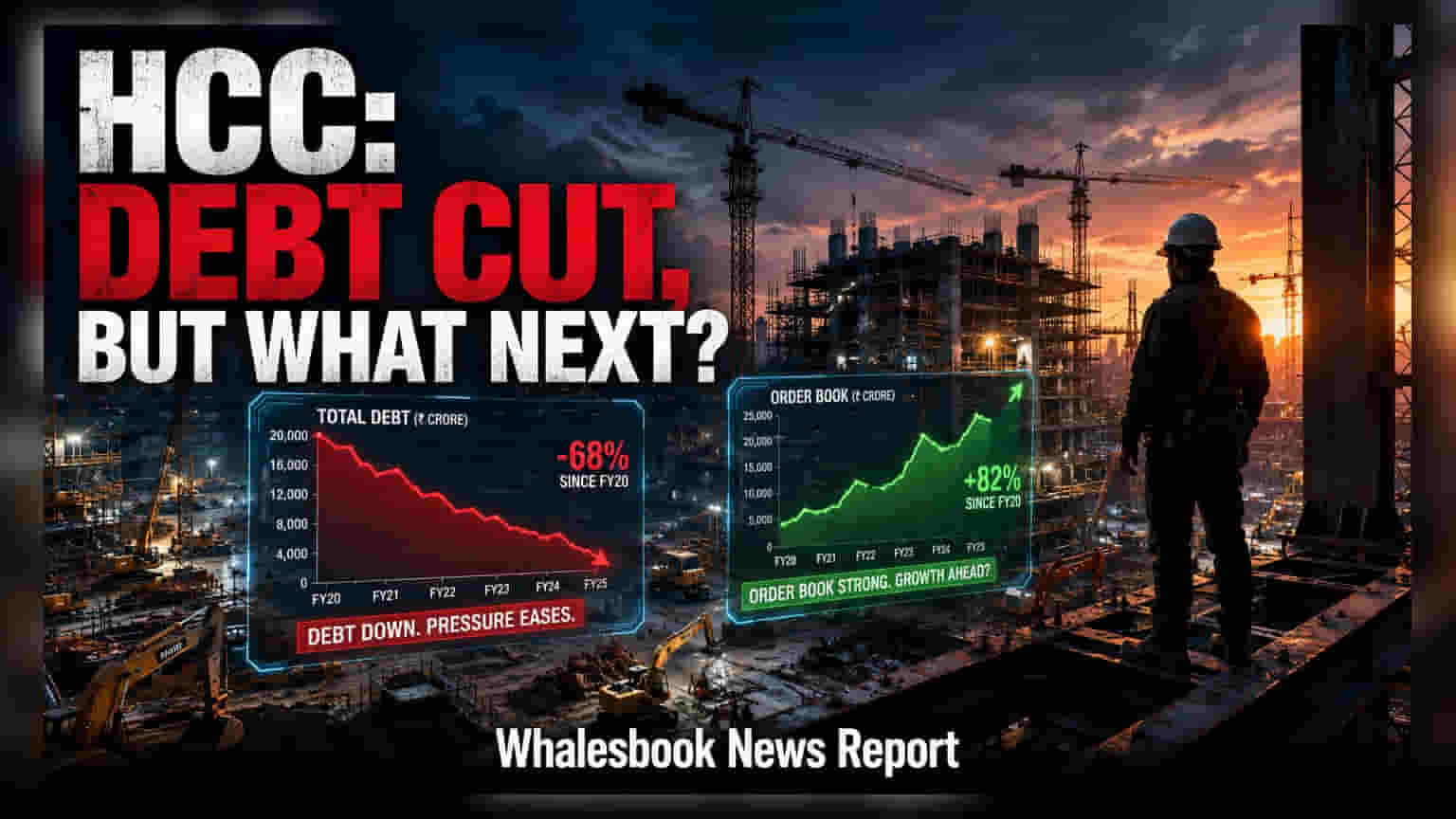
Hindustan Construction Co. (HCC) has reduced its debt to ₹19.95 billion, marking a 38% year-on-year decline. The company also reported a 142% jump in standalone net profit for FY26 to ₹2.06 billion. Investors are monitoring whether the company can maintain these improved margins while managing execution timelines on its ₹260 billion bid pipeline.
Detailed Coverage
Hindustan Construction Co. Ltd (HCC) has reported a significant shift in its financial profile, marked by a sharp reduction in debt and a notable increase in profitability for the fiscal year ended 2026. According to the company’s recent financial disclosures, net debt stood at ₹19.95 billion, reflecting a 38% reduction compared to the previous year. This deleveraging is part of a broader management effort to improve the balance sheet, with the company anticipating an annual interest cost saving of roughly ₹1,120 million by FY27.
Profit Growth and Operational Focus
Financial performance in FY26 saw a sharp rise in standalone net profit to ₹2.06 billion, up from ₹849 million in FY25. This 142% increase has been attributed by the management to tighter cost controls and improved operational efficiency during project execution. By refining how it manages material usage and labor, the company has worked to defend its profit margins against the background of global commodity price fluctuations that frequently affect the construction sector.
Order Book and Future Bidding
The company’s revenue visibility is supported by a steady inflow of new contracts. In the fourth quarter of FY26 alone, HCC secured ₹22.9 billion in new orders, bringing its total intake for the year to ₹56.54 billion. Recent activity includes a ₹11 billion letter of award secured in April and a successful bid for an ₹8.40 billion project. Currently, the company has ₹260 billion worth of bids under evaluation and has outlined plans to bid for an additional ₹438 billion in projects during the first half of FY27.
Industry Risks and Execution Factors
While the financial trajectory has improved, the infrastructure sector continues to face systemic challenges that can impact individual players. HCC’s performance remains sensitive to risks inherent in large-scale construction, such as delays in land acquisition, regulatory bottlenecks, and site-specific complexities. These factors can sometimes lead to project overruns. Furthermore, because a large portion of the order book is tied to government-funded infrastructure—such as metros, railways, and road projects—any slowing in public spending or changes in policy could affect future growth.
Investors are also tracking the impact of raw material costs. On fixed-price contracts, the company may find it difficult to pass on sharp increases in the prices of steel, cement, and fuel to the client, which could create pressure on profit margins. Looking ahead, the primary focus for the market will be the company’s ability to successfully convert its bid pipeline into revenue, maintain the current pace of debt reduction, and execute existing projects within agreed timelines and budgets.