

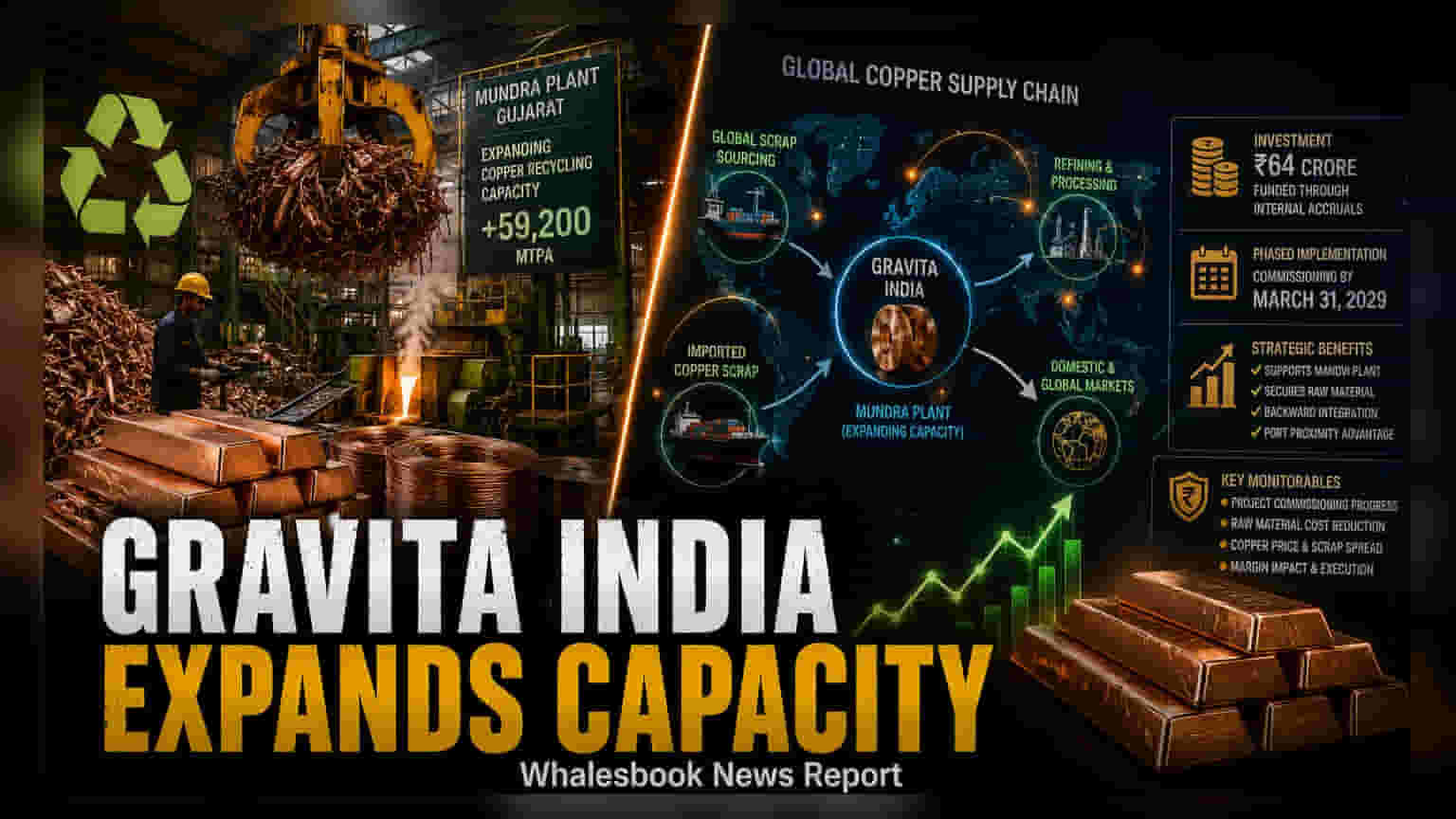
Gravita India is expanding its copper recycling capacity by 59,200 MTPA at its Mundra, Gujarat facility. The ₹64 crore project, funded by internal cash, is scheduled for phased completion by March 2029 to boost supply chain efficiency for the company's Mandvi plant.
Gravita India has announced plans to increase its copper recycling capacity by 59,200 metric tonnes per annum (MTPA) at its manufacturing unit in Mundra, Gujarat. The company has earmarked an investment of ₹64 crore for this project. According to the company's update, this expansion will be funded entirely through internal accruals, which avoids the need for fresh borrowing and helps maintain the company's debt profile.
The project is designed with a phased implementation schedule, with the final commissioning expected by March 31, 2029. This long-term timeline is significant because it aims to support the company’s broader operational goals, specifically acting as a source of raw materials for the proposed Mandvi plant. By processing more copper in-house, Gravita India is looking to improve its backward integration. This strategy helps the company secure its supply chain, reducing reliance on third-party suppliers for the material needed at its other facilities.
The choice of the Mundra site is also strategic. Its proximity to a major port provides logistical benefits, allowing for more efficient handling of imported scrap and the export of finished metal products. This is essential for a business that relies on a steady flow of global raw materials and needs to maintain competitive delivery times for its customers.
However, the project involves risks that investors should be aware of. A multi-year construction phase through 2029 carries the risk of cost overruns or delays due to operational or regulatory factors. Additionally, the recycling business is sensitive to global commodity market trends. The company's profitability depends heavily on the price spread between the raw scrap it buys and the refined copper it sells. Any volatility in global copper prices or a significant rise in scrap collection costs could put pressure on profit margins.
For investors, the most important monitorable is the regular update on the commissioning of each project phase. Tracking how this added capacity helps reduce raw material costs at the Mandvi plant will be essential to gauge the success of this capital spending. The company's ability to navigate global price fluctuations while managing this expansion will also remain a key factor for shareholders to watch as the project advances.