

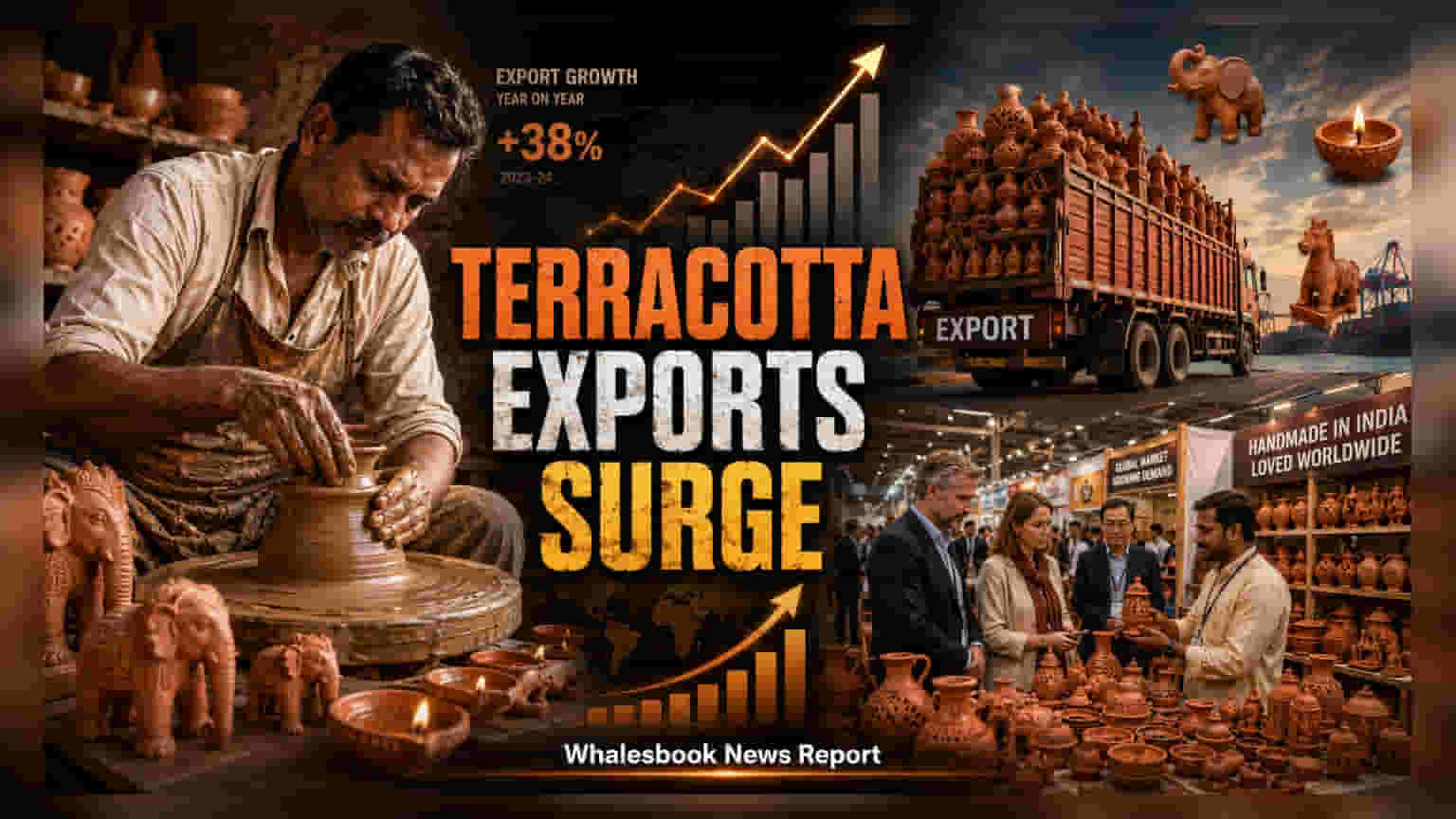
Gorakhpur’s terracotta craft is evolving into a formal commercial industry, bolstered by the state’s One District, One Product scheme and GI status. While local micro-units are now reporting annual revenues in the crores, the sector remains decentralized. Observers often track such shifts as indicators of rural economic formalization and SME growth potential in India.
The traditional terracotta industry in Gorakhpur is undergoing a significant transformation, moving from a scattered household activity into a structured commercial cluster. Supported by the Uttar Pradesh government’s One District, One Product (ODOP) initiative and protected by a Geographical Indication (GI) tag, this sector is now accessing broader national and international markets. This shift represents a broader trend in rural India where traditional skills are being integrated into formal value chains.
The Impact of ODOP Support
The ODOP program has acted as a catalyst for this growth by providing artisans with essential tools, training, and financial assistance. These interventions have addressed long-standing constraints that previously kept production limited to local demand. By formalizing aspects of the business—such as subsidized equipment and organized workspace provision—the scheme has enabled local clusters in villages like Aurangabad and Gulriya to ramp up output.
Financial data from the ground indicates the scale of this change. Several artisan-led units now operate at a commercial capacity, with reported annual business turnovers reaching between Rs 60 lakh and Rs 1.5 crore. This level of revenue generation is a marked shift from the historical subsistence-based model of the craft, demonstrating the potential for micro-enterprises to scale when supported by organized government infrastructure.
Market Integration and Logistics
The GI tag has been a critical component of this commercialization, providing a unique identity that distinguishes Gorakhpur’s terracotta in a competitive handicraft market. This branding has facilitated better pricing power and access to online marketplaces, allowing artisans to bypass intermediaries and sell directly to consumers in cities like Mumbai and Varanasi. Industry officials have noted that the goal is to build an end-to-end ecosystem where production efficiency matches market demand.
Operational Challenges for the Sector
Despite this growth, the sector remains a collection of decentralized micro-enterprises rather than an organized industrial corporate sector. This structure creates specific challenges that impact the sustainability of the industry. The primary hurdles include the need for standardized quality control across hundreds of independent units and the logistical difficulties of moving fragile, clay-based goods over long distances.
Furthermore, while government aid has provided a boost, there is an ongoing requirement for easier access to low-interest commercial financing to support further capacity expansion. The industry also remains dependent on traditional manual production methods, which raises questions about scalability if demand continues to rise significantly. For those tracking the rural economy, the future monitorables for this sector will be the ability of these clusters to maintain quality consistency, manage supply chain costs, and secure sustainable financing beyond the initial government support phase.