 Whalesbook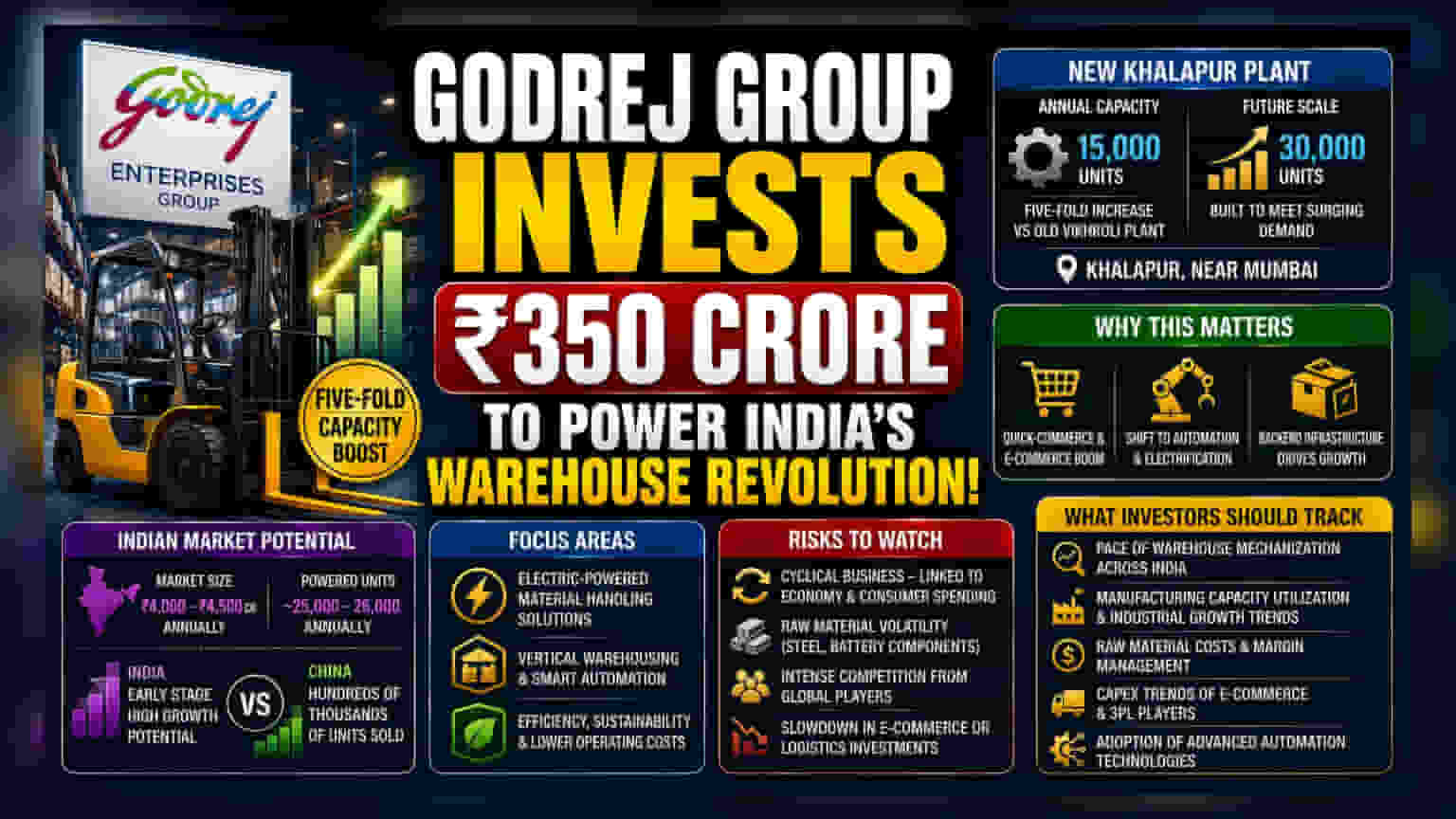


Godrej Enterprises Group is investing ₹350 crore in its material handling division to build a new manufacturing plant in Khalapur. This expansion aims to capture rising demand from quick-commerce and e-commerce players. The project significantly boosts production capacity for forklifts and warehouse automation, signaling a shift toward electrified and mechanized logistics. Investors should note this is part of the unlisted Godrej & Boyce conglomerate, serving as a key indicator of industrial infrastructure growth in India.
What Happened
Godrej Enterprises Group has announced an investment of ₹350 crore to expand its material handling equipment business. The core of this investment is a new manufacturing plant in Khalapur, near Mumbai. This facility is designed to produce 15,000 units annually, which represents a five-fold capacity increase compared to the company’s previous Vikhroli plant. The company has also outlined plans to eventually scale this capacity to 30,000 units. This move is primarily focused on meeting the surge in demand for warehouse equipment such as forklifts and automation systems from the booming quick-commerce and e-commerce sectors.
The Bigger Business Context
It is important for investors to understand that this division falls under the Godrej Enterprises Group, which is part of the unlisted Godrej & Boyce conglomerate. This means it is not a direct investment opportunity for retail investors in the stock market, unlike publicly traded entities such as Godrej Consumer Products or Godrej Properties. However, this development is a significant bellwether for the Indian industrial and logistics sector. The shift toward mechanized warehousing reflects a broader transformation in how goods move across India. By expanding its focus on electric-powered material handling solutions, the company is aligning with the broader industrial push toward electrification and automation.
Why This Matters For Investors
This investment highlights the infrastructure side of the quick-commerce growth story. While much market attention is given to the consumer-facing apps and delivery services, the backend requires a massive amount of physical equipment to function. Companies operating dark stores and fulfillment centers need specialized machinery to manage complex inventory, also known as Stock Keeping Units or SKUs. As these platforms expand into Tier-2 and Tier-3 cities, the demand for efficient, automated logistics equipment is expected to rise. This creates a ripple effect, benefiting equipment manufacturers who provide the essential tools to keep these supply chains moving.
Market Potential and Automation
Data indicates that the Indian market for material handling equipment is still in an early stage of growth compared to global peers. Estimates suggest an annual market of approximately ₹4,000 to ₹4,500 crore, involving around 25,000 to 26,000 powered units. When compared to markets like China, where annual sales reach hundreds of thousands of units, the potential for long-term growth in India remains substantial. Factors such as rising labor costs and the growing need for vertical warehousing—where facilities are built upwards to save space—are forcing companies to adopt mechanized and automated solutions over manual labor. The shift toward electric power in this equipment is also notable, as it reflects broader sustainability and operational efficiency trends in the industrial sector.
The Risks and Challenges
While the growth potential is high, this sector faces several risks that investors in related industrial companies should track. The business is cyclical, meaning demand is closely tied to the health of the broader manufacturing and retail economy. Any slowdown in consumer spending or a pullback in logistics investment by e-commerce giants could impact order books. Furthermore, the industry is sensitive to input costs, particularly raw materials like steel and battery components for electric equipment. Fluctuations in these prices can put pressure on profit margins. Additionally, the market is competitive, with established global players like KION India, Toyota Material Handling, and Jungheinrich vying for market share. Success will depend on the company's ability to maintain a competitive cost structure and keep innovating in a market where specialized requirements are increasing.
What Investors Should Track
For those tracking the broader logistics and industrial infrastructure sector, the key monitorable is the pace of warehouse mechanization across the country. Investors may look for updates on manufacturing capacity utilization in the industrial sector and the growth trends in organized retail. The ability of logistics equipment manufacturers to manage raw material price volatility and successfully integrate advanced automation technologies will be important indicators of sector health. Additionally, keeping an eye on capital expenditure trends among large e-commerce and 3PL (third-party logistics) players can provide useful context on the strength of demand for material handling equipment.