

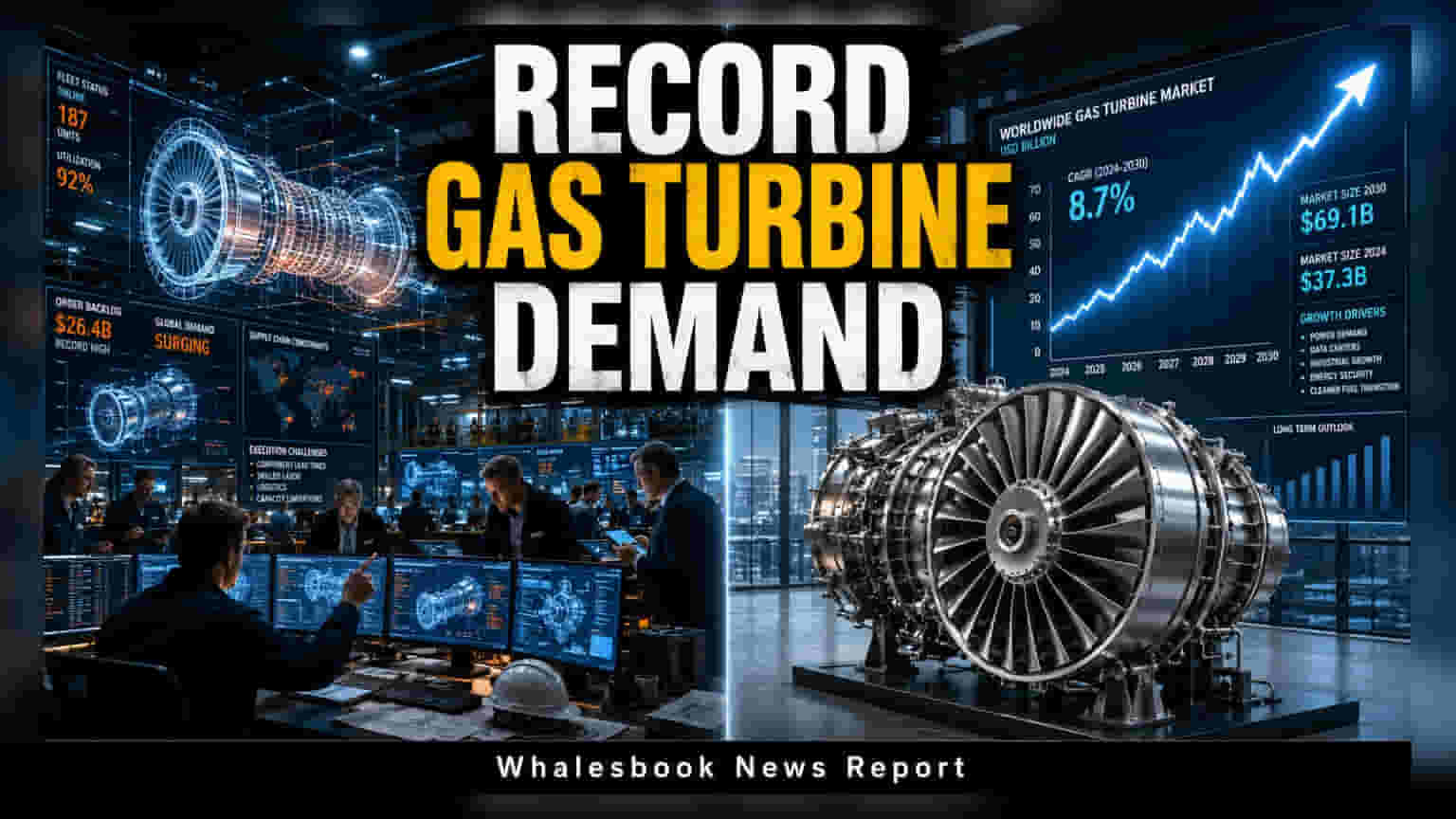
Global gas turbine orders surged 71% to 38 gigawatts in the second quarter, fueled by massive power needs from AI data centers. This record demand has created severe supply shortages, causing turbine prices to spike significantly. For investors, the focus is shifting from order growth to how effectively manufacturers can manage supply bottlenecks and protect profit margins against rising costs.
Global demand for gas turbines has reached an all-time high, with orders hitting 38 gigawatts in the second quarter. This marks a substantial 71% increase compared to the same period last year and a 29% rise from the previous quarter. The surge is primarily driven by the massive electricity requirements of expanding AI-focused data centers and a broader global shift toward electrification, which requires reliable, constant power generation.
The AI Data Center Connection
Unlike renewable energy sources which can be intermittent, data centers require consistent, 24/7 baseload power to operate efficiently. This necessity has put gas-fired power plants back in the spotlight, as they can be deployed relatively quickly to provide the stable energy supply that tech companies need. The United States currently leads this trend, accounting for nearly half of the global order volume, as the nation invests heavily in power generation infrastructure to support its growing tech sector.
Supply Constraints and Pricing Pressure
The industry is currently struggling to keep up with this rapid influx of orders. Manufacturing capacity is limited, and order books for major players are effectively sold out through 2027–2029 in some segments. This imbalance between high demand and constrained supply has led to sharp price inflation. Industry data suggests that a combined-cycle gas turbine scheduled for delivery in 2031 could cost three times more than units purchased last year. While this pricing power might seem beneficial, it also creates significant pressure on project developers, who may struggle to make their power projects profitable at these elevated equipment costs.
Industry Leaders and Execution Risks
Major manufacturers, including Siemens Energy, GE Vernova, and Mitsubishi Power, are at the forefront of this cycle. Siemens Energy, for instance, has reported a massive backlog reaching €73 billion, highlighting the long-term visibility of their business. However, for investors, the ability to turn these record orders into revenue and profit is now the primary challenge.
The sector faces serious risks, including severe supply chain bottlenecks for critical components and a lack of manufacturing capacity to meet the surge. Additionally, grid and transmission infrastructure is often failing to keep pace with new power plant projects, which could lead to delays in commissioning. These operational problems can increase costs and potentially delay the timeline for companies to record revenue from their massive order books.
The key monitorable for investors going forward will be profit margins. Companies must demonstrate that they can pass on these rising raw material and manufacturing costs to their customers without losing orders. Investors will also be watching for updates on delivery timelines and whether the supply chain can stabilize enough to prevent further project delays in high-demand regions.