

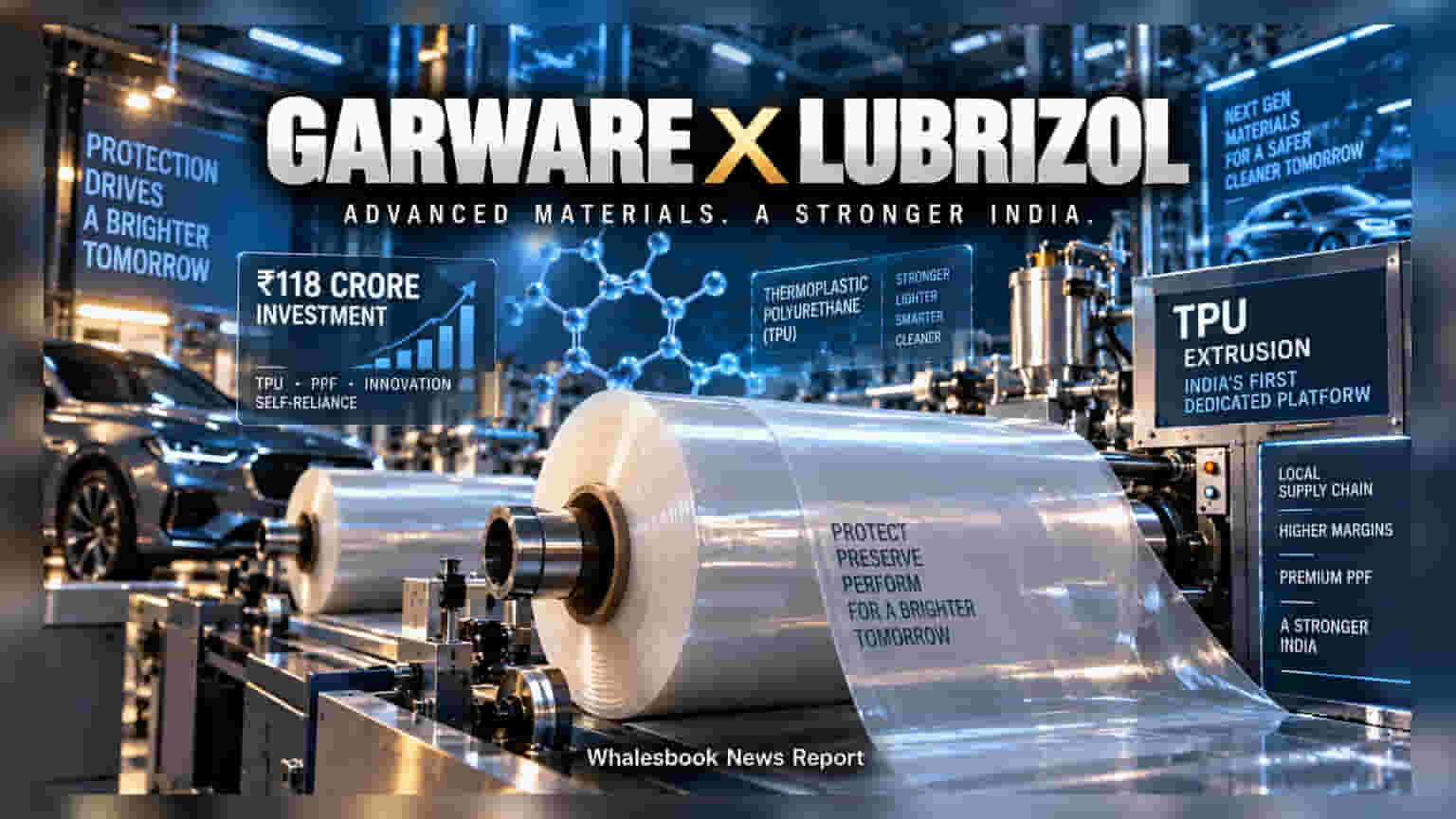
Garware Hi-Tech Films is partnering with chemical giant Lubrizol to set up a ₹118 crore TPU extrusion plant in India. This move enables the company to produce key materials for its premium Paint Protection Film business locally. By reducing reliance on imports, the firm aims to secure its supply chain and protect margins in the competitive automotive aftermarket segment.
Garware Hi-Tech Films has announced a strategic partnership with Lubrizol to establish India’s first dedicated thermoplastic polyurethane (TPU) extrusion platform. The company plans to invest ₹118 crore in this facility, a move that marks a significant step toward backward integration for its premium Paint Protection Film (PPF) business. PPF is a high-growth product used to protect vehicle paint from scratches and environmental damage, and it currently represents a high-margin segment for the company.
Strategic Move Into TPU Localization
Historically, Indian manufacturers in this sector have relied on imported materials to create their specialized films. By setting up an in-house extrusion process, Garware Hi-Tech Films intends to reduce its dependency on international suppliers. This shift is designed to help the company gain better control over its supply chain, which is often vulnerable to global price volatility and currency fluctuations. The partnership with Lubrizol is intended to provide the technical expertise required to scale this high-value product portfolio effectively.
Approximately 25 percent of the ₹118 crore investment is earmarked specifically for research and development and building the necessary technology infrastructure. This focus indicates that the company is aiming to not just assemble products but to build a robust manufacturing foundation for specialized materials within India. For investors, this shift toward backward integration is a key development as it can help the company protect its profit margins, provided that the new facility achieves high efficiency and scale.
Impact On Margins And Supply Chain
The long-term success of this expansion will depend on several factors, including the successful execution of the project and the company’s ability to manage the risks associated with such large capital spending. While in-house production can improve margins by reducing import costs, the company must also manage the risks of project delays or cost overruns that are common in large manufacturing setups. Investors may track the commissioning timeline of the plant to understand when the benefits of this backward integration will begin to reflect in the company's financial performance.
Furthermore, the PPF market is highly competitive. The demand is currently supported by a growing preference for premium automotive protection solutions among Indian car owners. However, the company will need to ensure that its local production can maintain the high quality required for premium products to stay competitive against global imports. The next important update for shareholders will be the project's construction progress and any management commentary regarding the expected contribution of this facility to overall revenue and profit margins in the coming years.