

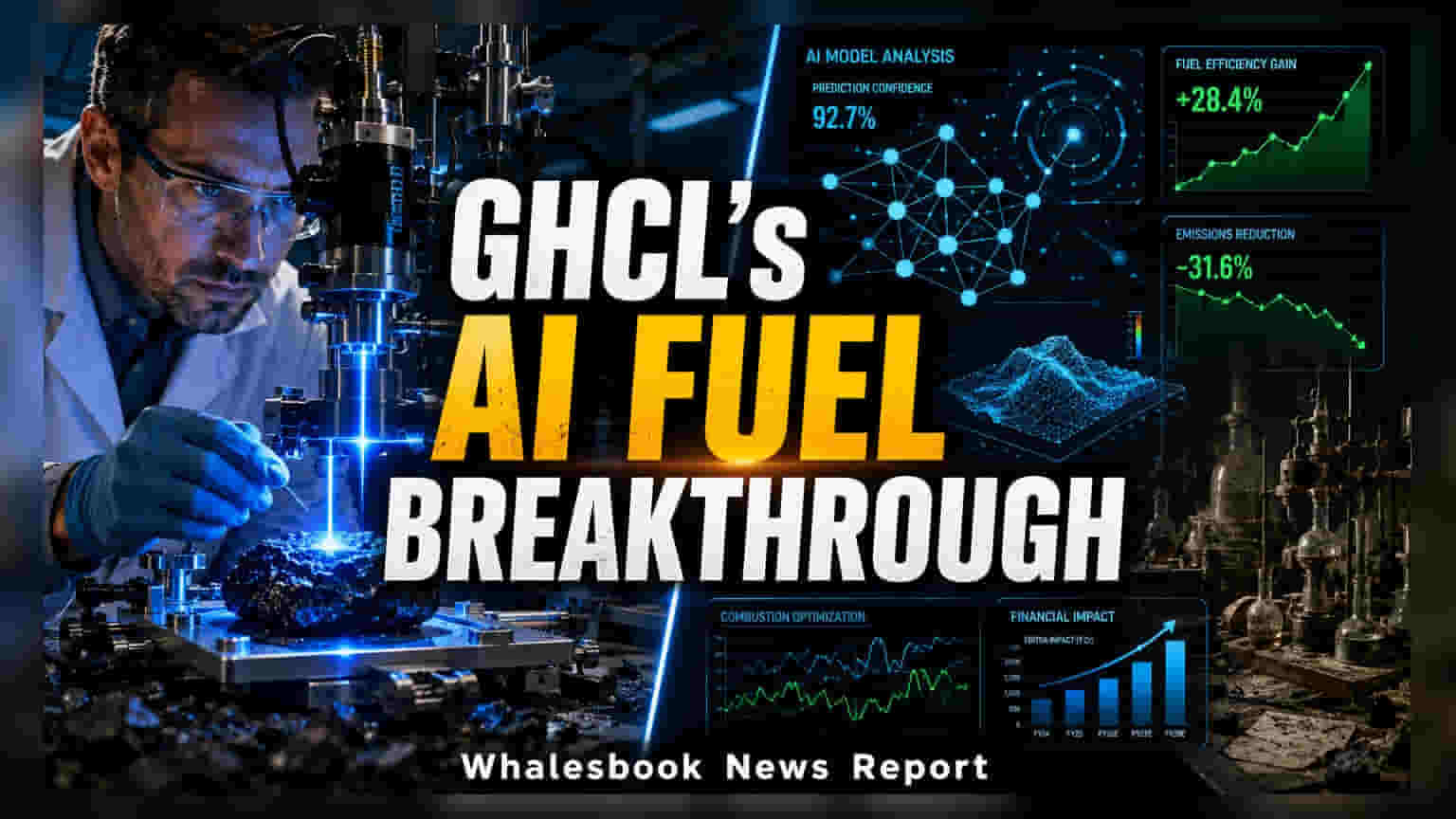
GHCL Limited and Manipal Academy of Higher Education (MAHE) have signed an agreement to create an AI-powered system that uses laser technology to test fuel quality in real-time. This project aims to help GHCL improve its energy management and reduce reliance on slow manual testing. The stock closed at ₹436.05 on August 7, 2026, amid the company’s focus on optimizing operational efficiency.
GHCL Limited and the Manipal Academy of Higher Education (MAHE) have entered into a partnership to develop a new technology for monitoring the quality of fuels used in industrial processes. The collaboration, formalized through a Memorandum of Understanding signed on August 7, 2026, focuses on creating an automated system to measure the energy content, known as Gross Calorific Value, of carbon-based fuels in real-time.
The system will use a method called Laser-Induced Breakdown Spectroscopy, or LIBS, combined with artificial intelligence and machine learning. Currently, industrial facilities like those operated by GHCL often rely on traditional laboratory testing to check fuel quality. This process involves sending samples to a lab, which can take time and delay immediate operational decisions. By moving to an on-site, automated system, the company aims to get instant results, which can help in adjusting boiler operations quickly for better efficiency.
For GHCL, this initiative is part of an ongoing effort to improve process efficiency and manage costs. The company recently reported its financial performance for the June 2026 quarter, which showed a net profit of ₹191 crore, a 32% increase compared to the same period last year. However, its revenue stood at approximately ₹798 crore, reflecting a decline of about 3.1% year-on-year. In this environment, initiatives that focus on technology and process optimization are often used to protect profit margins, especially when revenue growth faces headwinds.
While the partnership aims to modernize quality assurance, investors should note that deploying new AI and laser-based technologies in a heavy industrial setting carries execution risks. Developing the system from a laboratory setting to a plant-wide industrial application can face challenges, including the need for durability, accuracy in harsh environments, and the reliability of machine learning models when processing varied fuel types.
Additionally, GHCL operates in sectors that are heavily dependent on fuel and energy costs. While this new technology may optimize fuel usage, the company’s margins remain sensitive to global fuel price fluctuations and potential competitive pressure from imports. Investors will likely watch for updates on the project's development timeline, pilot testing results, and whether this technology eventually leads to measurable improvements in the company’s operational costs or energy consumption patterns.