 Whalesbook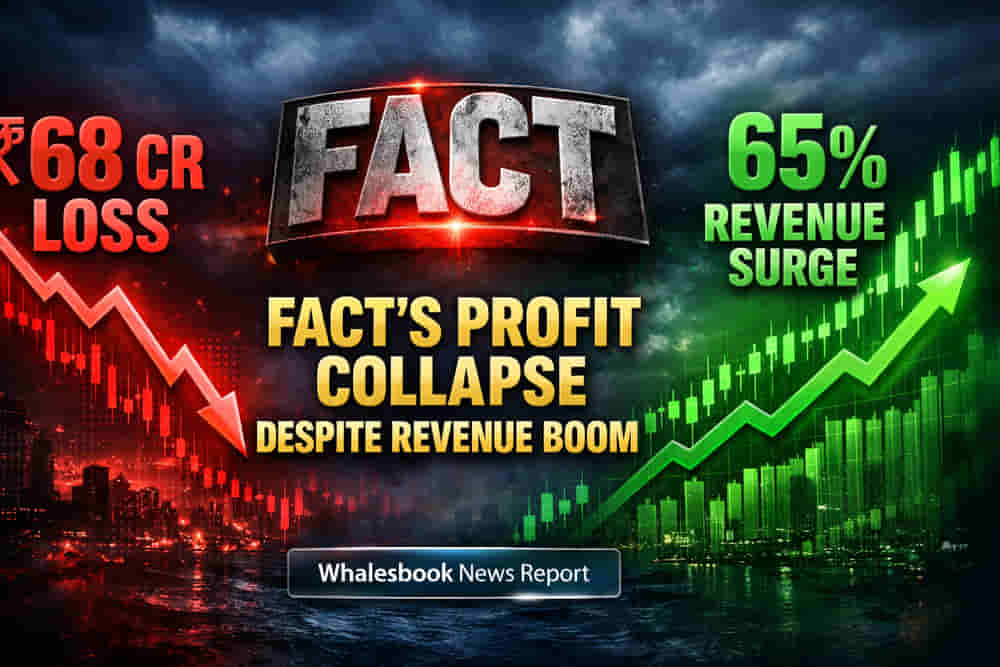
The dramatic swing into the red was primarily driven by a collapse in operating performance. FACT's earnings before interest, taxes, depreciation, and amortization (EBITDA) registered a loss of ₹42.9 crore, compared with a profit of ₹32.5 crore in the same quarter of the previous fiscal year. This indicates that rising input costs or pricing pressures completely eroded the financial benefits of the 65.1% year-over-year revenue growth. The company’s operating margin fell to its lowest level in eight quarters.
A Contrarian Market Reaction
Despite the alarming profitability metrics, FACT's stock closed higher on the day of the announcement, a move that puzzled many market observers. This counter-intuitive rally suggests investors may be focusing on the impressive sales growth as a leading indicator of future potential, possibly anticipating that margin issues are temporary. The stock had already experienced significant volatility, currently trading 26% below its 52-week high of ₹1,111.00. Over the past year, the stock has delivered a negative return of 13%.
In contrast to FACT's performance, some peers have shown more balanced results. Chambal Fertilisers & Chemicals reported a Q3 profit after tax of ₹534 crore, although its operating profit saw a slight decline. Meanwhile, Rashtriya Chemicals & Fertilizers (RCF) reported a Q3 net profit of ₹80.23 crore. The divergent results highlight specific operational challenges at FACT, particularly within its core fertiliser segment, which recorded a loss of ₹39.23 crore against a profit of ₹34.25 crore a year ago.
Sector Headwinds and Future Outlook
The broader Indian fertilizer sector is navigating a complex environment. While expectations of a strong monsoon and increased domestic demand could boost sales across the industry, global market volatility and input cost pressures remain significant concerns. The government's subsidy policies will continue to be a critical determinant of profitability for companies like FACT. The company's high debt-to-equity ratio of 1.17, which is substantially higher than peers like Coromandel International and Chambal Fertilisers, makes its earnings more sensitive to market shifts and interest rate changes. Investors appear to be looking past the current operational turmoil, possibly anticipating a cyclical recovery or strategic initiatives that could restore profitability on the back of its expanding revenue base.