

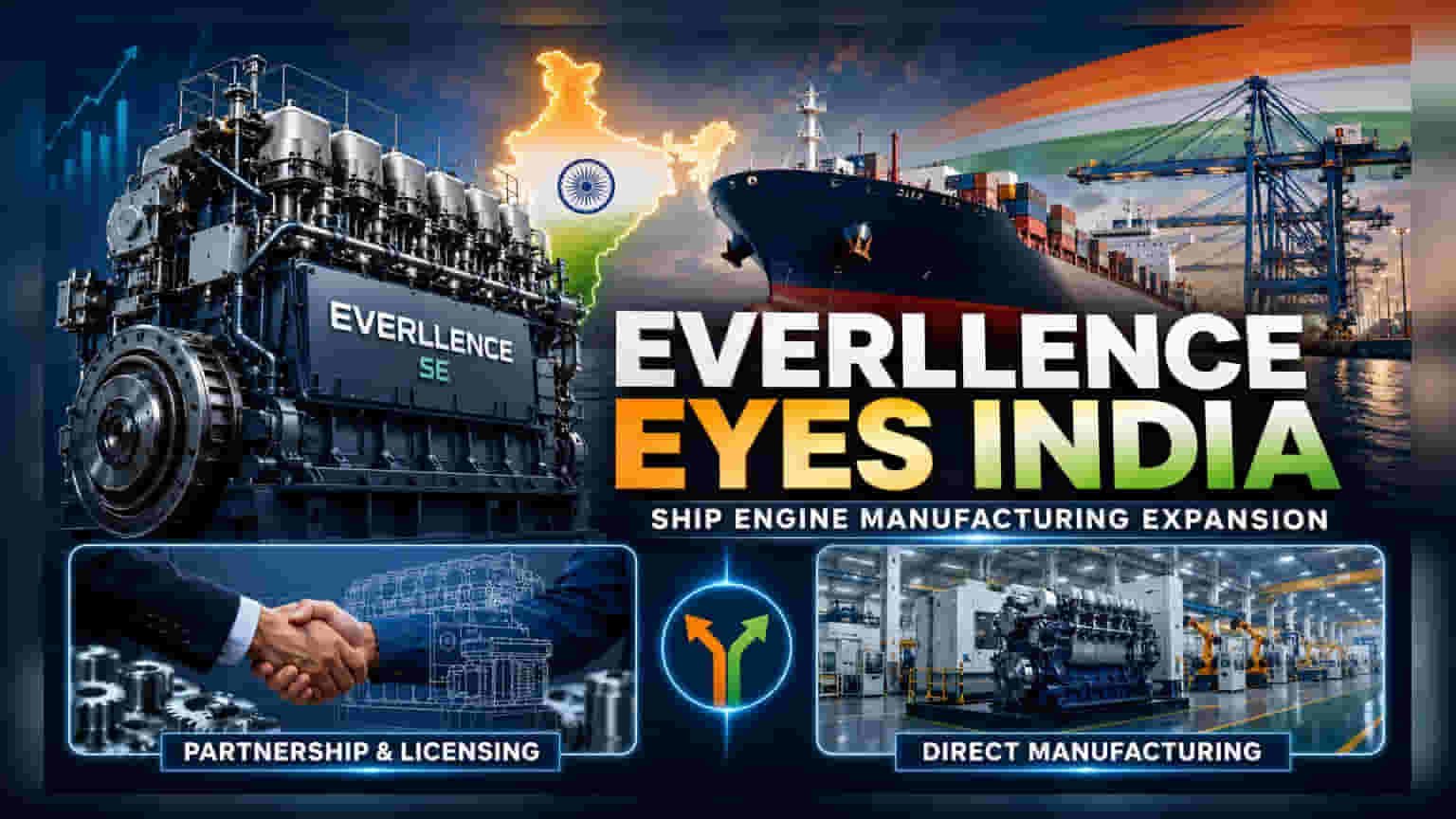
German engineering firm Everllence SE is exploring local manufacturing in India. The company is scouting for partners to license its two-stroke engine production while evaluating a dedicated facility for its high-speed 175D four-stroke engines. This move is part of a strategy to tap into India's growing shipbuilding and maritime sector.
What Happened
Everllence SE, a major global manufacturer of ship engines, has announced plans to expand its operational footprint in India. The German engineering firm is currently exploring two distinct paths to enter the Indian market. First, it is seeking local Indian manufacturing partners to produce its two-stroke engines for large commercial ships through licensing agreements. Second, the company is evaluating the possibility of setting up its own manufacturing facility in India to produce its high-speed, four-stroke 175D engine model.
The Licensing vs. Manufacturing Model
Everllence SE is using a dual-track strategy. The two-stroke engine approach uses an asset-light business model. In this setup, Everllence provides the technology, design, and branding, while the chosen Indian partner handles the actual factory production. Everllence then earns royalties from the partner for the engines produced. This model is common for the company globally, with established international licensees in countries like Japan and South Korea.
Conversely, the plan for the 175D four-stroke engine involves potential direct ownership. If the company chooses to establish its own manufacturing facility, it would involve significant capital spending and direct control over operations. This indicates a higher level of long-term commitment to the Indian market compared to the licensing model.
Why This Matters For The Business
India has been pushing to increase its capabilities in shipbuilding and repair to reduce import dependence and support the domestic maritime industry. Everllence’s interest suggests that the global manufacturer sees sufficient long-term demand in the Indian shipbuilding space to justify local production.
Two-stroke engines are essential for large commercial vessels because they offer high power output and efficient fuel consumption using heavy fuel oil, making them a standard requirement for large cargo ships. If the company successfully onboards Indian partners, it could localize a critical component of the maritime supply chain.
Risks And Execution Factors
Investors should keep in mind that the shipbuilding industry is highly cyclical and sensitive to global trade volumes. While local manufacturing is a positive step, success will depend on several factors. First, the ability to find an Indian partner capable of meeting the stringent quality standards required for marine engines is a major execution test.
Second, the domestic shipbuilding industry must scale up effectively to ensure there is enough demand for these high-power engines. Any delay in the rollout of India’s maritime infrastructure or shipbuilding projects could impact the timeline for these engine production plans. Finally, managing the cost of local production versus importing engines will be critical for the commercial success of the 175D model.
What To Watch Next
For investors, the most critical developments to track will be the announcement of the Indian manufacturing partners for the two-stroke engines. The choice of partner will reveal the level of technical capability the company is comfortable with. Additionally, the final decision on whether to build a dedicated factory for the 175D engine, including the planned investment size, will be a key indicator of the company's confidence in the Indian market’s growth.