

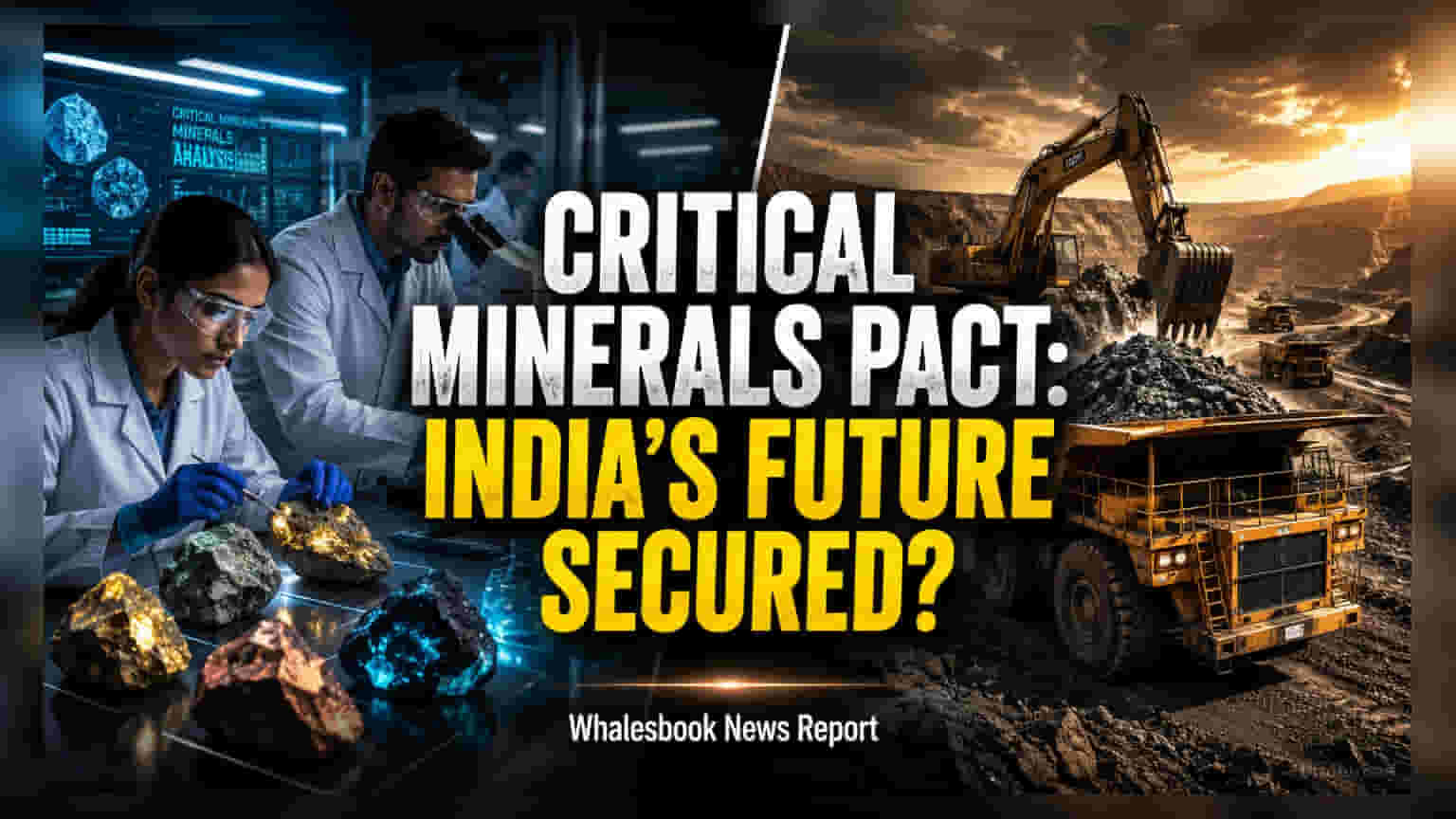
Engineers India Limited has signed an agreement with the CSIR-Institute of Minerals and Materials Technology to develop processing and extraction technologies for critical minerals. This partnership focuses on bridging the gap between laboratory research and commercial industrial use to strengthen India’s strategic resource capabilities.
Detailed Coverage
Engineers India Limited (EIL), a public sector undertaking under the Ministry of Petroleum and Natural Gas, has entered into a memorandum of understanding with the Bhubaneswar-based CSIR-Institute of Minerals and Materials Technology (CSIR-IMMT). The collaboration is aimed at advancing research and development specifically for critical and strategic minerals, which are essential for modern industrial applications and national security.
The partnership seeks to integrate the specialized research capabilities of CSIR-IMMT with the industrial engineering expertise of EIL. By focusing on mineral processing and extractive metallurgy, the two entities intend to create a complete value chain that can move from initial research to full-scale commercial deployment. This involves not only developing new technologies but also scaling them up for industrial use through pilot projects.
For investors, this move represents a strategic effort by EIL to diversify its technical service portfolio. EIL traditionally derives a significant portion of its revenue from consultancy and engineering services for the oil, gas, and petrochemical sectors. By entering the critical minerals space—a sector currently seeing increased government focus to reduce import dependence—the company is attempting to align itself with India's broader industrial and energy transition goals. However, the financial benefit of such R&D partnerships typically takes years to materialize, as commercial success depends on the eventual success of the technology developed.
Beyond technical research, the agreement includes provisions for human resource development, such as specialized training programs in metallurgy and mineral processing. This is intended to build the necessary technical workforce to support these new initiatives. The company’s long-term performance will depend on its ability to effectively monetize these research initiatives and secure viable industrial projects in the mineral processing domain.
The key monitorables for shareholders will be the speed at which these pilot-scale projects are converted into actual revenue-generating contracts, the capital spending required for technology scale-up, and whether EIL can maintain its profit margins while expanding into these new technical service areas. Investors should also note that as a public sector entity, EIL's growth is often linked to government policy and the overall pace of domestic industrial development in the mining and metal sectors.