

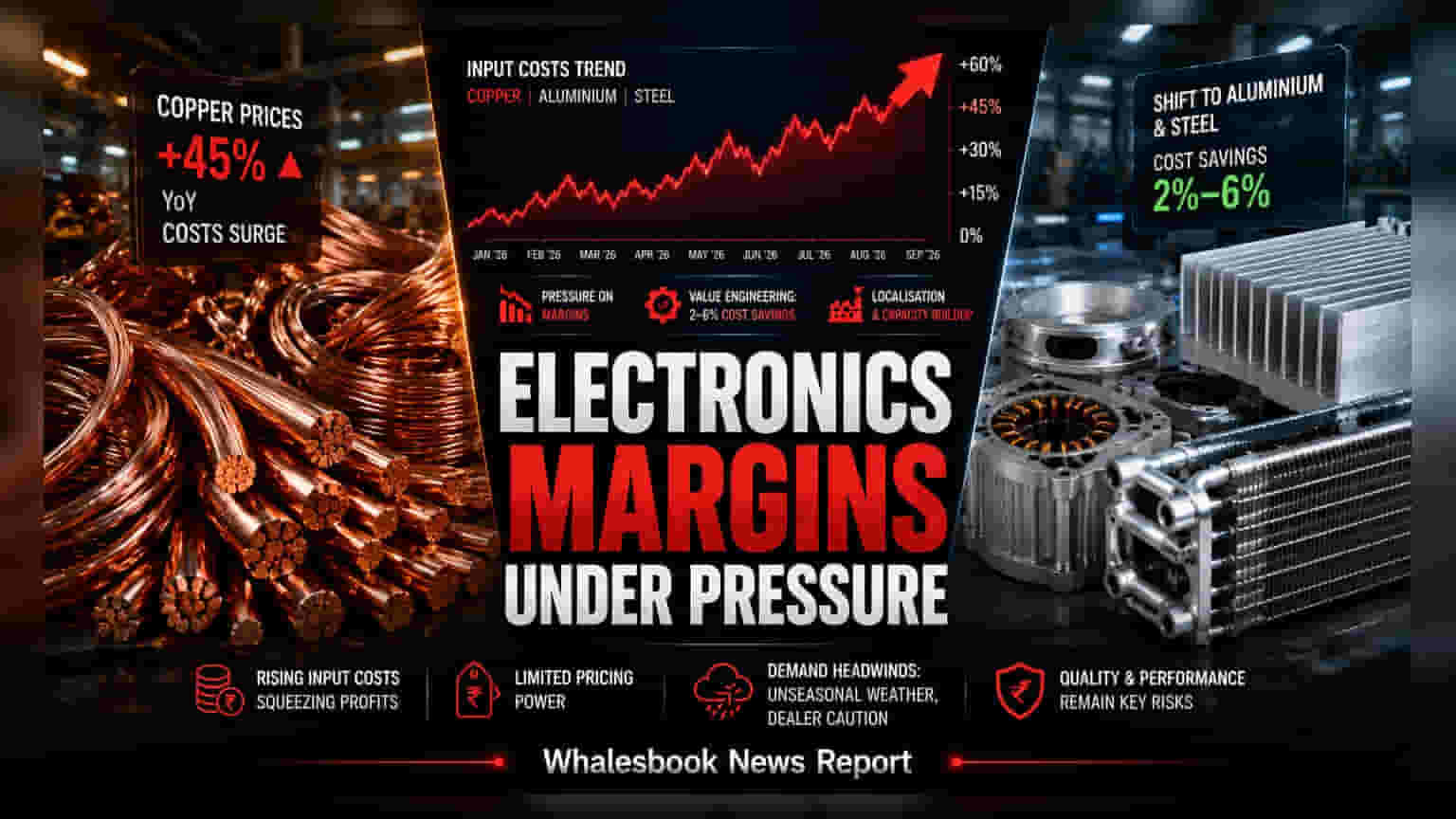
Indian electronics companies are replacing costly copper with aluminum and steel to fight rising input prices. These changes, alongside local manufacturing efforts, aim to protect profit margins that have squeezed from double digits to single digits. Investors are watching to see if these moves successfully lower costs without hurting product demand.
Indian electronics manufacturers are changing how they build appliances as they face a tough year of rising input costs. With copper prices climbing nearly 45% year-on-year, companies are increasingly replacing copper with aluminum and steel in components like motor windings, condenser coils, and transformers. This strategy, often called value engineering, aims to trim total manufacturing costs by 2% to 6%.
This shift is driven by intense pressure on company profits. Many electronics firms have seen their operating margins slide from double digits down to single digits. They are in a difficult spot because raising prices for customers has become harder after several rounds of price hikes since early 2026. The supply chain issue is further complicated by high demand from artificial intelligence data centers and electric vehicle manufacturers. These sectors are locking in supplies of metals like copper months in advance, making it harder and more expensive for standard appliance makers to secure the materials they need.
Beyond substituting materials, companies are working to increase domestic production to hedge against high freight costs and currency fluctuations. For example, PG Electroplast is expanding its local manufacturing capabilities, with plans for a new rotary compressor plant scheduled to start operations in the coming months. Other industry leaders like LG Electronics India are also working to localize the production of key resins to reduce dependence on imports.
However, this strategic pivot comes with its own set of business challenges. The primary monitorable for investors is whether these lower-cost designs can maintain product quality and performance standards. If consumers perceive a decline in durability or efficiency, it could affect brand reputation. Furthermore, the broader consumer durables market is currently facing pressure from unseasonal weather patterns, which have impacted sales of cooling products, and dealer caution regarding inventory levels. The effectiveness of these cost-saving measures will ultimately depend on whether manufacturers can successfully lower input spending while keeping their products competitive and reliable in a price-sensitive market.