 Whalesbook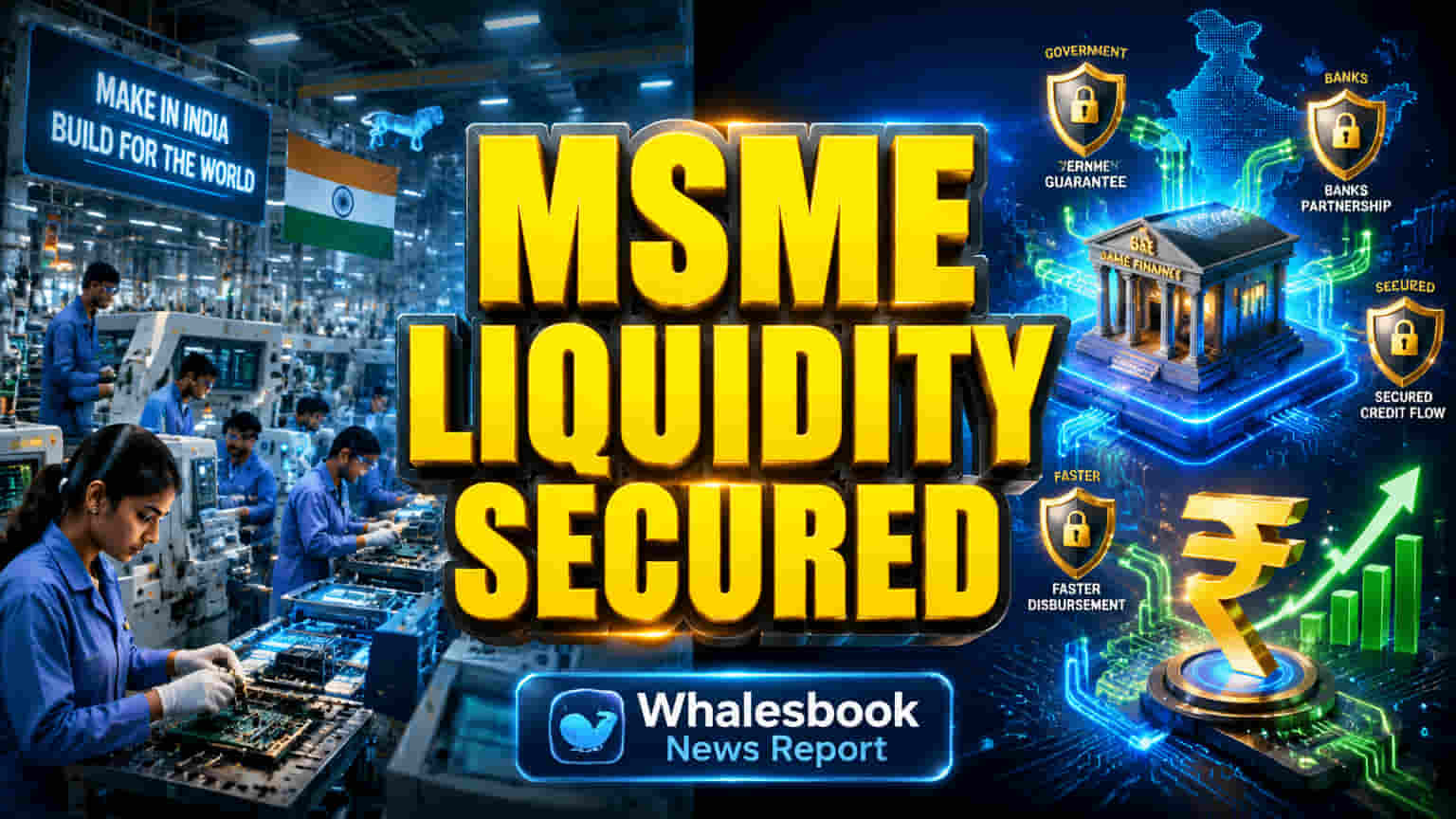


ECLGS 5.0 Approved for Electronics Makers
India's Union Cabinet has approved the Emergency Credit Line Guarantee Scheme (ECLGS) 5.0. This strategic financial support aims to boost the resilience of the country's vital electronics manufacturing sector, especially for its micro, small, and medium enterprises (MSMEs). This comes as these businesses face complex global supply chain disruptions and geopolitical uncertainties.
Scheme Details and Support
ECLGS 5.0 provides a 100% credit guarantee, waives fees, and offers additional working capital. MSMEs are the backbone of India's electronics sector, contributing significantly to GDP and output. This financial lifeline aims to offer immediate relief and confidence, particularly to Tier-2 and Tier-3 suppliers. The scheme makes an additional ₹2.55 lakh crore in credit available to help ease liquidity pressures from global economic conditions.
India's Ambitious Electronics Goals
India's electronics manufacturing sector has ambitious growth targets, aiming for $300 billion by 2026 and $500 billion by 2030. MSMEs are key to this vision, making up a large number of manufacturing units and involved in component manufacturing, electronics manufacturing services (EMS), repair, and design. Schemes like the Electronics Component Manufacturing Scheme (ECMS) have shown strong MSME involvement, with 80% of applications from this segment. The India Semiconductor Mission (ISM), with ₹76,000 crore backing, aims to position India as a semiconductor hub by supporting fabrication, design, and packaging. MSMEs are increasingly eyed for supply chain roles in ISM 2.0, especially for materials and equipment.
Broader Government Initiatives
Beyond ECLGS 5.0, various other initiatives support this growth. The Production-Linked Incentive (PLI) scheme has drawn significant investment, especially in mobile phone manufacturing. The Design Linked Incentive (DLI) scheme supports chip design. Past credit guarantee programs like CGTMSE have offered collateral-free credit to MSMEs, helping lending and economic growth. However, coverage remains below 10% of total MSE units. Competitor nations also provide substantial support, including direct digital transformation grants and cloud technology subsidies to their MSMEs.
Global Trends Impacting Electronics
The electronics sector is undergoing a global supply chain realignment, with the 'China+1' strategy encouraging diversification towards India. India's electronics production hit $125 billion in FY2024-25, with significant export growth. However, the sector faces cost disadvantages compared to global hubs, high import dependency for components (85-90%), and bureaucratic delays. Elevated component costs due to global uncertainties, like the West Asia crisis, and currency depreciation continue to pose challenges. Analyst outlooks forecast continued growth, suggesting a more calibrated, quality-driven path for MSMEs by 2026.
Persistent Cost Challenges
Despite government incentives, India's electronics manufacturing costs remain 10-20% higher than in other Asian hubs. Heavy reliance on imports for critical components like PCBs and semiconductors (85-90%) creates vulnerability and cost pressures. ECLGS 5.0 offers liquidity but doesn't fundamentally solve the challenge of achieving cost competitiveness for advanced manufacturing. This is particularly true for capital-intensive semiconductor fabs, which need substantial long-term investment and technological parity.
Building the Domestic Supply Chain
While India excels in chip design and assembly, building a robust domestic supply chain for high-value components, precision parts, and specialty materials remains a significant hurdle. The electronics manufacturing sector has historically been fragmented, with limited Tier-2 and Tier-3 suppliers. For MSMEs to truly integrate into sophisticated global value chains beyond basic assembly, addressing these upstream and midstream manufacturing gaps is essential.
Assessing Scheme Impact and Reach
While credit guarantee schemes like CGTMSE have positively impacted lending, their cumulative coverage has reached only about 9.4% of total MSE units. There's a risk that liquidity schemes, without targeted support for technological adoption and capability building, could mask underlying unprofitability or fail to equip MSMEs for the semiconductor industry's demands. Navigating bureaucratic processes for financial aid can also be challenging for some MSMEs.
Facing Global Rivals
Countries like China and Vietnam offer significant cost advantages and well-established ecosystems, creating stiff competition for India's export ambitions. Without sustained efforts to bridge the innovation-to-manufacturing gap and improve efficiency, India may struggle to move beyond assembly and capture higher-value segments of the global electronics market.
Outlook for India's Electronics Sector
Projections indicate robust growth for India's electronics manufacturing, with estimates reaching $604 billion by 2032 or $610+ billion by 2030. This growth is driven by domestic demand, import substitution, and government incentives. The India Semiconductor Mission aims for India to be among the top semiconductor nations by 2035. Analyst sentiment points to continued expansion, focusing on quality-driven growth and deeper integration into global value chains. The success of ECLGS 5.0 will be measured by how effectively it enables MSMEs to capitalize on evolving government schemes and the 'Make in India, Make for the World' strategy, not just the liquidity provided.