 Whalesbook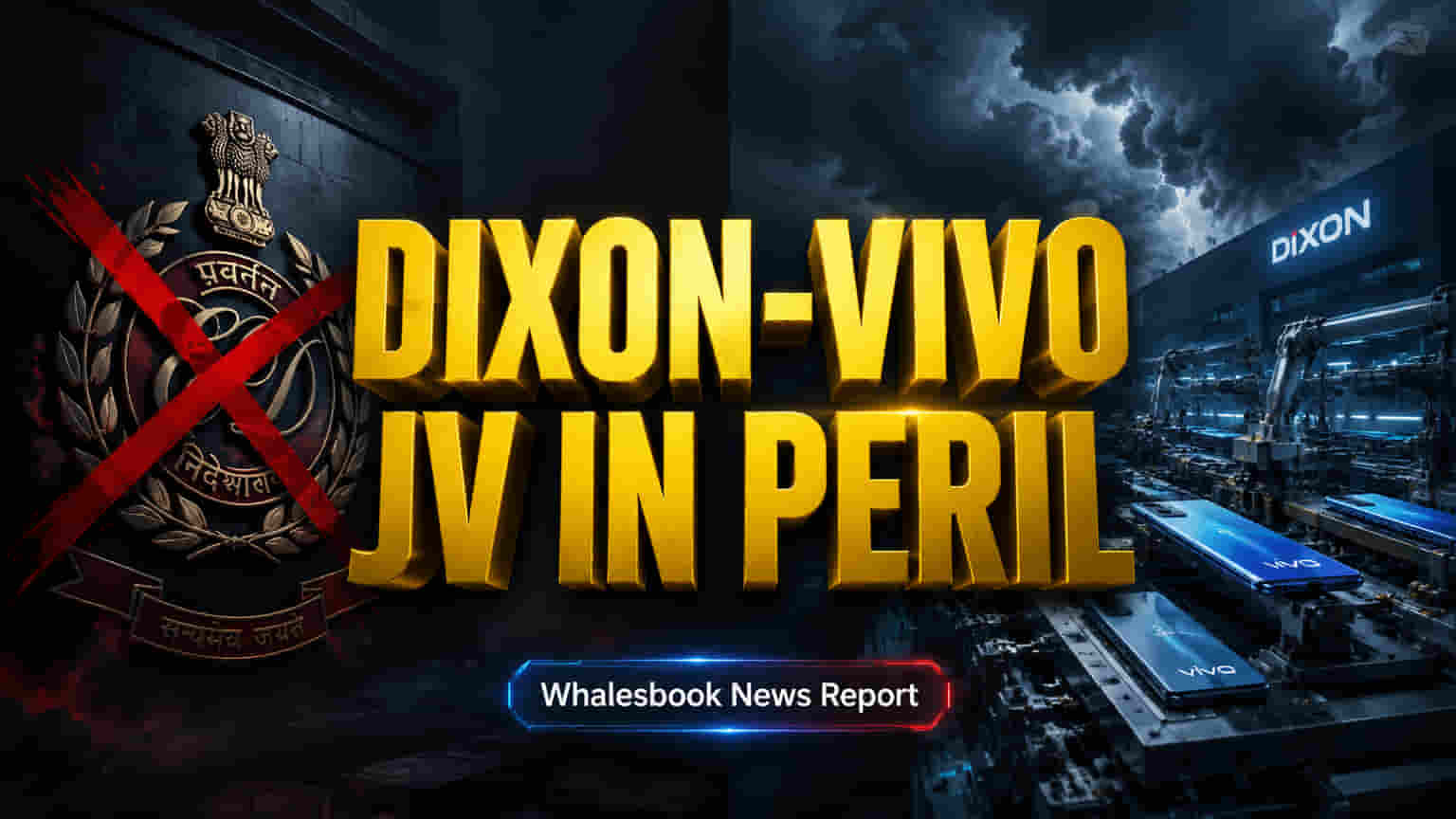


Regulatory Roadblock Slows Dixon-Vivo Venture
The proposed joint venture between Dixon Technologies (India) Limited and Vivo India, designed to enhance domestic smartphone manufacturing, is encountering significant governmental delays. The project is currently under review, with an extensive money laundering probe by India's Enforcement Directorate (ED) into Vivo India creating substantial uncertainty.
Investigation Compounds JV Approval Process
The Ministry of Home Affairs is expected to make a final decision on the Dixon-Vivo joint venture. However, the ongoing ED investigation into Vivo India, which alleges the company illegally transferred ₹62,476 crore to China to evade taxes, complicates the approval. This probe, conducted under the Prevention of Money Laundering Act and involving arrests of company executives, raises serious questions about the timeline. While some manufacturing investments use an automatic approval route, this JV appears to require central government clearance due to the sensitive nature of the ED investigation.
Dixon Navigates India's Expanding Electronics Market
Dixon Technologies operates within India's rapidly growing electronics manufacturing sector, a market valued at $125 billion in FY25 and projected to reach $500 billion by 2030. As a leading Electronic Manufacturing Services (EMS) provider, Dixon generates substantial revenue from manufacturing electronics for major brands like Samsung and Xiaomi. The company's stock trades around ₹11,000-₹11,200, with a P/E ratio of approximately 40-50 and a market capitalization near ₹67,000 crore.
Competition and Diversification Strategy
Dixon faces strong competition from domestic players like Lava International, which is expanding its smartphone presence, and other EMS providers such as Avalon Technologies and SFO Technologies. Global manufacturers like Foxconn also maintain a significant presence, particularly in mobile phone assembly. Despite a strong growth history and operational efficiency, indicated by a high ROCE of 30.45%, Dixon's reliance on clients like Xiaomi, which is reportedly facing market share challenges, presents a risk. The company is actively pursuing component manufacturing, including plans for a display fab, to diversify revenue and improve margins.
Analyst Views and Market Sentiment
Analyst sentiment is divided. Nomura maintains a 'Buy' rating with a target price of ₹14,678, citing government support and growth in component manufacturing. Jefferies, however, holds a 'Hold' rating, pointing to declining global smartphone volumes and rising input costs. The stock has recently traded near its 52-week low, reflecting market uncertainty. Dixon's previous joint venture with China's Longcheer Technology received approval, showing a capacity to navigate partnership approvals, though the current Vivo situation is considerably more complex.
Regulatory Overhang and Business Risks
The primary concern for Dixon Technologies is the prolonged regulatory uncertainty surrounding its partnership with Vivo. The ED probe into alleged financial impropriety creates a significant risk that could stall or derail the JV. This situation signals a heightened regulatory environment that could potentially deter future foreign investment, crucial for India's manufacturing goals. An unfavorable outcome for the Dixon-Vivo JV could lead authorities to adopt a more cautious stance, impacting investor confidence in similar collaborations.
Furthermore, Dixon's contract manufacturing model carries inherent risks related to client concentration and competitive pressures. While diversification into components is a strategic move, its successful execution, alongside managing supply chain vulnerabilities for imported components, is critical. The failure to secure the Vivo JV could mean Dixon misses out on significant expansion opportunities, potentially losing ground to competitors better able to navigate regulatory challenges or less exposed to geopolitical risks.
Future Outlook
Despite the current regulatory challenges, the long-term outlook for India's electronics manufacturing sector remains positive, supported by government policies and domestic demand. Dixon Technologies is well-positioned to benefit from this trend, especially with its planned expansion into component manufacturing. The resolution of the Vivo JV remains a key factor for the company's near-term strategy. Dixon is scheduled to announce its Q4 and full-year FY26 results on May 12, 2026, which will offer further insights into its performance and guidance.