

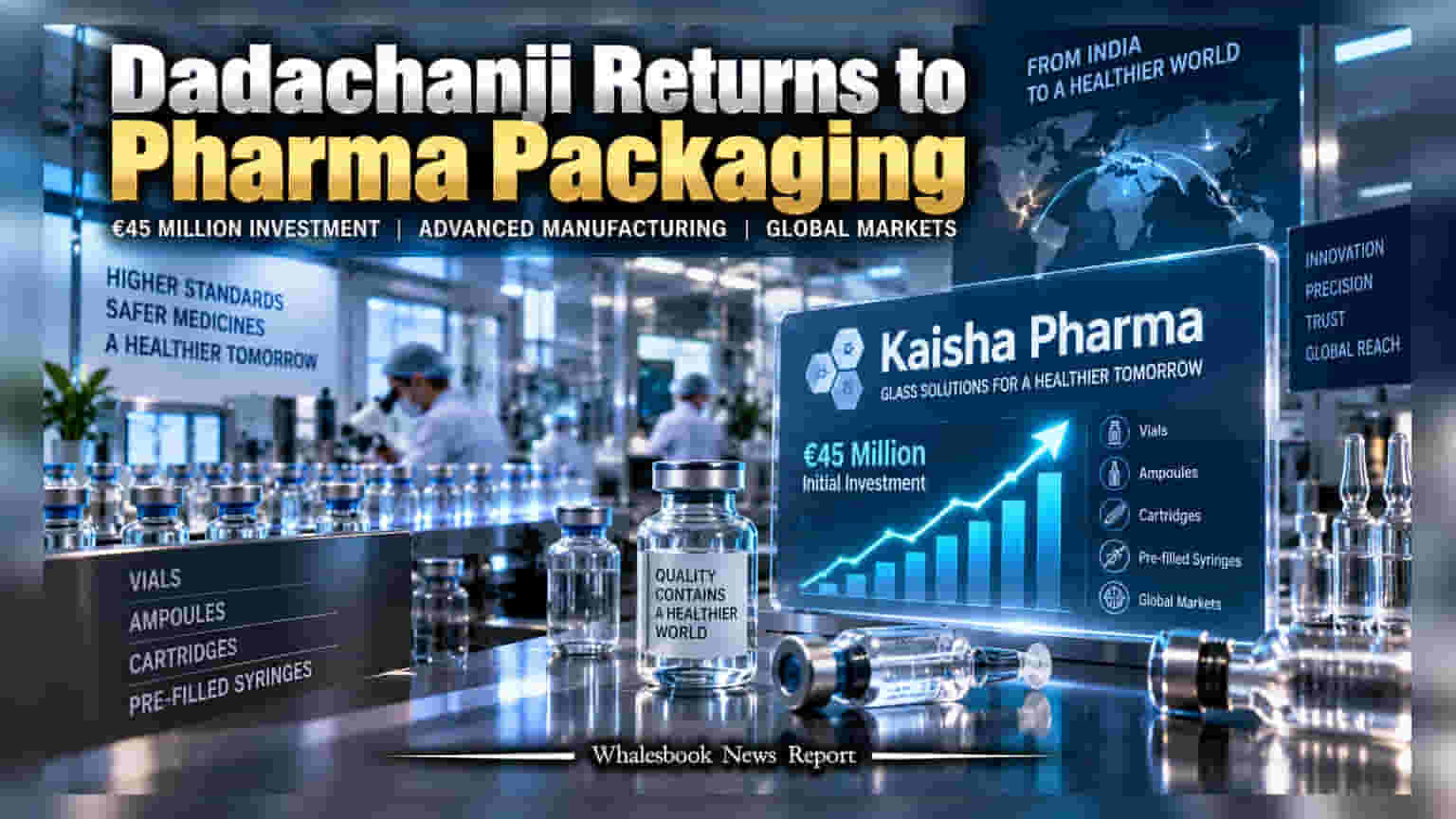
Five years after exiting their previous joint venture, the Dadachanji group is re-entering the pharmaceutical glass packaging market with the launch of Kaisha Pharma. The new venture is backed by a €45 million investment to produce specialized packaging for high-value biologics. As a private entity, the company will target global markets, with industry participants tracking how this new entry impacts competition in the specialized drug containment sector.
The Dadachanji group has officially announced its return to the pharmaceutical glass packaging industry with the launch of a new venture, Kaisha Pharma. This development comes five years after the group exited its previous joint venture, Schott Kaisha, which was sold to the Serum Institute of India in 2021. The new company is marking its comeback with an initial capital investment of €45 million to establish a large-scale manufacturing presence.
This investment is dedicated to building a 300,000-square-foot facility equipped with automated production lines and advanced camera inspection systems. The company plans to manufacture a range of essential glass packaging products, including vials, ampoules, cartridges, and pre-filled syringes. Management has indicated that the core focus will be on providing high-quality containment solutions specifically for sensitive drugs and high-value biologics, where maintaining product integrity is essential for safety and effectiveness.
To support this expansion, Kaisha Pharma is also setting up an international business development office in Europe. This indicates a clear shift in strategy, with the group aiming to serve global pharmaceutical markets rather than focusing primarily on the domestic Indian sector. By positioning itself as a provider of both primary packaging and fill-finish support systems, the company intends to become a comprehensive partner for drug manufacturers navigating complex delivery requirements.
Because Kaisha Pharma is a private entity, it does not have a public stock price or the same level of financial transparency as listed companies. For the broader industry, this entry creates new competition in the specialized glass packaging space. The pharmaceutical packaging market is highly competitive and relies heavily on strict global quality standards, which can make it challenging for even experienced players to ramp up production and secure market share quickly.
The primary test for the new entity will be successful execution. Establishing a large manufacturing base from scratch involves significant capital spending and the complex task of securing high-volume orders from large global pharmaceutical firms. While the group brings decades of legacy in the sector, scaling these new operations to meet international quality requirements will be critical. Market participants, including those watching the pharmaceutical supply chain and packaging sectors, will monitor the firm's progress in commissioning its facility and building its client base, as this will determine the extent to which the company can challenge existing incumbents.