

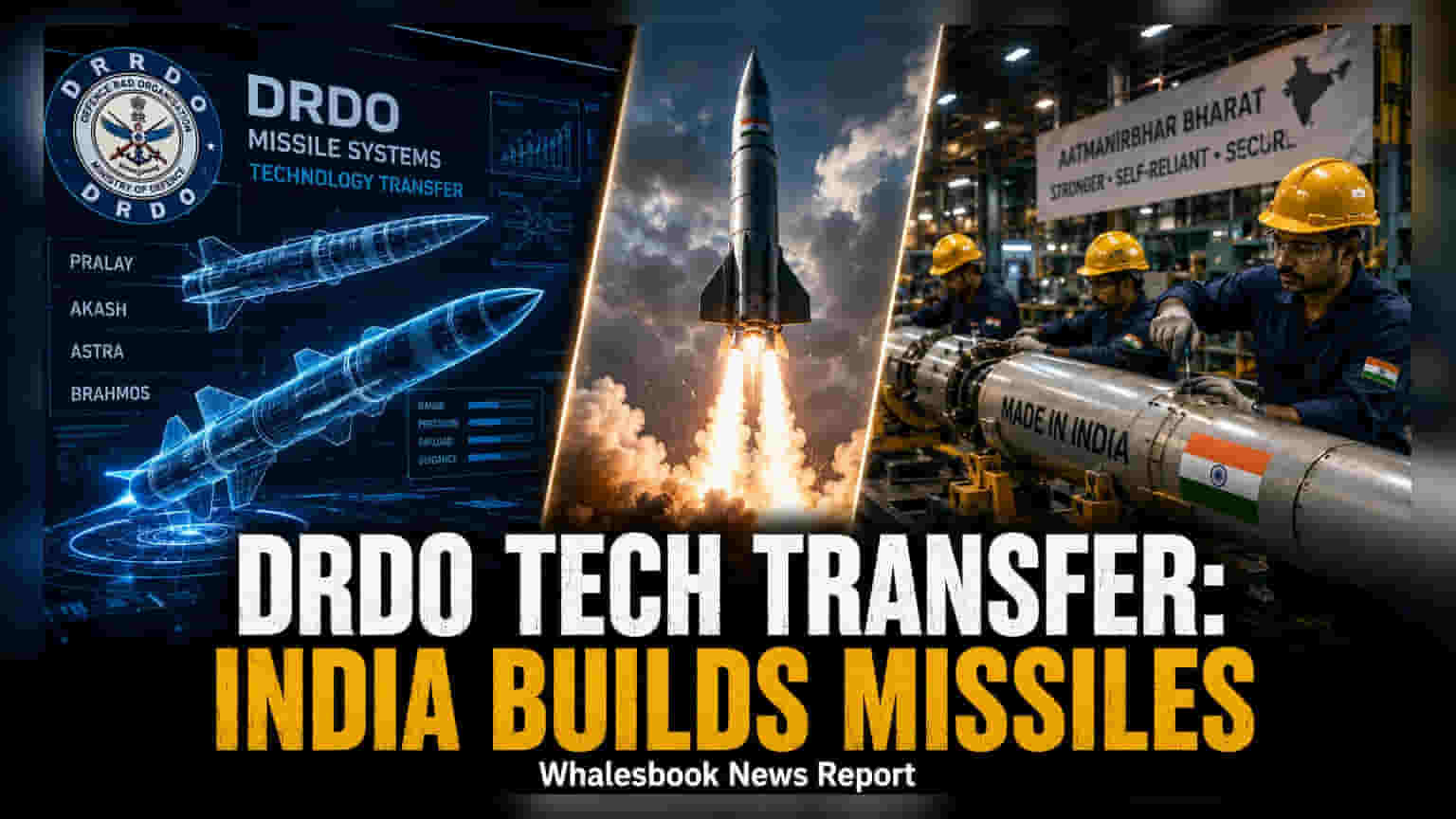
Defence Minister Rajnath Singh has approved the transfer of technology for all conventional DRDO missile systems to domestic companies. This policy aims to deepen private sector involvement in strategic weapons manufacturing as Indian defence production reached ₹1.78 lakh crore in FY 2025-26. Investors should track the strict qualification criteria for firms applying for these technology transfers.
On August 25, 2026, the Defence Ministry announced that all conventional missile systems developed by the Defence Research and Development Organisation (DRDO) will now be eligible for technology transfer (ToT) to Indian industries. This significant policy shift is designed to expand the domestic defence manufacturing base, moving from government-led research toward industry-led mass production.
This decision is a central part of the government’s 'Aatmanirbharta' (self-reliance) strategy. It follows a period of rapid growth in the sector, with domestic defence production reaching ₹1.78 lakh crore in the 2025-26 financial year. While public sector undertakings have historically led these strategic projects, the government is now focused on increasing private sector involvement, which contributed 24% of the total defence production value in the last fiscal year.
The transfer of technology allows qualified companies to manufacture these missile systems indigenously. The government is utilizing the Development-cum-Production Partner (DcPP) framework, which brings industry players into the project lifecycle during the development phase rather than waiting until the design is finalized. This model is intended to shorten the time it takes to move from a laboratory prototype to a deployable military product.
However, it is important for investors to understand that this opportunity comes with high barriers to entry. The manufacturing of missile systems is not a standard industrial process; it involves extreme precision, complex engineering, and strict safety requirements. Companies wishing to participate must hold valid defence manufacturing licenses and obtain clearances from the Petroleum and Explosives Safety Organisation (PESO).
Furthermore, participants must demonstrate substantial financial and operational stability. This includes meeting specific net worth, turnover, and infrastructure requirements. The leap from R&D prototypes to bulk production of 50 to 100+ units requires advanced project management and continuous quality assurance. For companies, the risks involve potential cost overruns, challenges in scaling complex technology, and the burden of strict regulatory and safety audits. Delays in mastering these technical processes or failing to meet quality standards could impact project timelines and profit margins.
The real impact of this policy on individual companies will depend on their ability to secure these technology transfer agreements and their existing capacity to handle high-precision aerospace manufacturing. Investors should monitor for specific tender announcements and company-level disclosures regarding the acquisition of these missile-manufacturing technologies and the capital expenditure needed to set up these specialized production lines.