

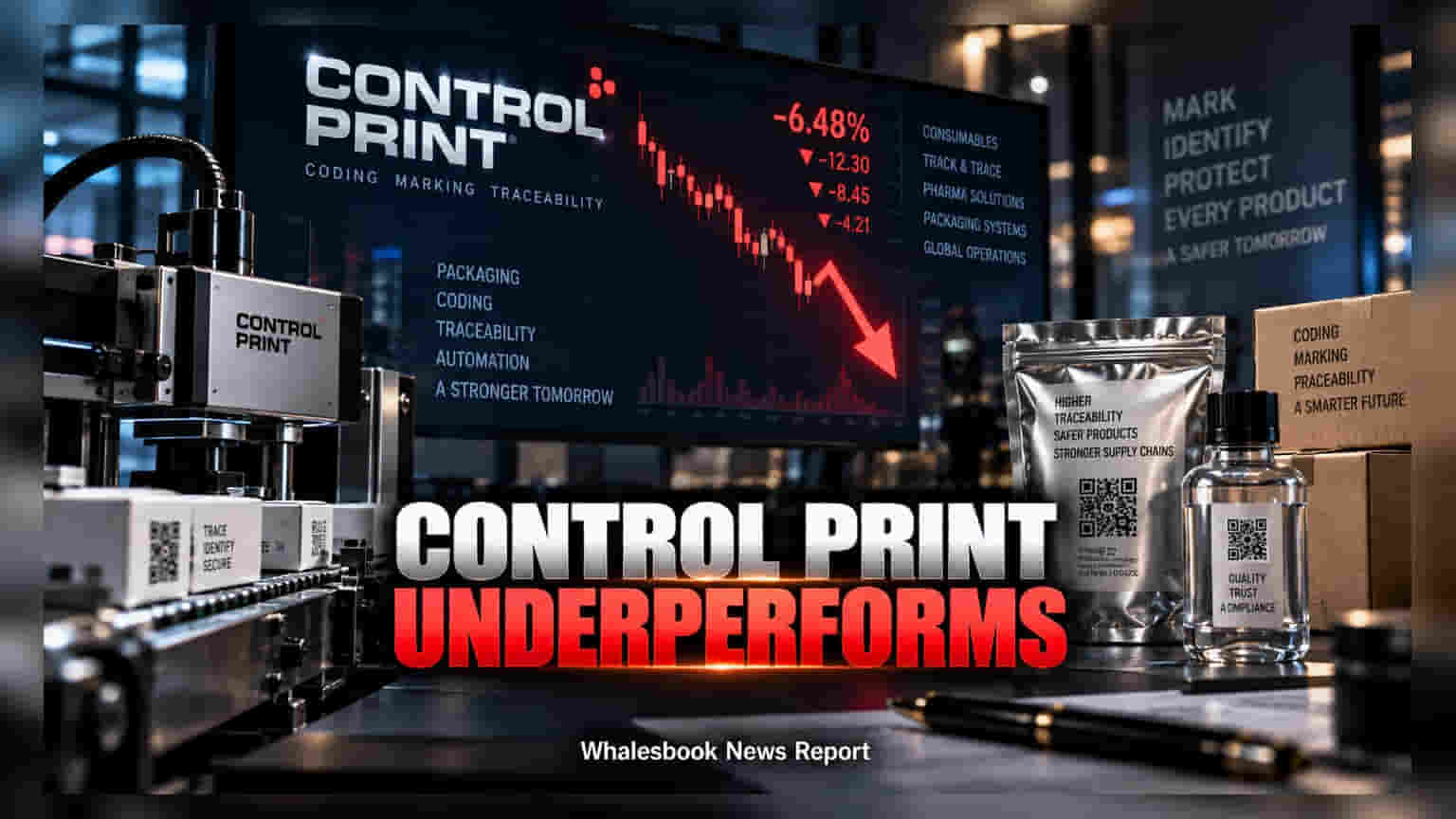
Control Print is seeing its core coding business earnings offset by losses from its Italian packaging arm, V Shapes. Despite a strong installed base of over 23,000 printers, the company reported modest 4% year-on-year revenue growth. Investors are now focused on the firm's pivot to pharmaceutical track-and-trace solutions and the timeline for the V Shapes unit to turn profitable.
Control Print, a significant player in the Indian industrial coding and marking market, is currently balancing steady growth in its core business with financial pressure from its overseas operations. The company’s Italian packaging subsidiary, V Shapes, continues to impact its overall earnings, creating a drag that has weighed on recent financial performance.
Core Business and Margin Pressure
The company competes with global entities such as Videojet, Domino Printech, and Markem-Imaje. Control Print has built a foundation with over 23,000 printers installed, creating a steady stream of revenue from high-margin consumables. However, the most recent quarter showed revenue growth of only 4% year-on-year. The firm faced several hurdles, including seasonal demand shifts and higher raw material costs, which caused a contraction in gross margins. While the management has initiated price adjustments to stabilize profitability, the market is waiting for these efforts to reflect in the company's bottom line.
Strategic Pivot to Track and Trace
To expand its reach beyond traditional coding and marking, the company is investing in its brand, QRiousCodes. This division focuses on product authentication technology, which is seeing higher demand due to evolving pharmaceutical regulations. Control Print is currently running pilot programs with two of the top five Indian pharmaceutical firms. The addressable market for these track-and-trace solutions is expected to grow as government mandates expand to cover a larger list of drugs. Successful implementation of these pilots could provide a new growth path for the company.
The V Shapes Turnaround Plan
The primary concern for investors remains the V Shapes unit. Management has set a target to break even in this segment by the first half of fiscal year 2028. To support this transition, the firm is introducing co-packaging services in India and internationally to increase machine adoption. The company is also developing recyclable packaging materials and expanding its infrastructure with a new facility in Assam. The outcome of these operational changes, alongside the stability of the core business, will determine the company's financial health in the coming years. Investors will likely track the execution of the packaging turnaround and the progress of the pharmaceutical pilot projects as key indicators of future performance.