 Whalesbook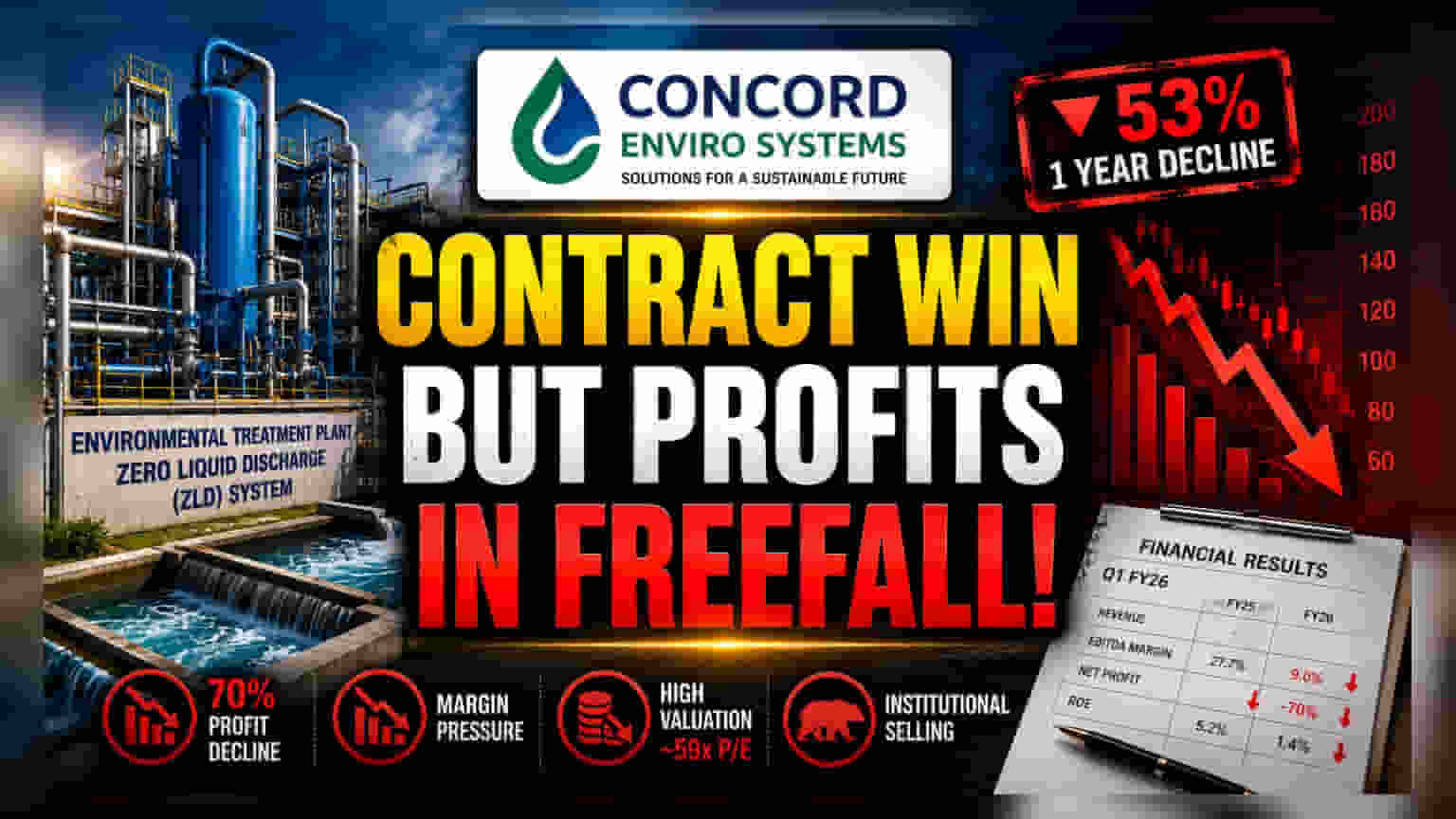


The Operational Paradox
While the securing of a ₹16 crore contract for Environmental Treatment Plant and Zero Liquid Discharge (ZLD) systems from a domestic rail engineering firm adds to the long-term order book, it highlights a stark contrast to the company’s recent fiscal performance. The project, involving design and installation over 28 weeks, represents a modest incremental win. However, this development arrives as the company faces a challenging macro environment, with the stock reflecting a 53% decline over the past year. Investors are increasingly looking past order book expansions to focus on the underlying sustainability of profitability.
Margin Compression and Sector Realities
Concord Enviro Systems recently reported a 70% year-on-year collapse in quarterly net profit, with EBITDA margins contracting from 27.7% in the year-ago period to 9%. Despite a stable top-line, the company is fighting severe margin compression exacerbated by rising input costs and operational inefficiencies. Unlike more diversified industry peers, Concord’s heavy reliance on the industrial water treatment segment leaves it vulnerable to cyclical capital expenditure by large-scale manufacturers. While the company maintains an efficient cash conversion cycle, its inability to translate revenue into bottom-line growth remains a primary concern for the market.
The Forensic Bear Case
From a risk-averse perspective, the company’s current valuation at a P/E ratio of roughly 59x appears difficult to justify given the recent earnings degradation. Management has acknowledged significant external challenges, including supply chain volatility and a recent restructuring of the salary framework that impacted short-term provisions. Furthermore, the company’s Return on Equity (ROE) remains depressed, and analyst sentiment is largely cautious. Unlike major competitors such as Thermax or VA Tech WABAG, which exhibit higher financial resilience and diversified revenue streams, Concord Enviro lacks a proven track record of maintaining profit margins during inflationary periods. Investors should note that the stock has seen consistent institutional selling pressure throughout FY26, suggesting that minor contract wins may not be sufficient to trigger a structural recovery.
Future Outlook
Management continues to emphasize its technical edge in desalination and membrane-based separation. However, until the company demonstrates a stabilization of its EBITDA margins and a reversal of the 70% profit decline, market participants remain skeptical. Future performance will depend on the successful execution of the new order pipeline and whether the company can pass on increasing input costs to its industrial clientele.