

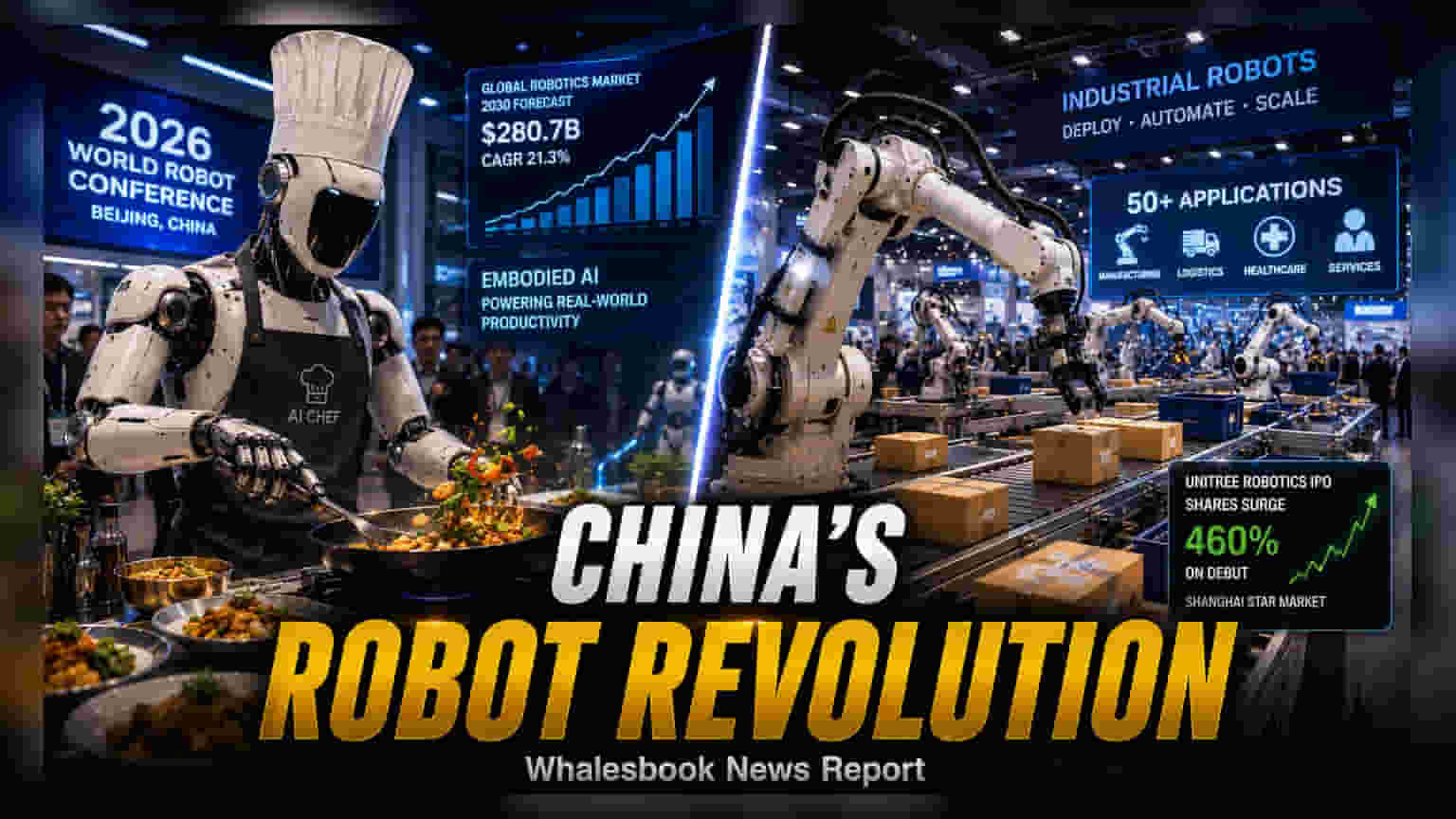
Beijing’s World Robot Conference highlights a move toward industrial robotics, marked by the 460% debut of Unitree Robotics on the Shanghai STAR Market. While innovation is accelerating, investors should monitor geopolitical risks, including US import bans, and the challenge of turning experimental robots into profitable industrial tools.
Beijing’s World Robot Conference (WRC) has become the center of global attention, not just for its display of over 2,000 robotic products, but for a significant shift in how the market is valuing the robotics industry. This week, Unitree Robotics, a leading humanoid developer, made a historic debut on China's Shanghai STAR Market. Shares surged 460% on their opening day, signaling high investor excitement for companies transitioning from laboratory prototypes to actual industrial machines.
The core theme of this year’s conference is a pivot toward real-world utility. Unlike previous years, where the focus was on flashy demonstrations, this event emphasizes deployment. With 49 state-owned enterprises showcasing 12 specific application scenarios, the goal is to integrate robotics into manufacturing, logistics, and daily services. This includes everything from automated kitchen robots to advanced industrial welding machines. The industry is banking on embodied AI, which refers to robots that can process their surroundings and perform tasks autonomously, to drive the next wave of industrial productivity.
While the stock market reaction to Unitree has been intense, investors should approach the robotics sector with a clear view of the risks. The industry faces significant geopolitical hurdles. The US Federal Communications Commission has implemented a ban on new imports of foreign-made humanoid and quadruped robots, citing national security concerns. This restriction limits the global market potential for Chinese robotics firms that may rely on exports for long-term growth. Additionally, while the IPO surge shows enthusiasm, the broader Chinese technology sector remains volatile, with periodic sell-offs often driven by economic uncertainties.
Moving from a concept to a profitable, mass-deployed robot is a complex process. Many of these machines are still in early stages, and the cost of production remains high. The key monitorable for the coming quarters will be actual commercial revenue—whether these robots are being purchased by factories for real, recurring work, or if they remain mostly experimental. The tension between rapid technical innovation and international regulatory barriers will likely define the sector's performance in the near term.