

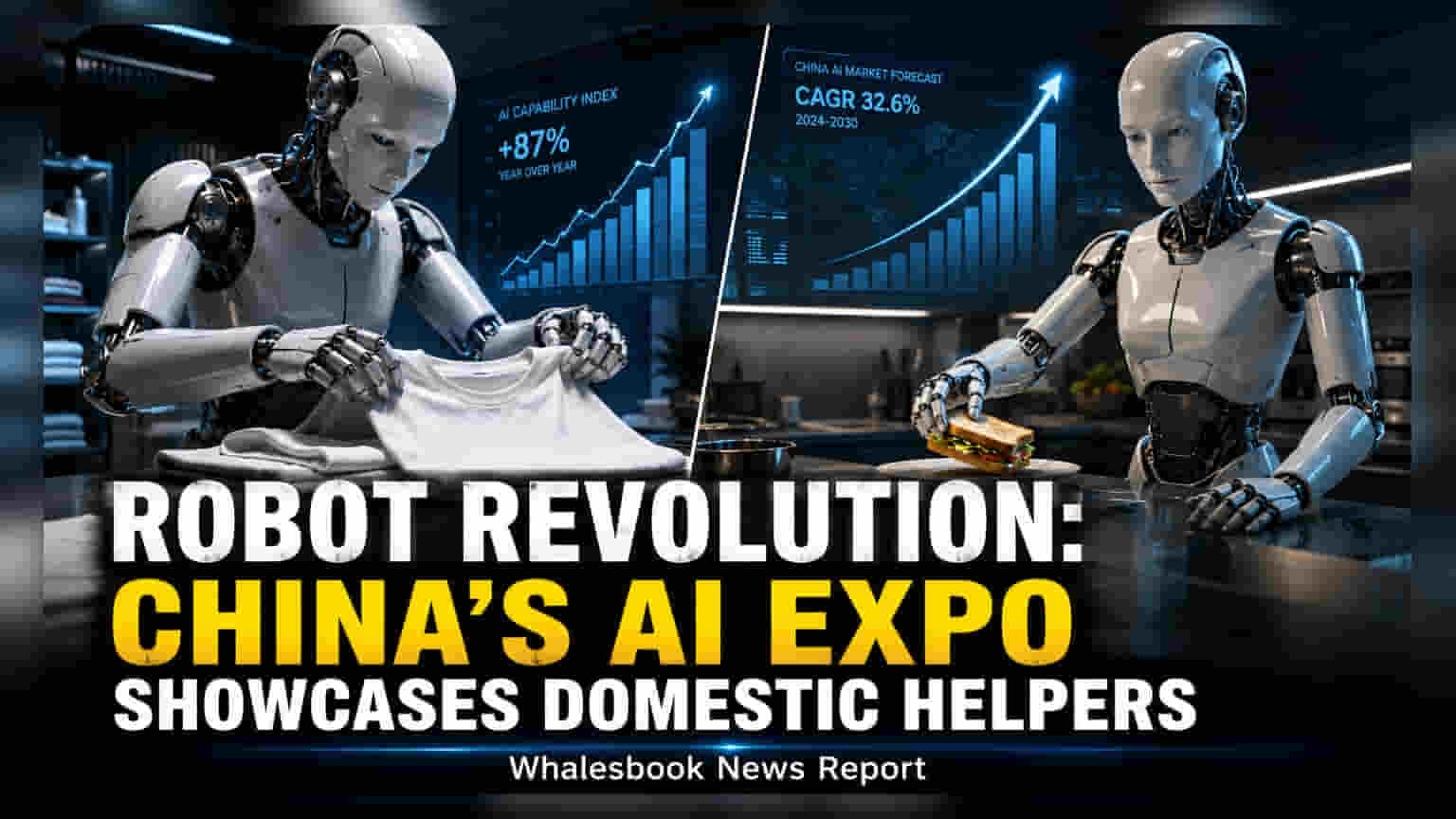
China’s World Artificial Intelligence Conference featured over 400 humanoid robot models performing tasks like laundry and food preparation. This display highlights the nation's focus on commercial robot integration in sectors like hospitality and retail. While these machines aim to augment labor, their widespread adoption remains dependent on further technological refinement and cost-effective scaling.
Detailed Coverage
The World Artificial Intelligence Conference (WAIC), held in Shanghai from July 17 to July 20, 2026, highlighted China's rapid expansion in the robotics sector. The event showcased more than 400 distinct humanoid robot models, a figure that reflects a significant concentration of global manufacturing output for these machines. These robots demonstrated various capabilities, ranging from domestic tasks like folding laundry and making sandwiches to industrial applications such as sorting packages and assisting in retail environments.
Commercial Applications and Operational Focus
Companies at the event moved beyond theoretical research, focusing instead on practical, commercial applications. For example, Keenon Robotics presented its XMAN-R1 model, which is currently undergoing trials in the Chinese hospitality industry. These robots are designed to assist with room service, linen collection, and basic post-wash folding. Management from participating firms indicated that these robots are intended to supplement human staff, particularly during off-peak hours, rather than replacing them entirely.
In the retail sector, firms like SenseTime showcased concepts such as the SenseMart Go store. These systems are designed to automate tasks including customer greetings, order management, product retrieval, and shelf restocking. According to SenseTime's leadership, the goal is to reach a point where such robotic infrastructure can recover its initial investment costs within a one-year timeframe.
Industrial and Economic Context
For investors, the integration of humanoid robots represents a shift toward higher automation in labor-intensive service sectors. The high number of models displayed suggests that China is building a large-scale manufacturing base for robotics. However, while demonstrations in controlled environments show clear technical progress, the transition to everyday use in complex, unscripted settings remains a primary challenge for the industry. Developers are still working on improving reliability, sensor precision, and the ability of these machines to navigate non-standard environments.
Future Monitorables
The economic feasibility of these technologies will depend on the ability of manufacturers to bring down production costs and prove long-term durability in real-world settings. Investors may track the speed at which these robots move from trial phases in controlled environments—such as specific hotels or retail stores—to broader commercial deployments. Additionally, the ability of these companies to demonstrate consistent cost recovery and operational efficiency will be critical to understanding the long-term impact on productivity and profitability within the service and industrial sectors.