

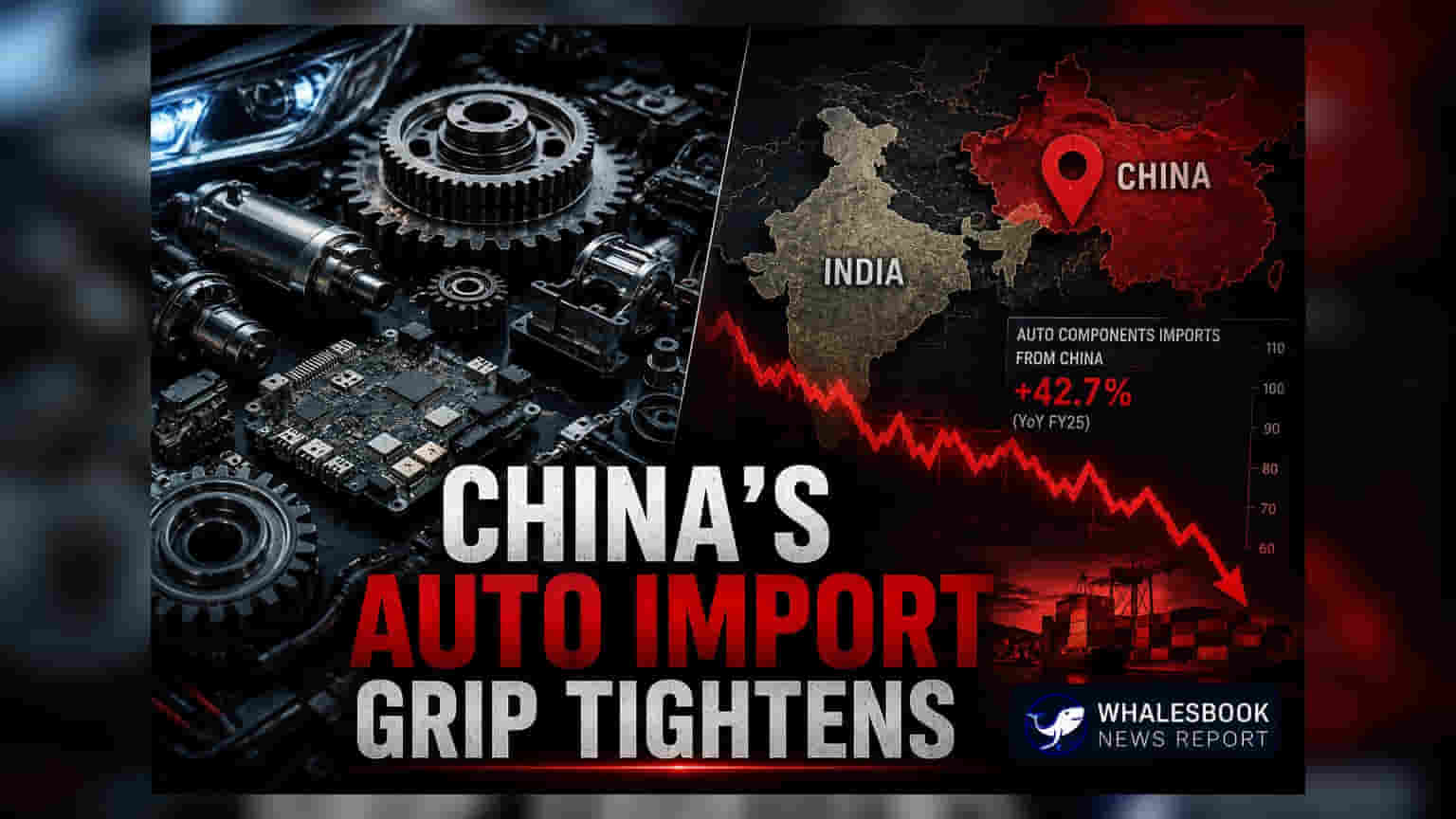
India's auto component sector turnover hit ₹7.60 lakh crore in FY26, yet reliance on Chinese imports rose to 36% from 29% in FY25. This trend highlights a growing dependence on China for sub-assemblies and components despite domestic manufacturing growth. Investors should monitor how this import reliance affects local supplier margins and long-term production self-sufficiency.
The Indian automotive component industry recorded a turnover of ₹7.60 lakh crore in the 2025-26 financial year, reflecting a 12.7% growth driven by strong domestic vehicle demand and increased production capacity. While the sector is expanding, data from the Automotive Component Manufacturers Association of India (ACMA) reveals an increasing reliance on imports from China, which now account for 36% of total component imports compared to 29% in the previous fiscal year.
Drivers Behind Import Reliance
Although India remains a key player in the global auto supply chain—with the United States accounting for 26% of exports—the import data suggests a strategic imbalance. Industry analysts note that several factors contribute to this shift. These include the specific technological requirements of global original equipment manufacturers (OEMs) present in India, supply chain policies that prioritize existing overseas mother plants, and the competitive pricing of Chinese components. Additionally, when domestic vehicle manufacturing growth outpaces the rapid development of local component supply, OEMs often turn to global sources to avoid production delays.
Impact on Domestic Manufacturers
While the sector outlook remains positive with expected growth of 8-10% in the coming fiscal year, the high dependence on China creates a complex environment for local manufacturers. Companies are currently balancing the benefits of international integration, such as Free Trade Agreements, with the risks of supply chain concentration. For domestic suppliers, the primary challenge is moving up the value chain to provide high-technology components locally. When domestic production cannot meet the cost or technical specifications required by newer vehicle models, the reliance on imports may continue to exert pressure on domestic profit margins.
What Investors Should Monitor
Going forward, the key factor for investors will be whether Indian auto component companies can successfully reduce this dependency through local capital spending and technology partnerships. Tracking the performance of companies that are actively increasing their local manufacturing capabilities versus those heavily reliant on trading or importing sub-assemblies will be essential. Further updates from ACMA regarding supply chain localization efforts and any changes in government policy regarding the import of critical sub-assemblies will be important triggers to watch in the coming quarters.