

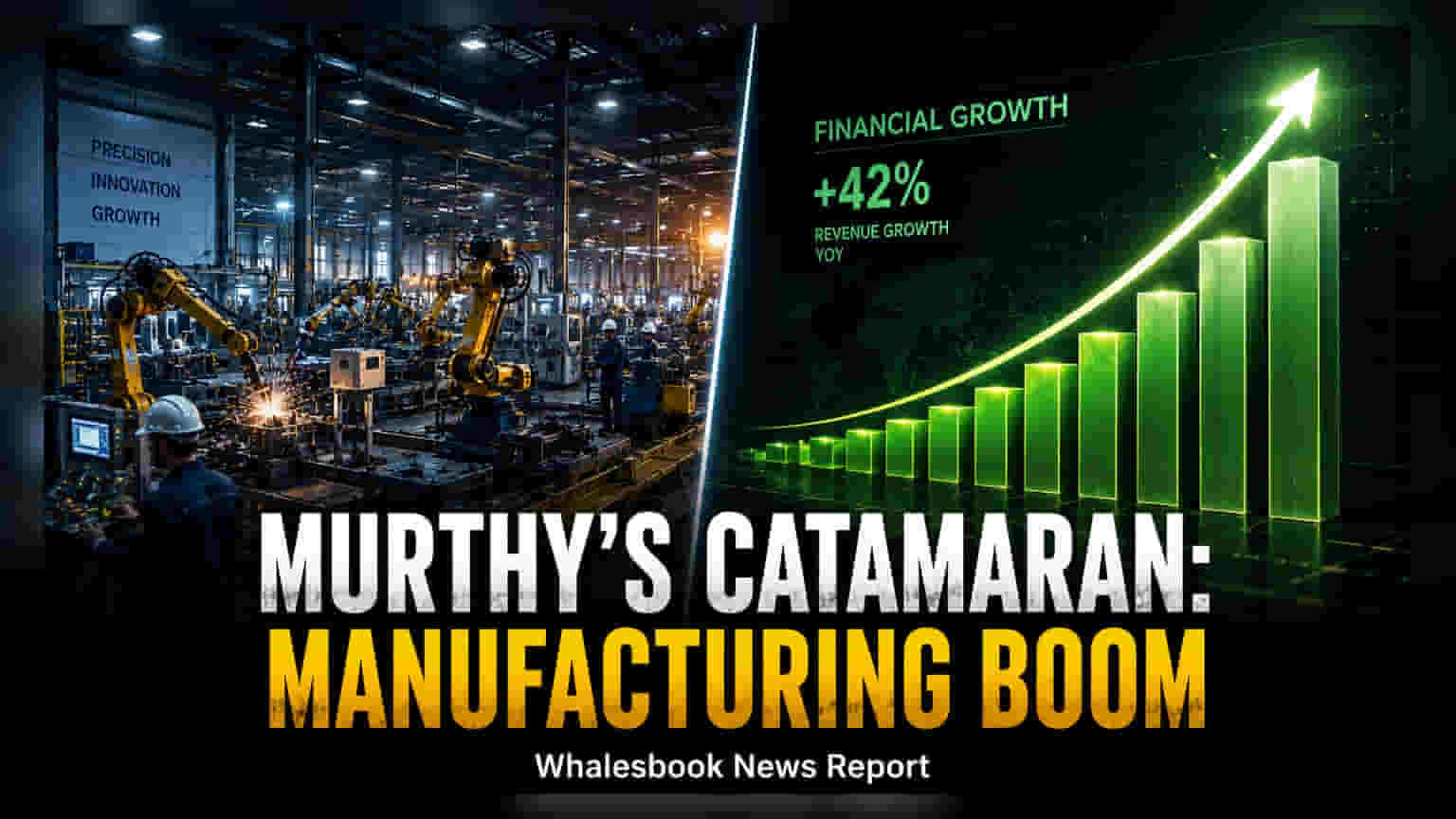
Catamaran, the family office of Infosys co-founder Narayana Murthy, is shifting its $1.3 billion investment portfolio toward Indian manufacturing and deep-tech. The firm now holds over 25% of its assets in manufacturing and plans to form international joint ventures to supply components for India's growing data center sector.
Detailed Coverage
Catamaran, the family office founded by Infosys veteran Narayana Murthy, is scaling up its bets on India's industrial sector. In a strategic pivot over the last four years, the firm has increased its exposure to manufacturing and deep-tech assets to more than 25% of its $1.3 billion total assets under management. This move marks a departure from its earlier investment focus, which previously had limited exposure to heavy industrial segments.
Expanding Through Global Partnerships
The firm is now actively pursuing international joint ventures to expand its domestic footprint. Chairman Ranganath MD indicated that the company is adopting a collaborative model similar to its past partnership with Amazon in the Indian e-commerce space. The strategy focuses on precision manufacturing and power equipment, specifically targeting components like switchgear, motors, cooling systems, and wiring. These items are identified as critical needs for the rapid growth of data center infrastructure within India.
Targeting the 'China-Plus-One' Opportunity
Catamaran is positioning itself to benefit from the global 'China-plus-one' strategy, where international companies look to diversify their manufacturing bases outside of China. By scouting for technology partners in countries such as South Korea, Japan, Israel, and Vietnam, the firm aims to convince global players of India's readiness as a manufacturing hub. The pitch emphasizes that if major electronics manufacturers can successfully export from India, other specialized industrial firms can achieve similar results, supported by existing government incentives.
Investment Strategy and Risk Context
While the firm is also increasing its interest in deep-tech, which typically requires longer development periods, management expressed confidence in the timelines for its manufacturing investments. The firm believes that manufacturing companies often have clearer paths to public listings, which can provide faster exits than long-cycle technology bets. For investors monitoring this space, the success of this strategy will depend on the firm’s ability to secure high-quality global partners and effectively navigate the complexities of large-scale industrial projects in India. Potential challenges in this sector usually include the time required to establish high-precision supply chains and the competitive pressure from established global manufacturers already present in the Indian market. The effectiveness of these ventures will likely be measured by how quickly these joint entities can reach operational scale and meet the quality standards required for data center components.