 Whalesbook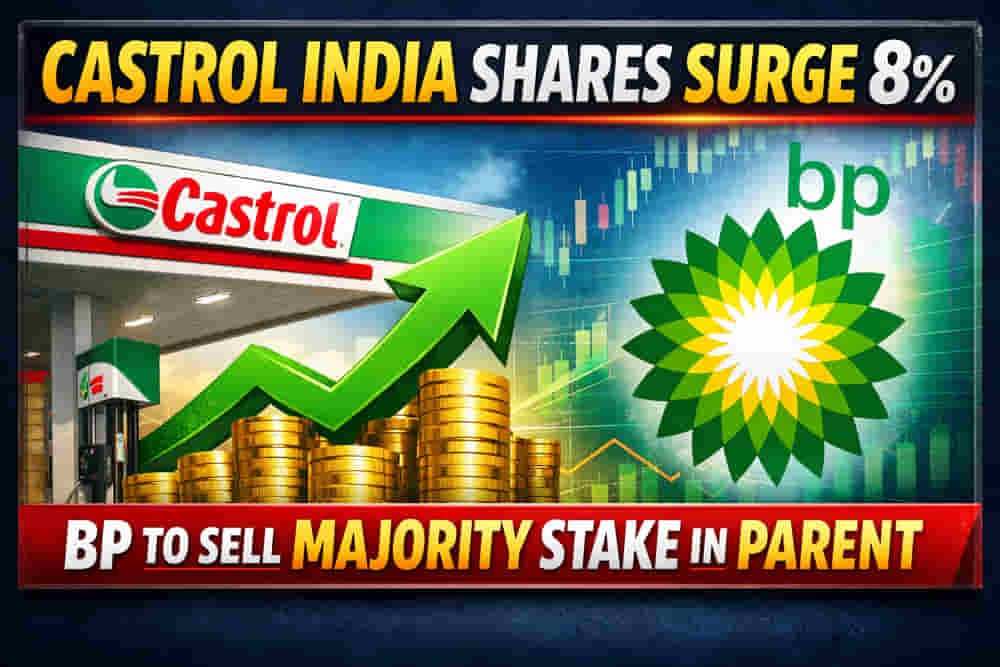
Castrol India Shares Soar on Parent Company Stake Sale News
Castrol India Limited's stock experienced a significant surge, climbing over 8% following the announcement that its parent company, BP, has agreed to sell a majority 65% stake in Castrol to private equity firm Stonepeak. The deal values Castrol at an enterprise value of approximately $10.1 billion.
Strategic Divestment by BP
BP stated that the transaction is expected to generate total net proceeds of around $6 billion for the energy giant. These funds are earmarked for debt reduction, a move that aligns with BP's broader strategy to streamline its business portfolio and concentrate on its core downstream operations. The sale of its controlling stake in Castrol represents a major strategic shift for BP.
Financial Metrics and Valuation
The sale values Castrol at an enterprise value of $10.1 billion, which translates to an EV to trailing twelve months EBITDA (Earnings Before Interest, Taxes, Depreciation, and Amortization) multiple of approximately 8.6x. This valuation reflects a significant financial milestone for the Castrol brand. BP views this divestment as a crucial step in strengthening its balance sheet and simplifying its overall corporate structure.
Market Reaction in India
The news immediately translated into strong investor buying interest for Castrol India Limited, the Indian subsidiary. The shares, which trade on the National Stock Exchange (NSE) and Bombay Stock Exchange (BSE), saw an 8% jump in early trading. This surge reflects investor optimism about the potential implications of the new ownership structure.
Ownership Structure of Castrol India
As of the end of the September quarter, BP held a majority stake in the Indian entity. Other significant shareholders in Castrol India include the Life Insurance Corporation of India (LIC) with a 10% holding, the Government of Singapore with 1.33%, and over five lakh small retail shareholders who collectively own approximately 16.6% of the company. The transaction initiated by BP pertains to the parent entity, but its repercussions are keenly watched by investors in the Indian subsidiary.
Impact
The sale of the majority stake in Castrol by BP to Stonepeak is expected to invigorate the Indian entity. While the immediate stock surge is a positive sign, future performance will depend on Stonepeak's strategy for Castrol, potential operational changes, and how the Indian subsidiary adapts to new ownership. Investors will be looking for clarity on future investment, product development, and dividend policies.
Impact Rating: 8/10
Difficult Terms Explained
- Enterprise Value (EV): A measure of a company's total value, including market capitalization, debt, and subtracting cash and cash equivalents.
- EV/LTM EBITDA Multiple: A valuation metric comparing a company's enterprise value to its earnings before interest, taxes, depreciation, and amortization over the last twelve months. It helps assess if a company is overvalued or undervalued.
- Downstream Operations: Refers to the refining of crude oil into finished products like gasoline, diesel, and lubricants, as well as their marketing and distribution.
- Stakeholding: The ownership interest or claim a person or entity has in a company.
- Private Equity Firm: An investment firm that pools money to invest in private companies or take public companies private.