

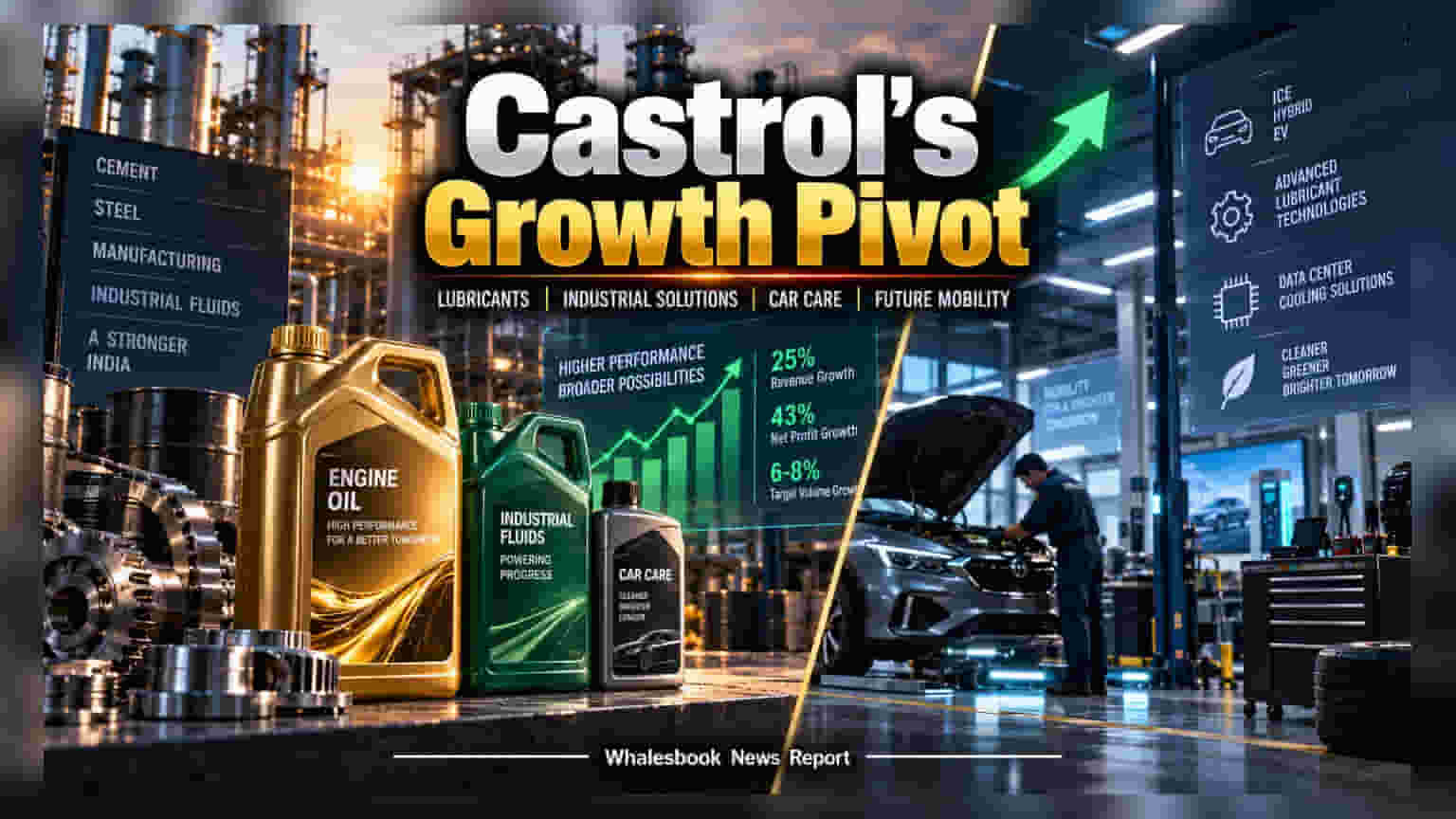
Castrol India is diversifying into industrial and car-care segments to outpace industry growth, following a strong Q2 2026 where net profit jumped 43% to ₹348 crore. The company is now exploring high-tech areas like data center cooling while maintaining its core lubricant business.
Castrol India is aggressively expanding its business portfolio, moving well beyond its traditional role as a motor oil manufacturer. The company recently reported a strong performance for the second quarter of 2026, with revenue rising 25% year-on-year to ₹1,871 crore. Net profit for the same period increased by 43% to reach ₹348 crore, highlighting the company’s ability to drive profitability while navigating a changing automotive landscape.
Under the leadership of Managing Director Saugata Basuray, Castrol is recalibrating its growth strategy to outpace the broader domestic lubricant market. While the industry is seeing annual growth of roughly 3-4%, Castrol aims to achieve annual volume growth between 6% and 8%. This strategy relies on leveraging its distribution network of over 60,000 outlets and shifting focus toward higher-value products.
One of the central pillars of this expansion is the industrial segment. Castrol is increasingly supplying specialized fluids to India's growing cement and steel sectors, capitalizing on the ongoing industrial spending cycle. Alongside this, the company is diversifying into consumer car-care products, such as waxes and polishes, to build a more comprehensive automotive maintenance brand. The company also declared an interim dividend of ₹6.25 per equity share, with a record date of August 11, 2026.
Looking toward future technologies, the company is evaluating an entry into high-tech cooling solutions for data centers. Management has indicated that the company’s global parent organization has already secured approvals linked to hardware used in advanced computing, including Nvidia-certified systems. While these initiatives are currently in the trial phase, they represent a significant pivot from the company's automotive roots. In the mobility space, the management remains pragmatic, anticipating that internal combustion engines, hybrids, and electric vehicles will continue to coexist for a long period, allowing the firm to maintain its relevance across different vehicle types.
However, this strategic pivot comes with distinct challenges. Castrol remains sensitive to commodity price volatility, particularly regarding the cost of Group III base oils, which are essential raw materials for its products. Geopolitical disruptions and forex volatility can put pressure on profit margins. To mitigate these risks, the company is prioritizing a premium product mix and marketing efforts to defend its target EBITDA margin range of 21-24%. Investors will likely monitor how effectively the company can manage these raw material cost pressures and execute its entry into new industrial and technology segments, as the success of this diversification will determine the company's ability to maintain its margin and growth targets.