 Whalesbook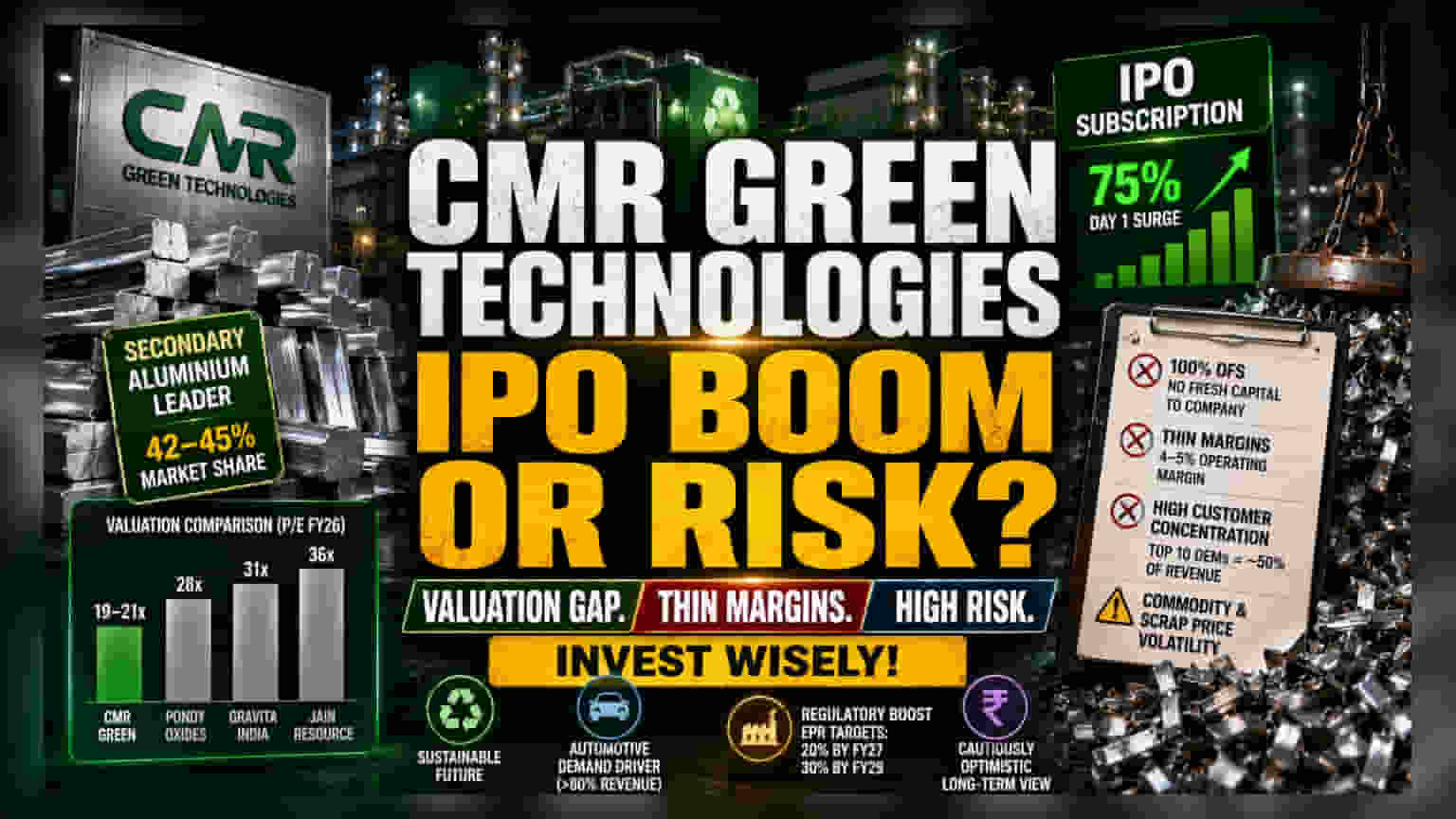


The Valuation Gap
Despite the immediate 75% subscription surge on opening day, the narrative surrounding CMR Green Technologies’ IPO is not purely bullish. The company, which maintains a dominant 42-45% market share in India’s secondary aluminium sector, is currently testing the market’s appetite for a pure Offer for Sale (OFS). Because this is a secondary market exit for existing shareholders, no capital from the ₹630.88 crore raised will flow into the company’s own expansion or debt-reduction efforts. This absence of a fresh issue component has invited scrutiny from analysts who emphasize that the company’s capital structure remains stretched by recent, aggressive infrastructure spending.
The Analytical Deep Dive
Market participants are benchmarking the stock against listed peers like Pondy Oxides, Gravita India, and Jain Resource Recycling. While the issue is priced at approximately 19-21x FY26 annualized earnings—a seemingly lower multiple than peers trading at 28-36x P/E—the discrepancy warrants caution. CMR Green’s thin operating margins, hovering between 4-5%, underscore the high-turnover, low-margin nature of its business. Unlike some of its peers that demonstrate greater profitability, CMR’s financial performance has been historically sensitive to both commodity price volatility and its heavy reliance on the automotive sector, which accounts for over 80% of its revenue.
Structural Weaknesses and Risk Factors
Investors must weigh the company’s operational scale against significant underlying risks. The firm’s historical financial data displays substantial volatility, including a sharp net loss reported in FY24, which management attributed to exceptional items. Furthermore, customer concentration remains a structural concern; nearly half of total sales are derived from a narrow list of top-10 automotive OEMs. This high degree of dependency means any cyclical downturn in vehicle production directly hits the firm’s bottom line. Additionally, the business is highly susceptible to London Metal Exchange price shifts and fluctuations in global scrap metal valuations, which can rapidly compress already narrow margins.
The Future Outlook
Forward-looking sentiment remains cautiously optimistic, driven largely by regulatory shifts. Proposed Extended Producer Responsibility (EPR) mandates, which may require automotive manufacturers to utilize at least 20% recycled materials by FY27 and 30% by FY29, provide a structural floor for long-term demand. Brokerage consensus suggests that if the company successfully improves its product mix and continues to leverage its 13-facility network, it may achieve better fixed-cost absorption. However, market experts maintain that the current valuation, while attractive on a relative basis, requires investors to possess high tolerance for the cyclicality inherent in the metal recycling trade.