

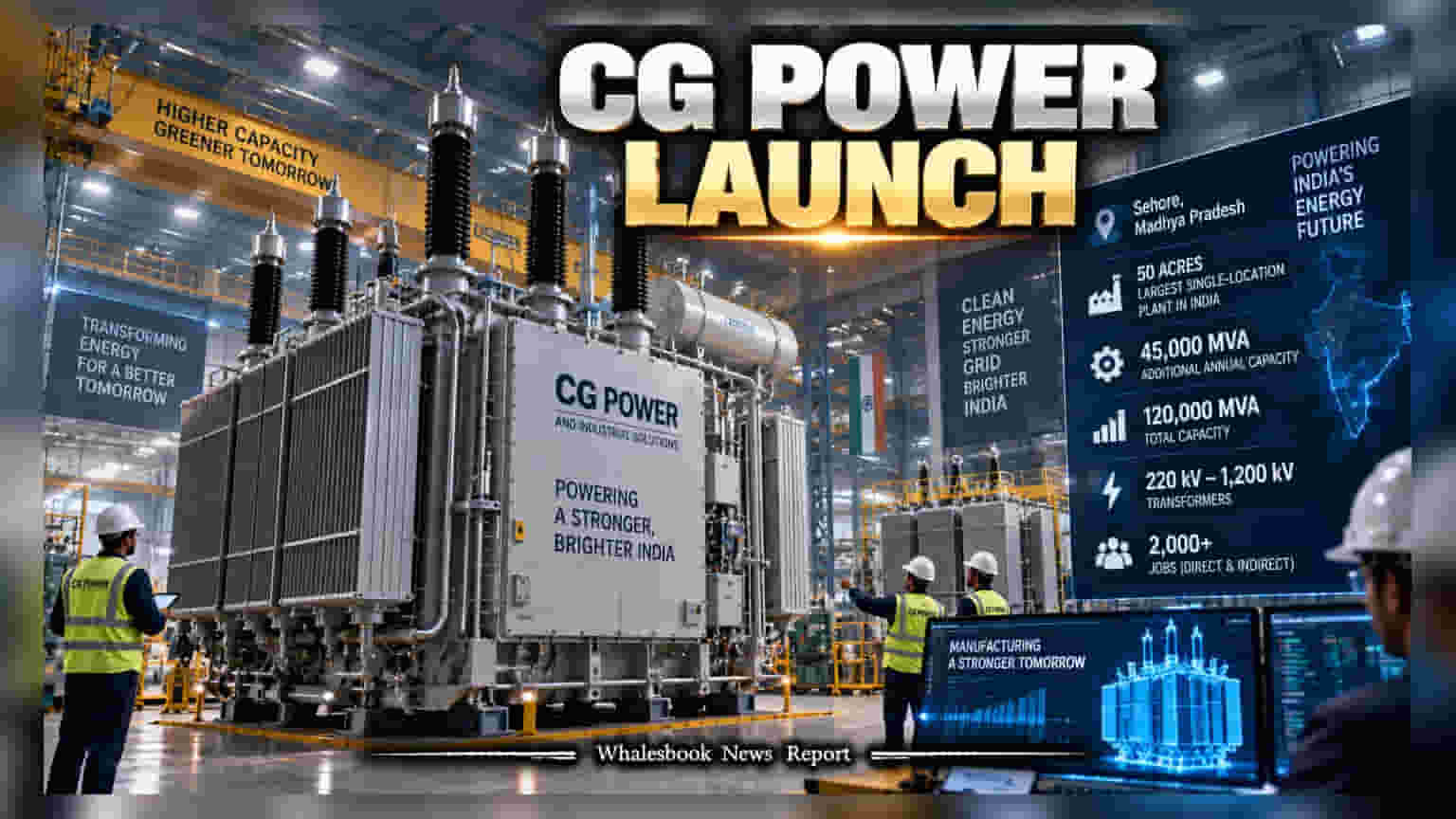
CG Power and Industrial Solutions has launched a new 50-acre transformer manufacturing facility in Sehore, Madhya Pradesh, with a ₹792 crore investment. This expansion increases the company's total annual capacity to 120,000 MVA, helping it meet rising demand from sectors like renewable energy and data centers.
CG Power and Industrial Solutions has officially started operations at its new power transformer manufacturing plant in Sehore, Madhya Pradesh. This 50-acre facility marks a major expansion for the company, as it is now the largest single-location plant of its kind in India. The unit reached this operational stage in approximately 13 months after the foundation stone was laid.
The new plant adds an annual production capacity of 45,000 MVA to the company, bringing its total manufacturing capacity for power transformers to 120,000 MVA. The factory is designed to produce units ranging from 220 kV to 1,200 kV, aiming to serve both domestic requirements and international markets. With a monthly output capacity of 35 units, the plant is positioned to capture demand from critical infrastructure sectors, including railways, data centers, and the growing renewable energy industry.
From a financial and strategic perspective, this project involved an investment of ₹792 crore. For investors, this represents a significant capital allocation aimed at long-term capacity building. As energy demand in India continues to rise, having the infrastructure ready to support grid upgrades and transmission expansion is a key part of the company's growth strategy. The project is also expected to create over 2,000 direct and indirect jobs, contributing to regional industrial growth.
While the expansion strengthens the company's production scale, investors may watch how the management handles the risks associated with such large-scale projects. Like other industrial players, CG Power faces potential pressure on profit margins from raw material price inflation. Managing a new, large facility involves operational complexities, and maintaining efficiency while scaling up production is essential. Additionally, the company's move into broader energy equipment markets means it will need to keep a close watch on working capital requirements, as large manufacturing setups can sometimes tie up cash flow during periods of high material costs or project delays.
Moving forward, the primary factor for investors will be how quickly the plant reaches full production efficiency and how effectively it can secure new orders to utilize this increased capacity. Market analysts and shareholders will likely monitor upcoming quarterly reports to see how the new facility impacts revenue growth and whether the company can maintain stable operating margins despite the intense capital investment.