

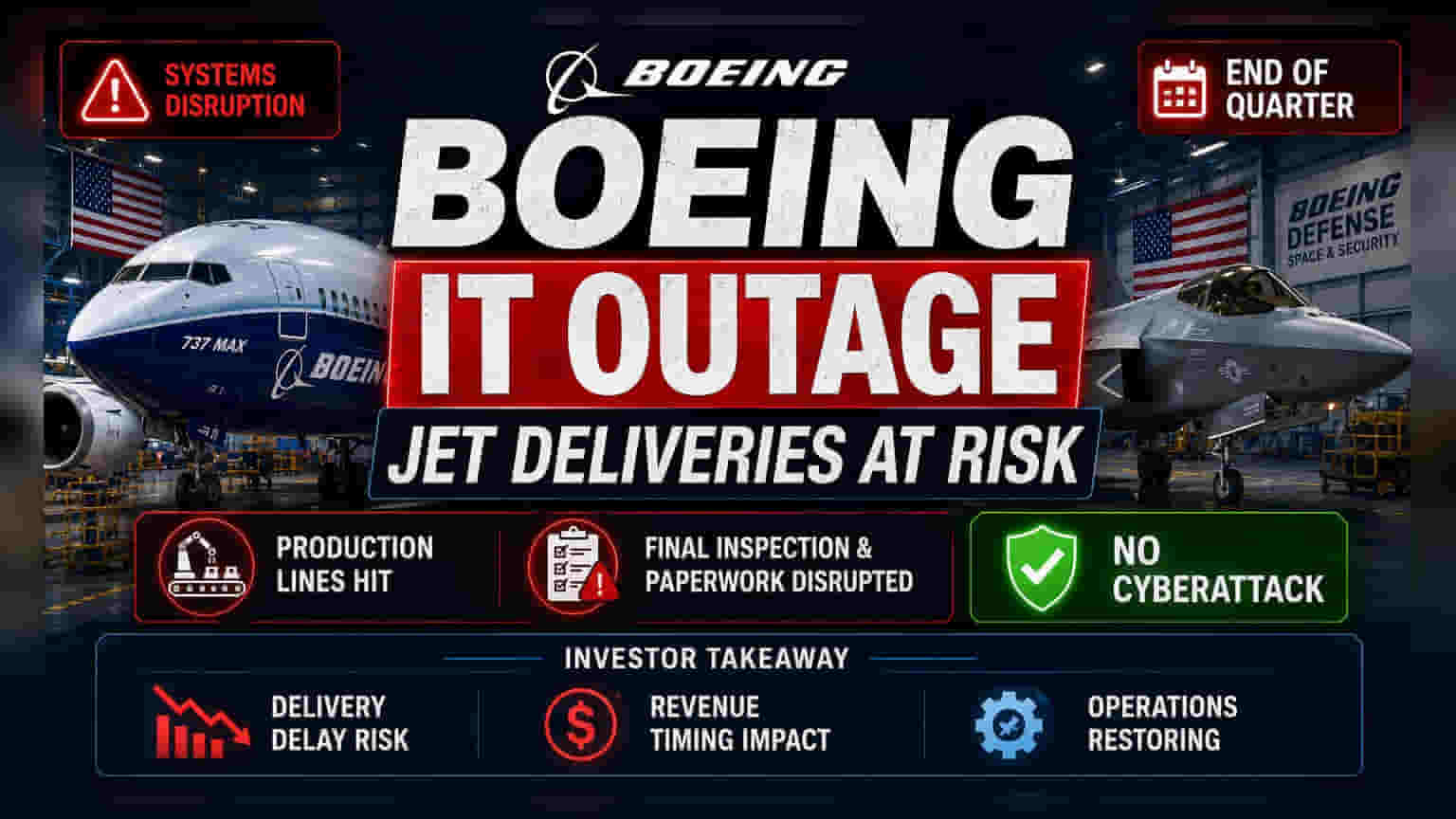
A major IT outage at Boeing halted critical commercial jet inspections and production lines during the end-of-quarter window. While the aerospace giant ruled out cyberattacks, the disruption impacted final delivery processes. Investors are now tracking how the downtime affects reported delivery numbers and operational efficiency for the quarter.
What Happened
Boeing, one of the world's largest aerospace manufacturers, confirmed a major IT systems disruption on Tuesday that impacted its commercial and military production lines. The outage specifically hit computer applications essential for final jet inspections and the administrative paperwork required for aircraft deliveries.
The disruption occurred at a sensitive time, coinciding with the end of the quarter—a period when manufacturers typically push to complete and deliver finished goods to meet financial targets. Boeing has officially stated that the cause of the outage is understood and has explicitly ruled out any connection to a cyberattack. The company's IT team is currently focused on restoring full operations.
Why Delivery Delays Matter
In the aerospace industry, the timing of jet deliveries is critical. Revenue is typically recognized by manufacturers only when the aircraft is formally handed over to the customer. Because the IT failure hampered the final inspection and paperwork process, it created a bottleneck on the final day of the quarter. While some deliveries were completed, the disruption may have impacted the total volume of aircraft handed over to airlines and government clients within the reporting period.
For investors, this raises questions about operational efficiency. Large industrial manufacturers rely on complex, interconnected IT systems for everything from inventory management to regulatory compliance. Any technical failure, even if not security-related, can lead to missed targets and potential cash flow delays.
The Supply Chain Perspective
Boeing operates a vast global supply chain, including significant partnerships and manufacturing units in India. Indian companies such as Tata Advanced Systems and Dynamatic Technologies, among others, contribute to the supply chain by manufacturing aero-structures and critical components for Boeing’s platforms.
While this specific outage appears to be an internal technical issue at Boeing rather than a failure of external suppliers, disruptions at the original equipment manufacturer (OEM) level can ripple across the sector. If final assembly or inspection is delayed, it can lead to a buildup of components or inventory at the supplier level. However, without further details on the duration of the impact, the downstream effect on Indian suppliers remains speculative.
Operational Resilience and IT Risk
One positive aspect for investors is the quick clarification from the company that no cyberattack was involved. Cybersecurity incidents often lead to prolonged downtime, data breaches, and heavy regulatory scrutiny, which can cause significant stock price volatility. By clarifying that the issue is not related to a security breach, Boeing has attempted to maintain stability and focus on the technical restoration of its systems.
Nonetheless, the event highlights the fragility of relying on centralized IT systems for high-stakes manufacturing. As companies move toward greater automation and digital integration in their production lines, IT resilience becomes a key operational risk factor that shareholders should consider.
What Investors Should Track
Investors may monitor the following to understand the impact:
- Delivery Updates: Watch for official company reports on total deliveries for the quarter to see if the outage caused any meaningful shortfall.
- Operational Recovery: Any further delays or extensions in the downtime could indicate deeper technical problems than initially suggested.
- Management Commentary: Look for future updates or earnings calls where the company may discuss the impact of this outage on quarterly financial recognition.
- Sector Sentiment: Continued IT reliability issues in the broader industrial goods sector could influence how the market values operational risk.