

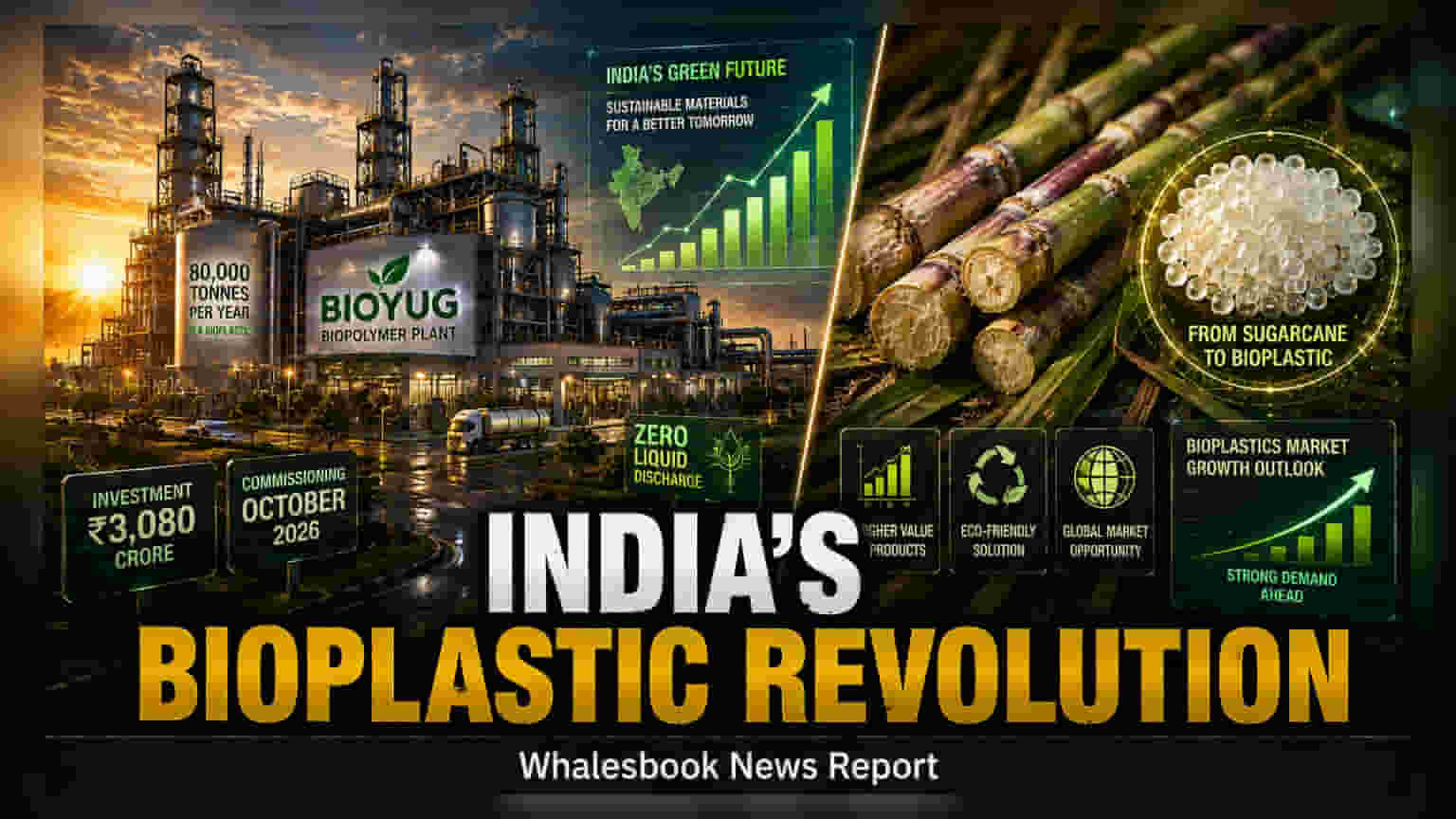
Balrampur Chini Mills will inaugurate its ₹3,080 crore biopolymer facility in Uttar Pradesh this October, aiming to produce 80,000 tonnes of bioplastic annually. While the project signals a strategic shift, investors are tracking this move against recent sector-wide margin pressure, which led to a 14.5% decline in the company's Q1 FY27 profit.
Balrampur Chini Mills Limited is preparing to commission its major biopolymer manufacturing facility in Lakhimpur Kheri, Uttar Pradesh, this October. The project, known as 'Bioyug', represents an investment of ₹3,080 crore and is set to become India's first industrial-scale plant dedicated to producing Polylactic Acid (PLA)-based bioplastics. The facility is designed to convert locally sourced sugarcane into 80,000 tonnes of bioplastic annually, utilizing a Zero Liquid Discharge system to minimize environmental impact.
The project is a significant step in the company's efforts to diversify its revenue stream beyond traditional sugar production. By integrating the production of eco-friendly materials directly with its sugar operations, the company aims to move toward higher-value products. The plant's readiness was recently reviewed by district officials, confirming that the site is on track for its scheduled operational start.
However, this new venture comes at a time when the broader sugar sector is navigating significant headwinds. In its latest financial update for Q1 FY27, Balrampur Chini Mills reported a net profit of ₹44.1 crore, which reflects a 14.5% decline compared to the previous year. This performance has been impacted by industry-wide challenges, including government-imposed restrictions on sugar exports and caps on stock holdings. Furthermore, the central government's decision to permit duty-free imports of up to 10 lakh tonnes of raw sugar to stabilize domestic prices has intensified pricing pressure, affecting profit margins for domestic producers.
For investors, the success of this biopolymer plant will depend on several factors beyond just the launch. The immediate challenge involves successfully executing a first-of-its-kind large-scale manufacturing process for PLA in India. Because bioplastics are often more expensive to produce than traditional petroleum-based plastics, achieving cost-efficient production and securing stable demand for the final output will be essential for the project's long-term financial viability.
Moving forward, the primary monitorables for stakeholders will be the pace of production ramp-up at the Lakhimpur Kheri facility and whether the new venture can offset the volatility seen in the core sugar business. Investors will also look for management commentary on how the company plans to manage its margins while balancing the high capital spending required for this new green manufacturing milestone.