

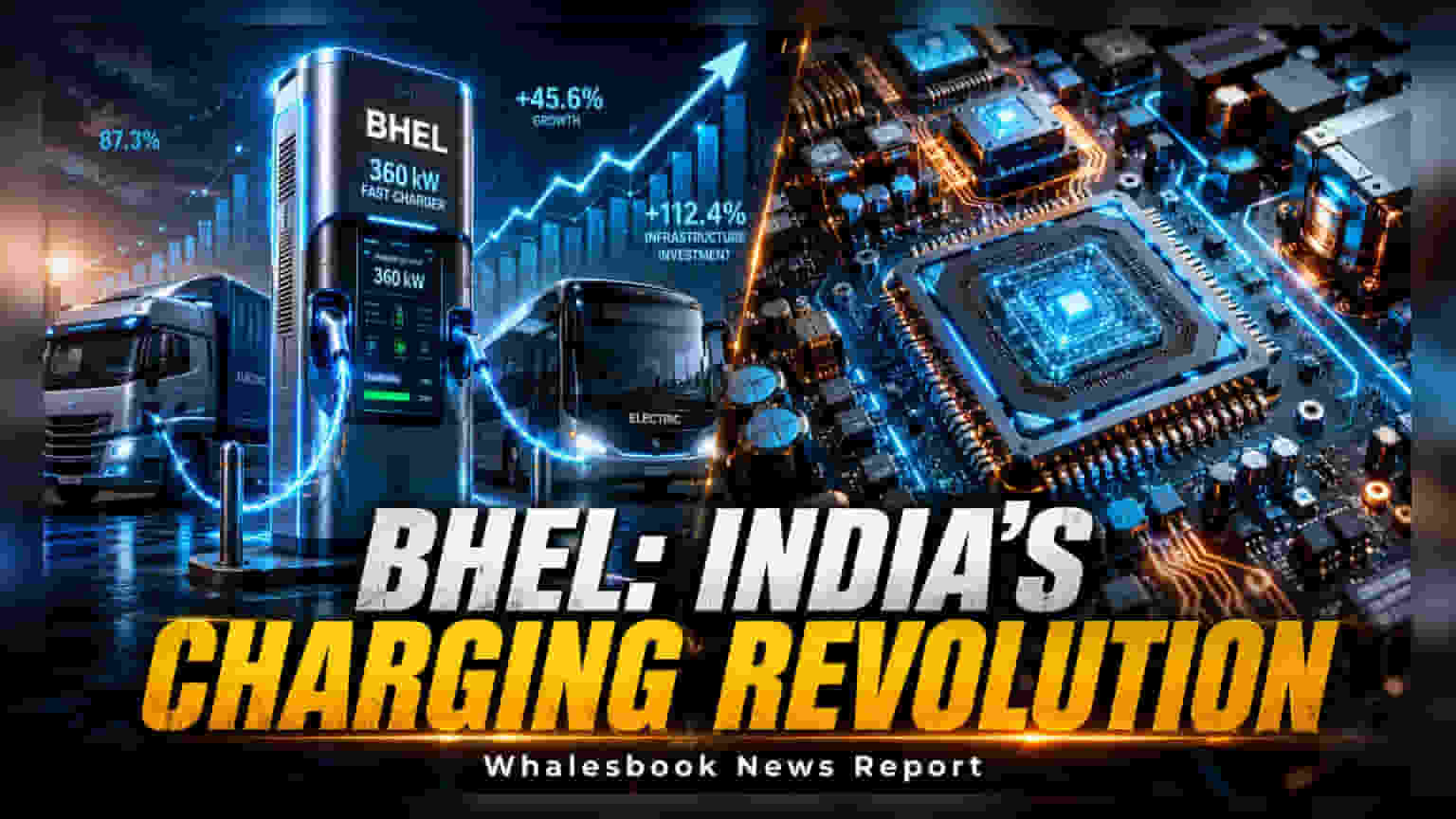
Bharat Heavy Electricals Ltd (BHEL) is developing India’s first indigenous 360 kW fast charger for electric buses and trucks. This initiative aims to strengthen the domestic EV supply chain under a government-backed flagship program. Success depends on the company's ability to localize key components like semiconductors.
Bharat Heavy Electricals Ltd (BHEL) has announced the development of 360 kW fast chargers, a significant expansion of its existing power electronics portfolio. Designed specifically for heavy-duty electric commercial vehicles like trucks and buses, these units are expected to reduce charging times, a critical factor for the operational efficiency of fleet operators. This project is part of a broader government initiative under the Ministry of Electronics and Information Technology to build an self-reliant electric vehicle infrastructure in India.
Strategic Diversification for BHEL
BHEL is historically known for its core business of manufacturing boilers, turbines, and large-scale power plant equipment. As the global and domestic energy landscape shifts toward non-fossil fuels, the company is diversifying into the EV ecosystem to reduce its long-term reliance on traditional power sector orders. While BHEL currently manufactures 60 kW and 122 kW chargers, the move to 360 kW technology represents a shift toward the high-capacity segment required for commercial transport. For investors, the ability of the company to transition its manufacturing expertise from heavy industrial equipment to specialized electronic hardware remains a key area to watch.
Competitive and Technical Challenges
BHEL faces an established market with several domestic and international participants. Peers such as Exicom and Servotech Power Systems Ltd already provide charging infrastructure, while global corporations like ABB India and Delta Electronics have a long-standing presence in high-power charging solutions. Beyond market competition, technical hurdles regarding localization persist. High-power chargers require advanced components such as Silicon Carbide (SiC) semiconductor dies and specialized chipsets. Currently, these high-end electronic parts are often imported. Achieving true self-sufficiency will require BHEL to manage supply chain risks effectively, as reliance on imported components could potentially impact profit margins or project timelines if global supply issues arise.
Investor Monitorables
For those tracking the company’s progress, the next steps include the transition from prototype development to commercial-scale manufacturing. Investors may look for updates on project execution timelines, the degree of localization achieved in the final product, and the company's ability to secure orders in a competitive environment where operational downtime and charging speed are the primary metrics for commercial clients. Additionally, the success of this project will likely be influenced by the government's future policy support for electric truck and bus financing, which is expected to drive demand for such high-capacity charging infrastructure.