

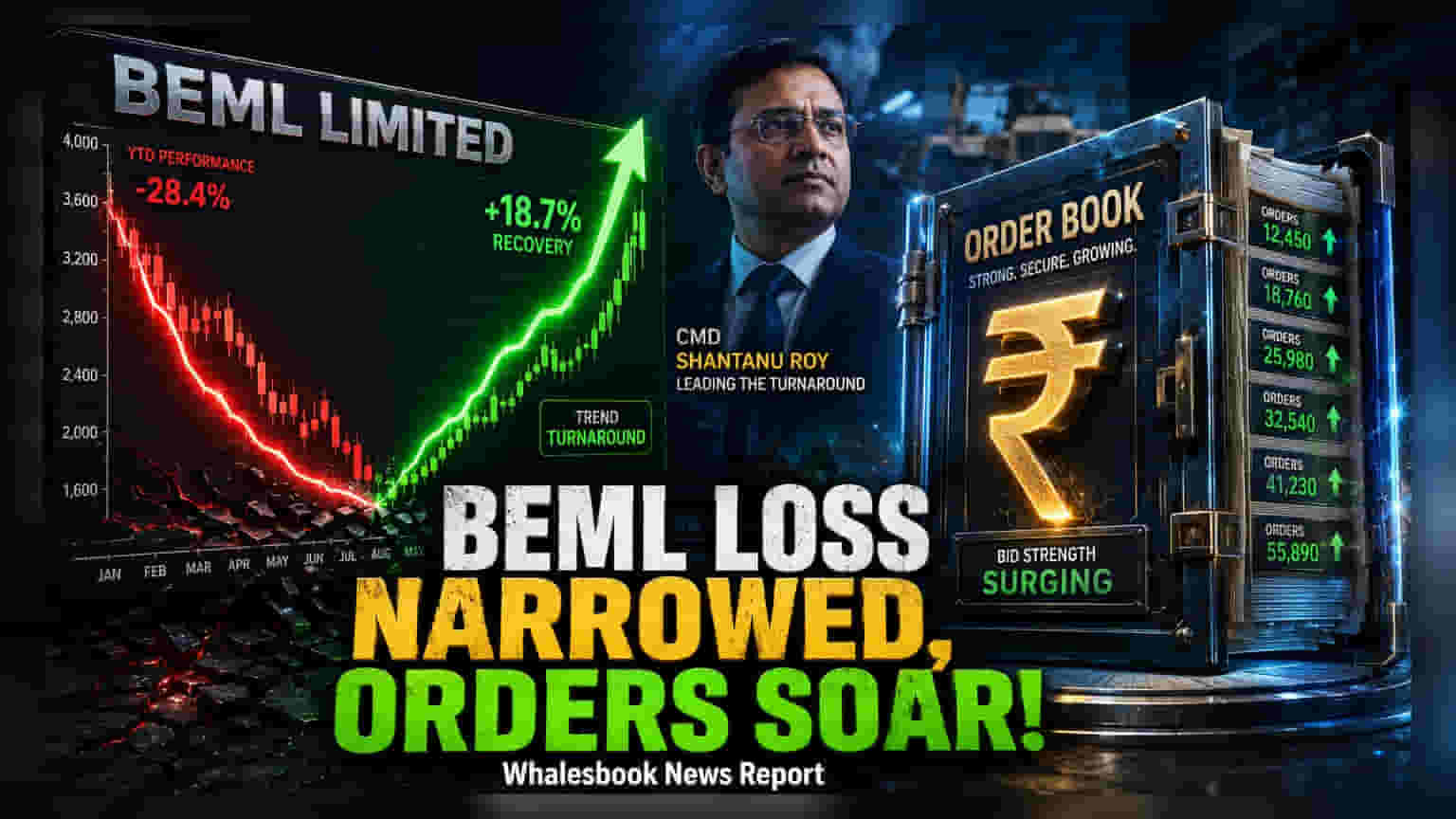
State-owned BEML reported a net loss of ₹27.01 crore for the June quarter, an improvement from the previous year. Revenue grew 29% to ₹820 crore, while the company secured fresh orders worth ₹1,181 crore. Investors may monitor whether the company can sustain this momentum amid high finance costs, thin profit margins, and reported governance concerns.
BEML Limited's latest financial results for the first quarter of FY27 show signs of operational recovery. The company reported a net loss of ₹27.01 crore for the period ending June 30, 2026, which is a notable reduction from the ₹64.11 crore loss recorded in the same quarter of the previous year. This narrowing of losses comes alongside a 29% year-on-year growth in revenue, which reached approximately ₹820 crore.
Milestone in Operating Profit
A key highlight for the company this quarter was achieving a positive EBITDA (operating profit) of ₹3 crore. While the absolute amount is modest, it is a significant milestone as it marks the first time in a decade that the company has turned profitable at the operating level during a first quarter, which is typically a slower period for industrial and infrastructure-linked businesses. This indicates improved efficiency in its core operations.
Strong Order Visibility
BEML's long-term growth outlook remains supported by a robust pipeline of work. The company secured new orders worth ₹1,181 crore during the quarter, representing a sharp 172% increase compared to the same period last year. This brings the total order book to ₹16,284 crore, providing the company with clear revenue visibility for the coming years. Furthermore, the board has recommended a final dividend of ₹12.28 per share for FY26, signaling confidence in the company's capital allocation.
Financial Health and Operational Risks
While the top-line growth and order wins are positive, there are areas of concern for investors. The company has made progress in reducing its total borrowings, which fell to ₹532.67 crore from ₹707.24 crore a year ago. Despite this, finance costs surged by 41.39% during the quarter. This indicates that servicing its existing debt remains a strain on the company's financials.
Additionally, profit margins remain razor-thin. The EBITDA margin stands at just 0.26%, which is significantly lower than the 16% sustainable target management has previously discussed. The company is also facing challenges with working capital, as rising trade receivables continue to impact cash flow. Beyond these operational factors, analysts have flagged concerns regarding corporate governance, specifically noting the current absence of a full complement of independent directors on the board.
Looking ahead, the primary focus for the company will be translating its large order book into healthy cash flows. Investors may track whether BEML can effectively control its finance costs and whether it can improve its profit margins to align more closely with its long-term operational targets.