

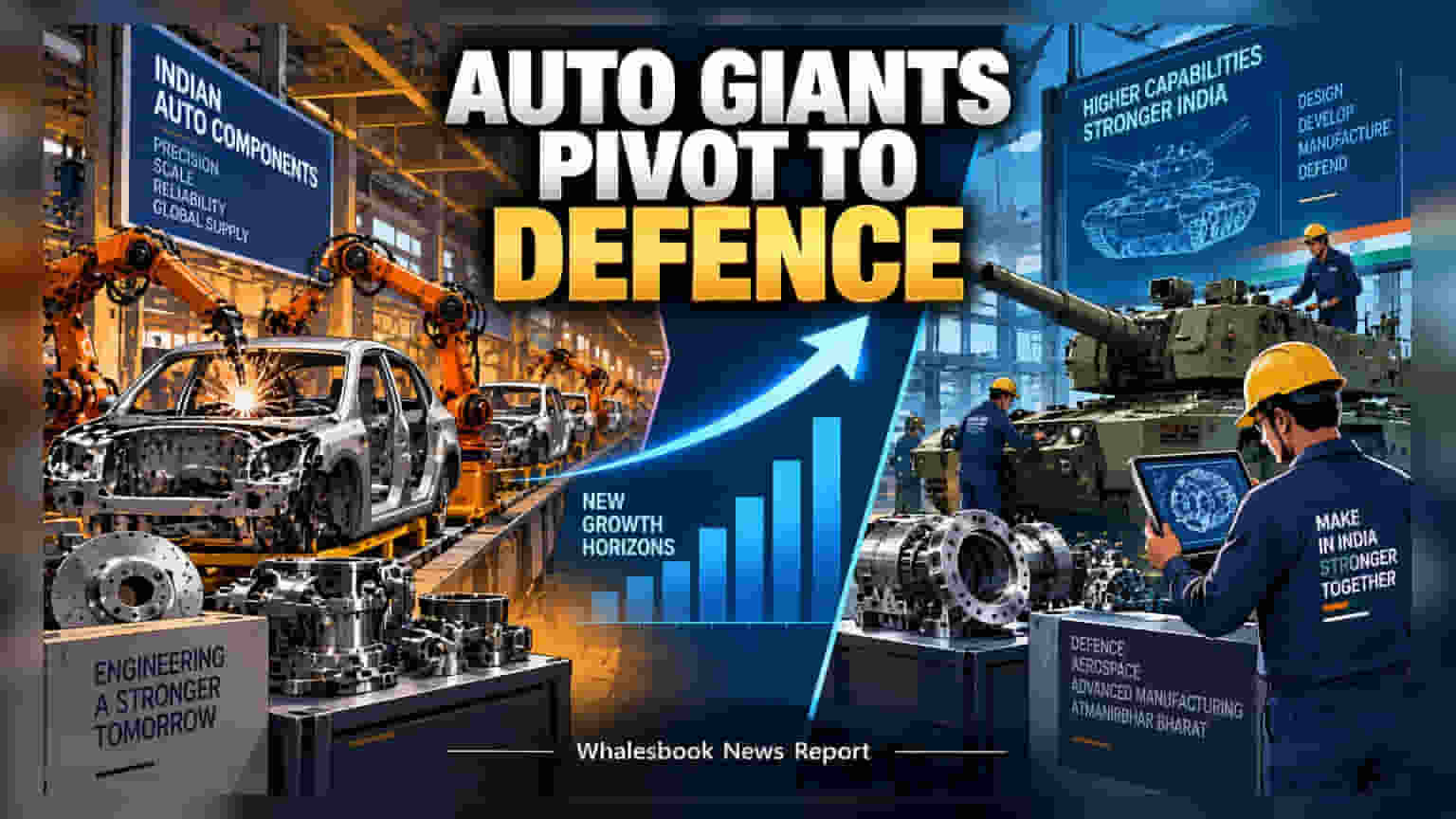
Indian auto component companies are shifting toward defence manufacturing to tap into domestic indigenization. While they possess the engineering skills, investors should remain cautious as defence orders typically involve multi-year qualification timelines, heavy capital spending, and slower revenue cycles compared to the automotive business.
Indian auto component manufacturers are increasingly looking at the defence sector as a new area for growth. Driven by the government's push to indigenize military equipment production, many companies that traditionally supply car and truck parts are now attempting to adapt their existing factories to make defence hardware. The logic behind this move is straightforward: precision engineering.
At a factory level, the technical requirements for high-quality automotive components—such as metal forging, casting, and machining to fine tolerances—closely match the needs of defence and aerospace manufacturing. Because these firms already possess the infrastructure and the expertise to maintain consistent quality and safety standards, the jump to military-grade production seems logical on paper. Companies are essentially betting that their ability to mass-produce reliable parts can be repurposed for a sector where reliability is the most important factor.
However, the reality of the defence business is vastly different from the high-volume, relatively predictable automotive supply chain. Investors should note that the path to generating consistent revenue from defence is steep and slow. Unlike the automotive sector, where a contract can lead to production within months, the defence industry is governed by complex regulatory hurdles. Obtaining necessary certifications, such as those for aerospace and military-grade parts, can take years. A company cannot simply switch its production line from automotive parts to artillery components without significant upfront money spent on machinery, testing, and compliance.
Another challenge is the nature of the client base. Defence procurement is predominantly led by government agencies and the Ministry of Defence, which often operate with long decision-making cycles and rigorous, multi-stage testing processes. This means that even after a company secures an initial order or signs a Memorandum of Understanding, the actual conversion of that order into reported revenue on the balance sheet can be a slow process. This creates a gap between market excitement and actual financial performance.
For investors, the most critical task is distinguishing between companies that are merely exploring the sector and those that are already delivering on orders. Established players, such as Bharat Forge, have spent years developing their defence capabilities and have clearer evidence of revenue contribution. In contrast, firms that have recently entered the space or are only in the planning stage carry higher uncertainty. The risk for these companies is that heavy spending on expansion may put pressure on their cash flow and debt levels long before the defence business becomes profitable.
Moving forward, the primary monitorable for investors is the actual execution of the order book rather than the signing of new contracts. It is essential to track whether a company has successfully transitioned from the testing phase to commercial production. Without clear data on revenue recognition from defence projects, the excitement around this sector shift may not immediately translate into improved bottom-line results.