

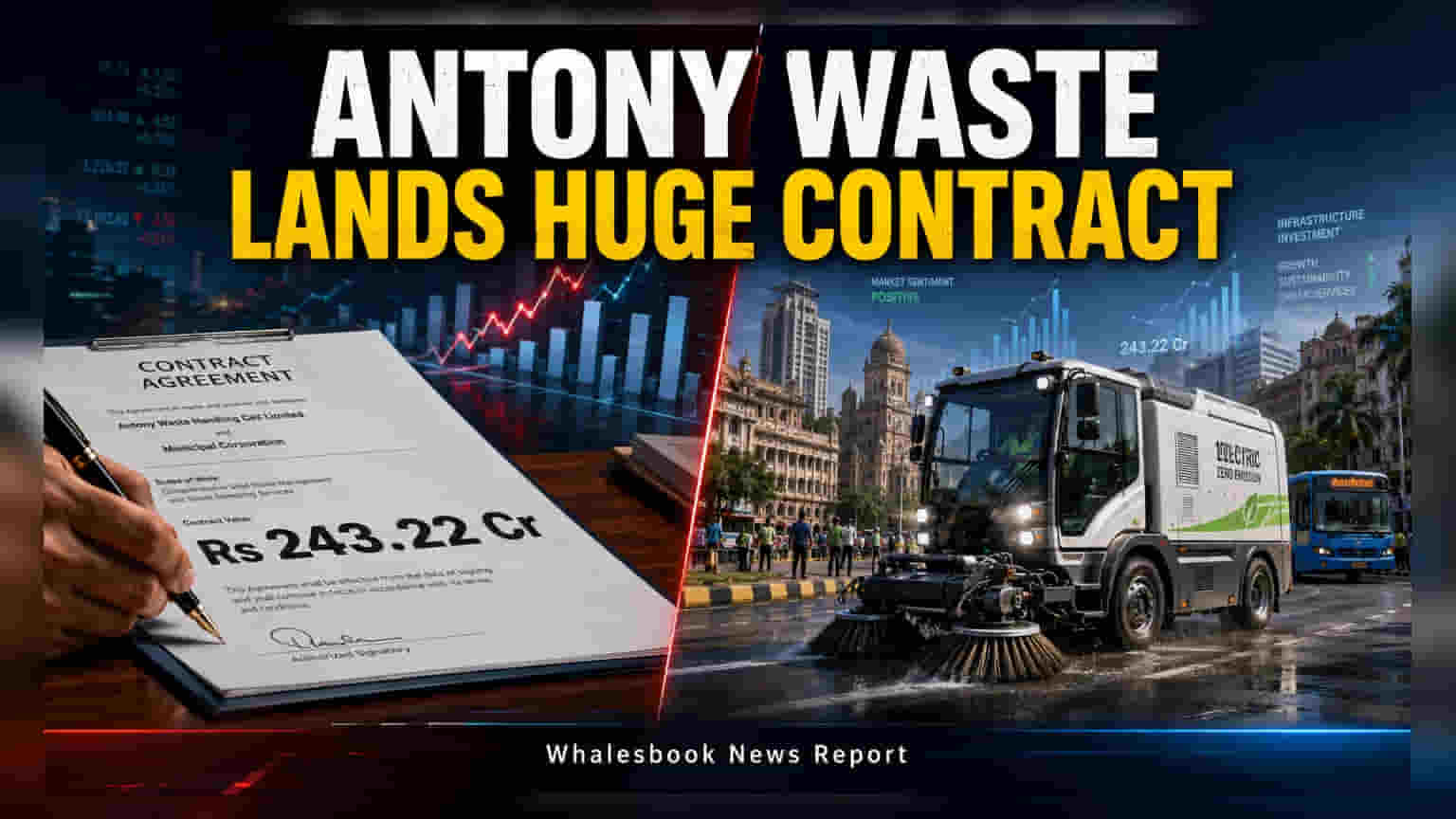
Antony Waste Handling Cell has secured a Rs 243 crore waste management contract from the Greater Noida authority. Despite this new order, the company's shares dropped over 6% on Tuesday as investors reacted to weak first-quarter financial results, with profit after tax falling sharply to Rs 0.7 crore.
Antony Waste Handling Cell, a provider of integrated waste management services, has secured a five-year contract valued at Rs 243.22 crore from the Greater Noida Industrial Development Authority (GNIDA). Under this agreement, the company is tasked with managing electric mechanical road sweeping operations and maintenance in the East Zone of Greater Noida. This contract includes an option for a two-year extension, potentially offering the company longer-term revenue visibility.
However, the stock market reaction to this announcement was negative. Antony Waste shares declined over 6% on Tuesday, August 11, 2026, as investors shifted their attention to the company’s first-quarter financial results, which were released alongside the contract news. While the company reported a 6% year-on-year increase in operating revenue to Rs 269 crore, the profit performance disappointed the market.
The company’s profit after tax dropped significantly to Rs 0.7 crore for the quarter ended June 30, 2026, down from Rs 23 crore in the same quarter last year. This decline in profitability was driven by rising operating costs. The company faced increased expenses related to vehicle hiring and transportation at its project sites. Additionally, deferred waste disposal costs from the previous quarter added to the financial burden during this period.
A portion of the lower profit was due to a one-time expense of Rs 7 crore for the early repayment of a term loan for the company’s renewable energy division. While this prepayment was a strategic move to lower debt costs, resulting in a 200 basis point reduction in interest rates to 8.25%, it caused an immediate impact on the quarterly bottom line.
Looking ahead, the company faces several operational and financial challenges. The waste management sector often faces pressure from rising operating expenses, which can squeeze profit margins. Investors are concerned about the company’s ability to manage costs effectively while scaling up its operations. The reliance on large municipal contracts also introduces concentration risk, as the company’s financial health is heavily tied to the successful execution of these specific projects.
The next important update for investors will be how the company improves its operating margins in the coming quarters. While the new Greater Noida contract provides a steady stream of work, the focus will remain on whether the company can control costs, maintain healthy profit margins, and deliver consistent earnings growth. The market will likely look for signs of improved operational efficiency in the next financial reports to justify a recovery in the stock price.