

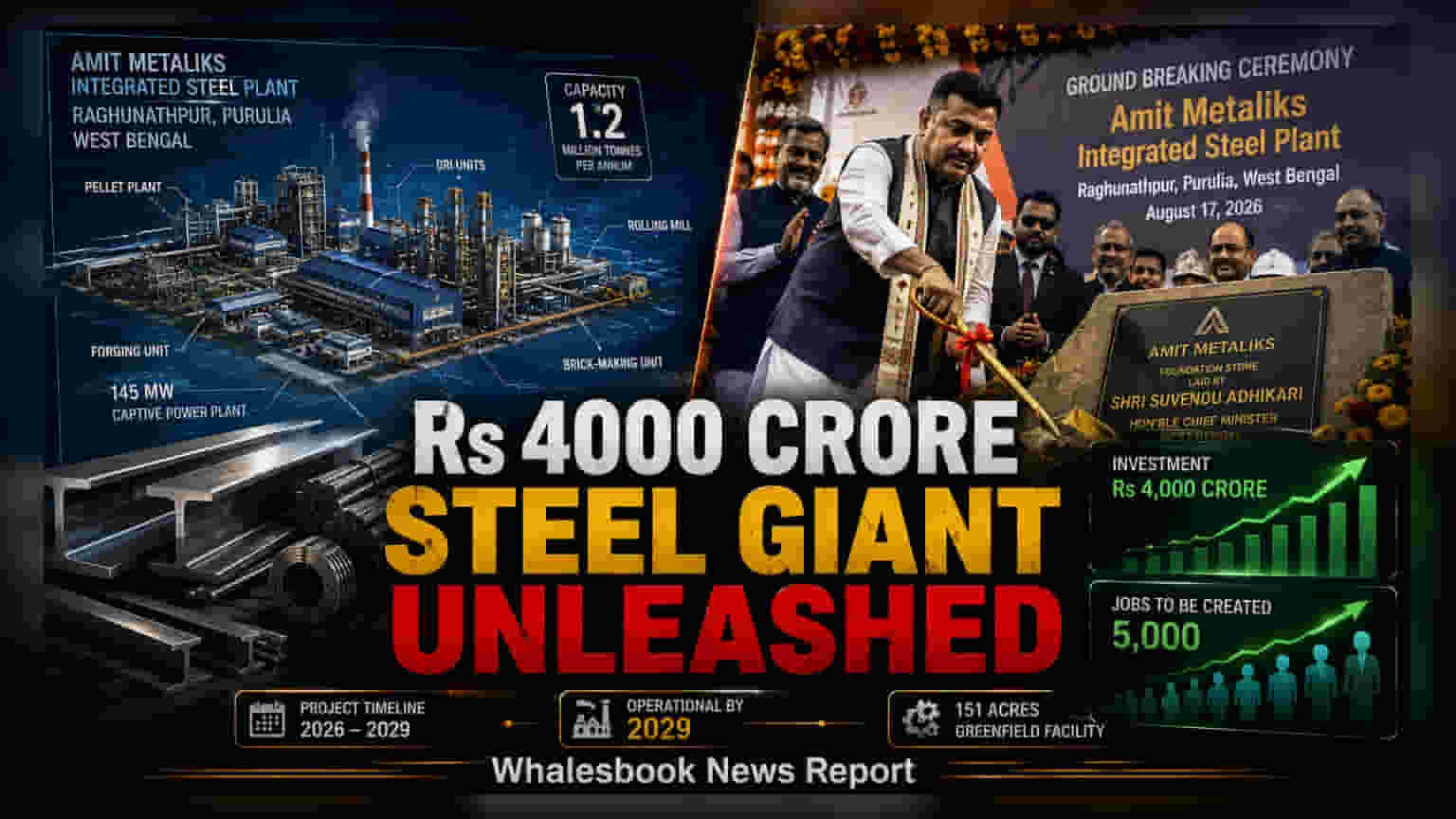
Amit Metaliks has officially begun work on a Rs 4,000 crore integrated steel manufacturing facility in Raghunathpur, West Bengal. With a targeted annual capacity of 1.2 million tonnes and operations expected to start by 2029, the project represents a significant expansion for the company. Investors may track how this heavy capital spending impacts the company’s debt levels and future financial flexibility.
Amit Metaliks has officially launched the construction of its new integrated steel manufacturing project in Raghunathpur, Purulia district. West Bengal Chief Minister Suvendu Adhikari laid the foundation stone on Monday, August 17, 2026. This Rs 4,000 crore investment is a major milestone for the company, as it aims to significantly boost its production capacity and industrial footprint in the region.
Project Scope and Timeline
The planned greenfield facility is spread across approximately 151 acres. It is designed to have an annual steel production capacity of 1.2 million tonnes. The integrated nature of the plant means it will house several essential units on-site, including a pellet plant, direct reduced iron (DRI) units, a rolling mill, forging facilities, and brick-making units. Additionally, the project will feature a 145-MW captive power plant to support its energy needs. According to the company's timeline, the plant is expected to become operational by 2029.
For investors, a project of this scale brings both long-term growth potential and short-to-medium-term financial considerations. The company's ability to execute this project within the planned timeframe and budget will be a key area for monitoring. Large-scale construction projects in the steel sector often carry the risk of cost overruns and delays due to external factors like raw material price fluctuations, supply chain bottlenecks, and the complexity of assembling such a large industrial setup.
Financial and Strategic Context
When a company undertakes a project of this magnitude, it typically involves a mix of internal cash and borrowed funds. Investors often analyze how such a large capital expenditure (capex) affects the company's balance sheet, particularly regarding debt levels and cash flow. Since the steel industry is cyclical, meaning it experiences periods of high demand and price fluctuations, the management’s strategy for funding this expansion is critical. Maintaining financial health while investing heavily is a standard challenge for growing industrial companies.
Furthermore, the government’s focus on fostering industrial investment in West Bengal could provide a supportive policy environment, but the success of the plant will ultimately depend on market demand for steel and the company's operational efficiency. The project is also expected to create approximately 5,000 jobs, which aligns with the state’s current industrial policy emphasis on local employment generation.
Moving forward, market participants will likely keep a close watch on future exchange filings regarding project milestones, funding arrangements, and any updates on the commissioning schedule. The long gap until the 2029 operational date means that investors will need to track the company’s regular quarterly updates for any signs of pressure on profit margins or changes in the capital spending plan.