

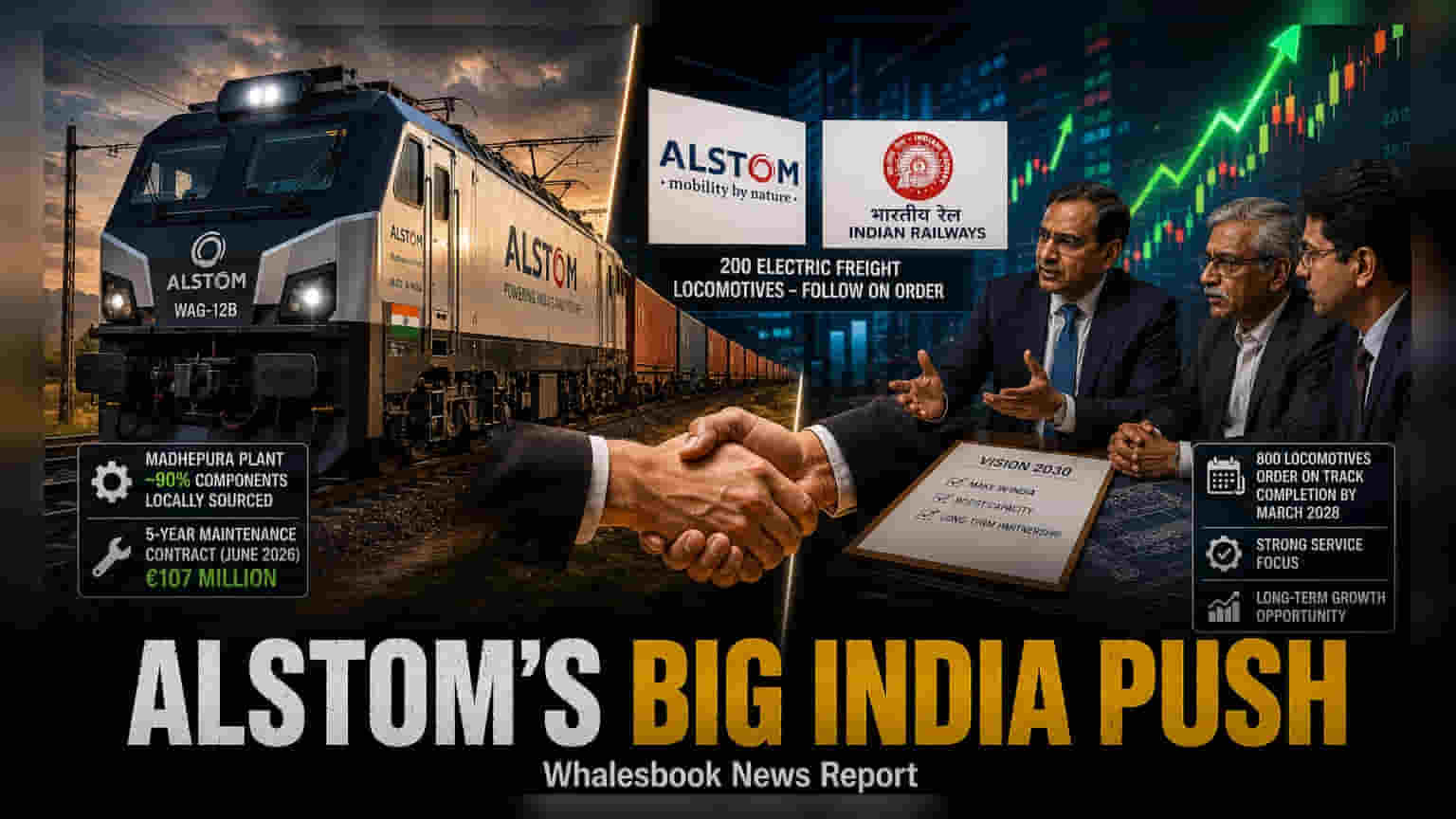
French train manufacturer Alstom is pursuing an additional order for 200 electric freight locomotives from Indian Railways to follow its ongoing 800-locomotive contract ending in 2028. This move aims to sustain capacity at its Bihar-based plant while deepening local supply chains.
Alstom is engaging in discussions with Indian Railways for a follow-on order of 200 electric freight locomotives. The company aims to secure this new contract to ensure its manufacturing facility in Madhepura, Bihar, continues to operate efficiently once the current order is fulfilled. The existing contract for 800 locomotives is on track to be completed by March 2028.
Building on Localization and Maintenance
The Madhepura plant has reached a significant milestone in local production, with approximately 90% of components now sourced within India. Alstom is currently working to replace remaining imported items, such as wheels and axles, with domestic alternatives. The company has entered into talks with potential local suppliers like Ramkrishna Forgings to support this transition, though this relies on the railway company awarding the additional locomotive order.
Beyond new manufacturing, Alstom has been expanding its service footprint in the country. In June 2026, the company secured a five-year maintenance contract valued at €107 million for 250 WAG-12B locomotives, highlighting a strategy to focus on long-term service agreements alongside initial vehicle supply.
Investor Perspective on Execution and Margins
For investors, the primary monitorable for Alstom involves balancing revenue growth with profitability. While the company reported record global order intake of €27.6 billion in the fiscal year 2025/26, its financial performance in the rolling stock segment has faced pressure from execution headwinds. Projects of this scale often involve complex manufacturing requirements, and any delays or cost increases can directly impact operating profit margins.
The railway manufacturing sector in India remains highly competitive. Alstom’s standalone operating margins have historically been moderated by legacy fixed-price contracts, which offer limited flexibility when raw material or logistics costs fluctuate. While a new order would provide long-term visibility for the Madhepura plant, the financial impact will depend on the terms of the contract and the company's ability to maintain efficient project execution without significant cost overruns.
Investors may look for updates on the order approval from Indian Railways, as well as management commentary regarding how future contracts are structured to protect profit margins against potential supply chain or inflationary pressures.