 Whalesbook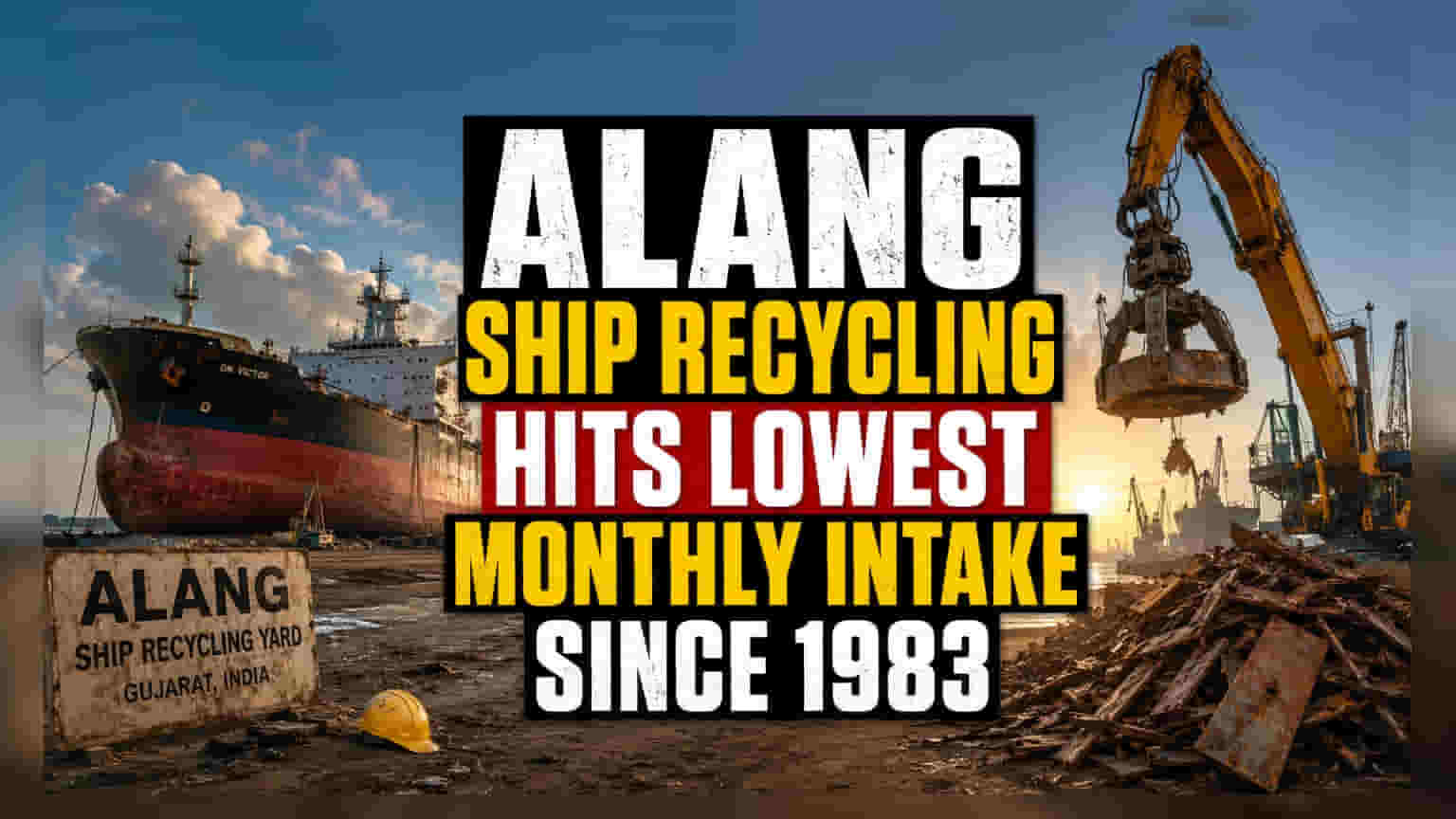


The world's largest ship recycling hub in Alang, Gujarat, has seen arrivals drop to just one vessel in May. High global freight rates and extended ship operational lives have kept older vessels at sea, severely impacting this multibillion-rupee industry that relies on consistent inflows to remain profitable.
What Happened
The Alang ship recycling hub in Gujarat has recorded its lowest monthly vessel intake since operations began in 1983. In May 2026, only one vessel, the Angola-flagged oil tanker On Victor, arrived at the yards. This stark decline represents a significant shift from historical averages and marks a major challenge for the local industrial cluster, which is widely estimated to be a ₹10,000 crore business ecosystem.
Why This Matters For The Industry
Ship recycling yards operate on a high-volume, low-margin business model. To keep their facilities running, yards require a steady pipeline of ships to break down. The current scarcity of vessels means that the 115 operational scrapyards in the region are facing severe under-utilization of capacity. Because these facilities have high fixed costs—including labor, land, and maintenance—a prolonged drought in arrivals can lead to significant financial stress for the smaller and medium-sized units that dominate the sector.
The Economics of the Slowdown
The primary driver of this downturn is global maritime economics rather than a local issue. Ongoing geopolitical tensions in key shipping lanes, such as the Red Sea and the Strait of Hormuz, have forced ships to take longer routes. This has tightened the global supply of available cargo vessels and pushed freight rates to elevated levels. Consequently, shipowners are finding it more profitable to continue operating older, aging vessels than to send them for recycling. As long as these older ships remain high-revenue assets, the flow of inventory to shipbreaking yards like Alang is likely to remain suppressed.
The Bigger Economic Impact
The crisis at the shipbreaking yards has a ripple effect on the local economy. The industry supports roughly 15,000 workers directly. Furthermore, Alang is a major hub for the secondary steel market, where salvaged steel plates, machinery, and equipment from the ships are processed and sold. A persistent slowdown reduces the supply of raw materials for this secondary steel market, which can indirectly impact construction and manufacturing sectors that rely on affordable, recycled metal.
What Investors Should Track
For those monitoring the industrial and manufacturing sectors, the key monitorable is the trend in global freight rates and geopolitical stability. A cooling of freight rates or a significant change in global trade dynamics would likely prompt shipowners to finally retire their aging fleet, which would lead to an increase in vessel arrivals at Alang. Another point to watch is the resilience of the local ancillary businesses. If the current low-volume environment persists for an extended period, it may lead to consolidation within the industry, as financially weaker units may be forced to exit or pivot their operations.