

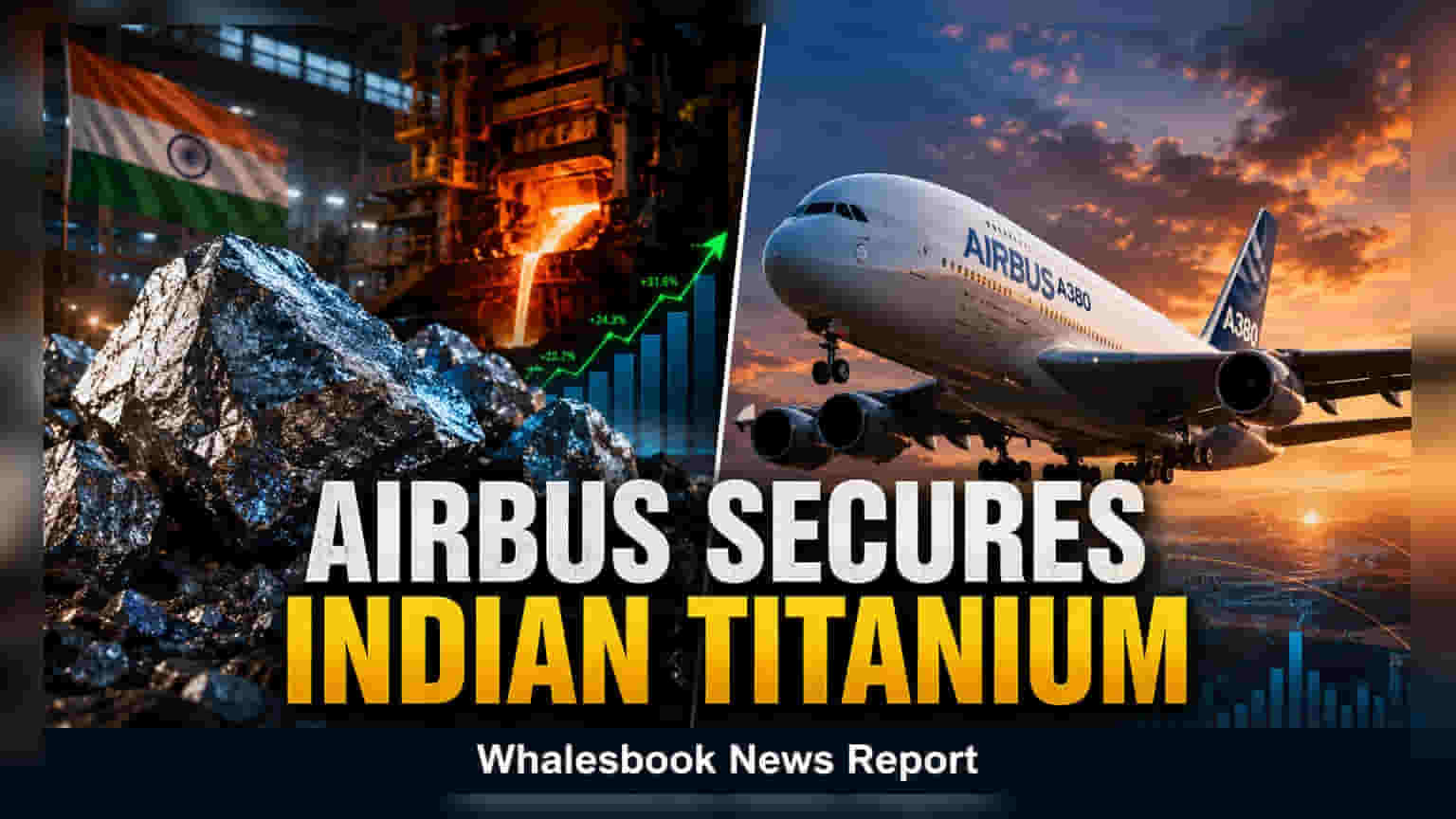
Airbus plans to begin sourcing aerospace-grade titanium from Indian manufacturers for the first time. This move marks a shift in the aircraft giant's supply chain strategy and signals a new opportunity for domestic aerospace component suppliers.
Detailed Coverage
European aerospace major Airbus has announced plans to incorporate India into its global supply chain for aerospace-grade titanium. This marks a notable change, as the company previously relied on traditional global suppliers for this critical raw material used in aircraft manufacturing. The development was confirmed by Jürgen Westermeier, President and Managing Director for Airbus in India and South Asia.
Strategic Shift in Aviation Supply Chains
Aerospace-grade titanium is a high-value material valued for its strength and heat resistance, making it essential for critical aircraft structures and engine components. For India, entering the supply chain for such specialized materials represents a step up from basic engineering services into high-tech manufacturing. By sourcing locally, Airbus is looking to increase the localization of its supply chain, which could help it diversify risks associated with its global raw material procurement.
This move follows a period where the global aerospace industry has faced pressure to secure more resilient supply chains. Historically, Indian companies have been strong in aerospace engineering services and lower-tier component manufacturing. However, the shift toward supplying raw materials like titanium suggests that Indian suppliers are now meeting the stringent quality and certification standards required by global aerospace firms.
Investor Context for Aerospace Manufacturers
For Indian investors, this development brings attention to the domestic aerospace and defense manufacturing sector. While the exact scale of the procurement and the specific Indian companies involved have not been fully detailed in early reports, the news suggests that firms with existing advanced metallurgy or aerospace component capabilities may see improved growth prospects.
However, it is important to note that the aerospace supply chain is highly regulated. Suppliers must adhere to strict international quality standards, such as AS9100 certification. Any delay in meeting these requirements or issues with production consistency could pose execution risks for domestic companies looking to capitalize on this opportunity. Additionally, since the aerospace sector is capital-intensive, investors should track whether domestic firms incur significant debt to expand their production capacity or install the specialized machinery required to process aerospace-grade titanium.
The next important monitorable will be the identification of the Indian vendors selected for this supply contract, the volume of material to be sourced, and whether this leads to further technology transfers in the broader aerospace ecosystem. Investors may also look for updates on how this partnership affects the operating margins of the participating Indian manufacturers as they scale up to meet these higher-value technical requirements.