

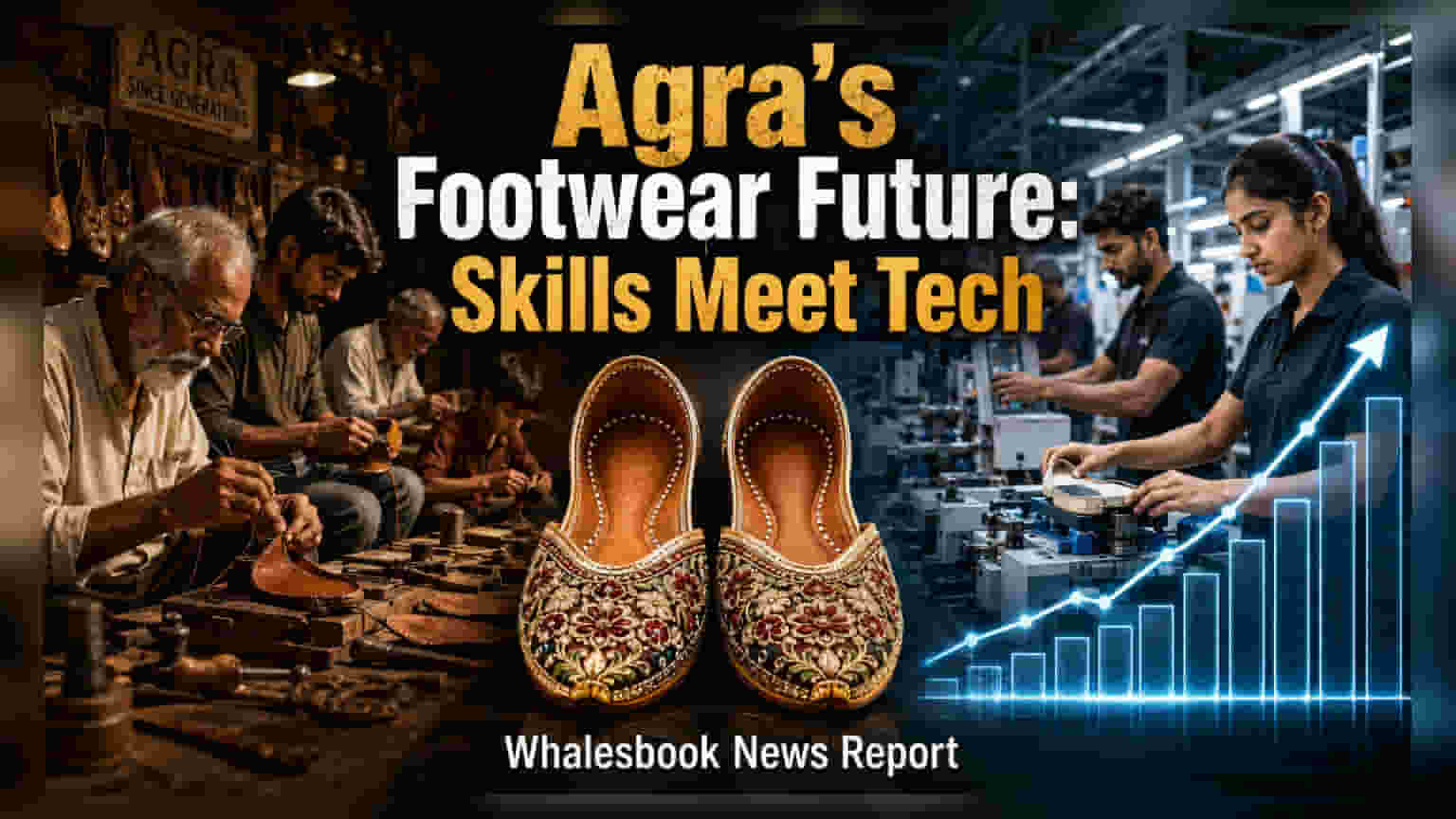
The Uttar Pradesh government's One District, One Product (ODOP) initiative is upgrading Agra's traditional footwear cluster, providing training and financial support to thousands of small units. While this boosts the local economy and leather exports, the industry remains a decentralized collection of private MSMEs rather than a single listed company. Investors should note the sector's shift toward modern manufacturing and its competitive dynamic with larger, branded footwear players.
The Uttar Pradesh government is actively driving a structural shift in Agra’s footwear industry through its One District, One Product (ODOP) initiative. By providing access to modern machinery, financial aid, and structured market linkages, the program aims to help the city's vast network of small, traditional workshops transition into more efficient, sustainable businesses. Agra has long been a critical hub for India’s footwear market, accounting for a significant portion of domestic production and leather exports, with annual exports estimated at Rs 4,000 crore.
Modernizing a Decentralized Hub
Unlike the modern manufacturing setups seen in large corporate footwear companies, Agra’s industry is highly decentralized. It consists of thousands of cottage industries, small workshops, and approximately 150 export units. The ODOP initiative seeks to bridge the gap between these traditional, manual-intensive operations and the demands of a modern market. Through Common Facility Centres, the program trains artisans in mechanized cutting, stitching, and finishing. By providing access to bank loans and subsidies for equipment, the government is attempting to reduce the artisans' reliance on informal contractors and enable them to scale their operations independently.
Understanding the Investor Context
For stock market investors, it is essential to understand that there is no single publicly traded entity representing the 'Agra Footwear Sector.' The cluster is composed entirely of private, unorganized MSMEs. While this initiative strengthens the local economy and improves the quality of export-grade footwear, it does not directly impact the balance sheets of listed Indian footwear companies like Bata India, Relaxo Footwears, or Metro Brands in the immediate term.
However, the sector's modernization has indirect implications. As small units in clusters like Agra upgrade their capabilities and quality standards through government support, they may increasingly compete with larger, organized players in the mid-market and export segments. Investors in the footwear sector should track whether this increased competitiveness impacts the pricing power or market share of established brands, particularly in segments where cottage industries have traditionally held a foothold.
Industry Risks and Monitorables
Despite the government support, the sector faces structural challenges. Small units remain highly vulnerable to volatility in raw material costs, such as synthetic leather and chemicals. Additionally, scaling production to meet consistent global quality standards requires significant capital investment and process discipline, which can be difficult for small, family-run enterprises to maintain.
Investors looking at the broader footwear sector should continue to monitor raw material price trends and the impact of imports on the domestic market. For the Agra cluster specifically, the key monitorable for the local economy will be the successful transition of these units from informal setups to sustainable businesses that can operate independently of government support over the long term.