 Whalesbook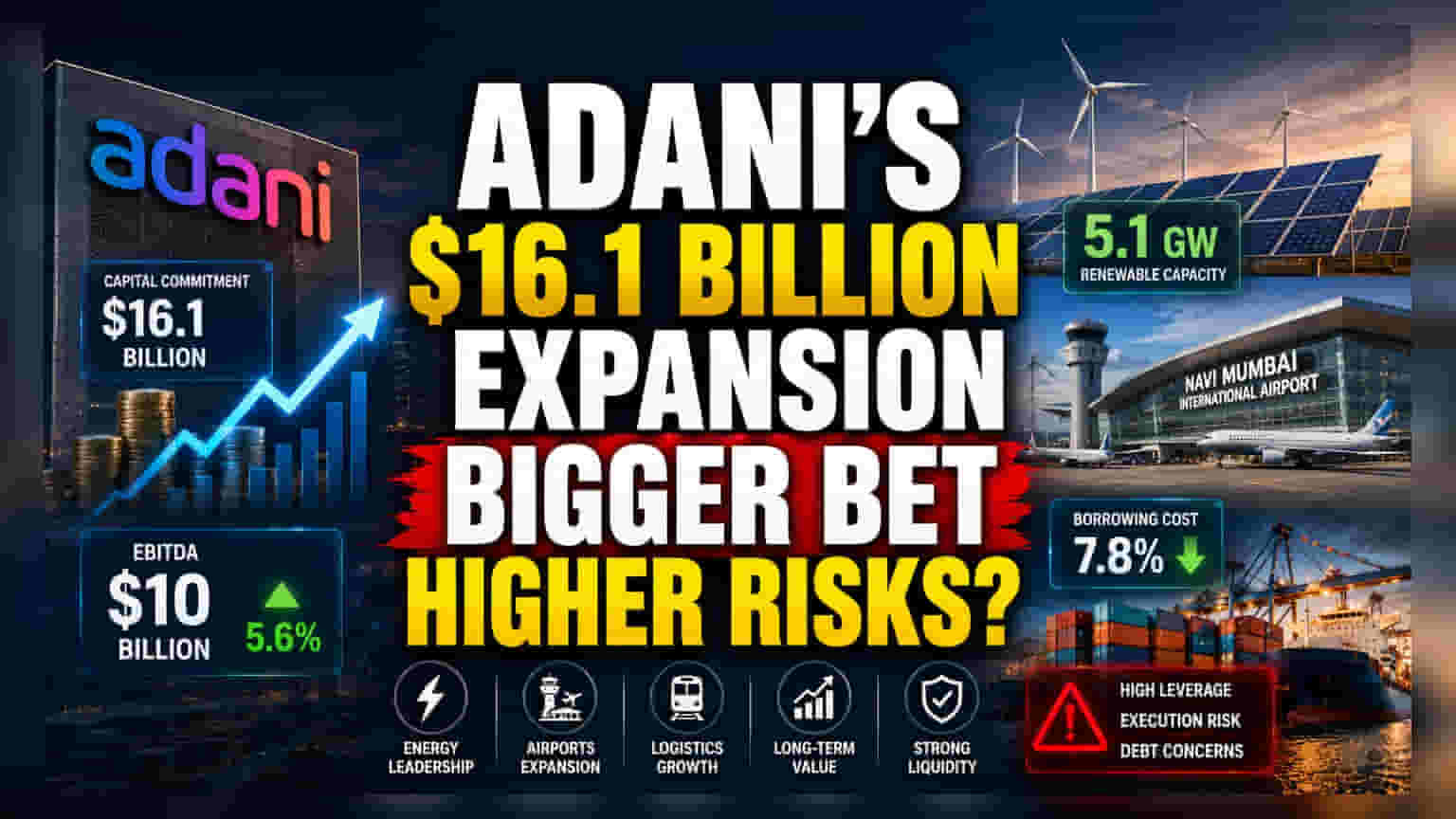


The Capital Intensity Dilemma
Adani’s latest fiscal expansion marks a transition from organic growth to an intensive capital deployment phase. By committing $16.1 billion—a figure unprecedented in the Indian corporate sector—the conglomerate has signaled a bet on long-term infrastructure demand. While the headline EBITDA of $10 billion captures market attention, the underlying metric of interest remains the efficacy of this capital. When assets grow at this velocity, the primary challenge is ensuring that revenue realization keeps pace with depreciation and interest obligations. Unlike its competitors, which have adopted a more measured approach to asset acquisition, this group continues to prioritize scale, aiming to dominate energy and logistics through rapid capacity additions.
Infrastructure Performance and Sectoral Dynamics
The commissioning of 5.1 GW in renewable capacity and the operationalization of the Navi Mumbai International Airport signify a tactical shift toward high-barrier-to-entry sectors. These projects are designed to provide predictable, inflation-linked cash flows. However, the reliance on these sectors exposes the group to specific regulatory and execution risks. Historically, large-scale infrastructure projects often face gestation periods longer than modeled. Market participants are monitoring the contribution of these assets in FY27, as the current EBITDA growth of 5.6% implies a maturing profile that may struggle to outpace the sheer volume of new debt-funded assets hitting the balance sheet.
The Forensic Bear Case: Leverage and Execution
Despite management's assertion that liquidity covers debt obligations for 17 months, the conglomerate’s reliance on capital markets for equity infusions—such as the recent $3 billion raise by the flagship entity—suggests that internal cash flow generation from legacy operations is not yet sufficient to fund the aggressive expansion cycle independently. Critics point to the high leverage ratios inherent in such infrastructure-heavy models, noting that while borrowing costs have drifted downward to 7.8% due to improved credit optics, any systemic increase in interest rates or a slowdown in industrial demand would compress margins significantly. Furthermore, the rapid integration of diverse businesses, from copper smelting to airport management, introduces significant operational complexity. If the group fails to achieve projected utilization rates at the new airport terminals or fails to hit efficiency targets in its energy storage division, the burden of debt service will become the primary focus for credit rating agencies.
Future Outlook and Market Positioning
The group is now tasked with transforming its massive asset base into superior free cash flow. While the reduction in borrowing costs over the past two years provides some breathing room, the sustainability of this trend depends heavily on stable macroeconomic conditions and the ability of the newly commissioned projects to meet projected revenue targets. Institutional investors remain cautiously optimistic, waiting for the first full year of operations from these massive investments to determine if the expansion yields a permanent increase in shareholder value or merely added complexity.