

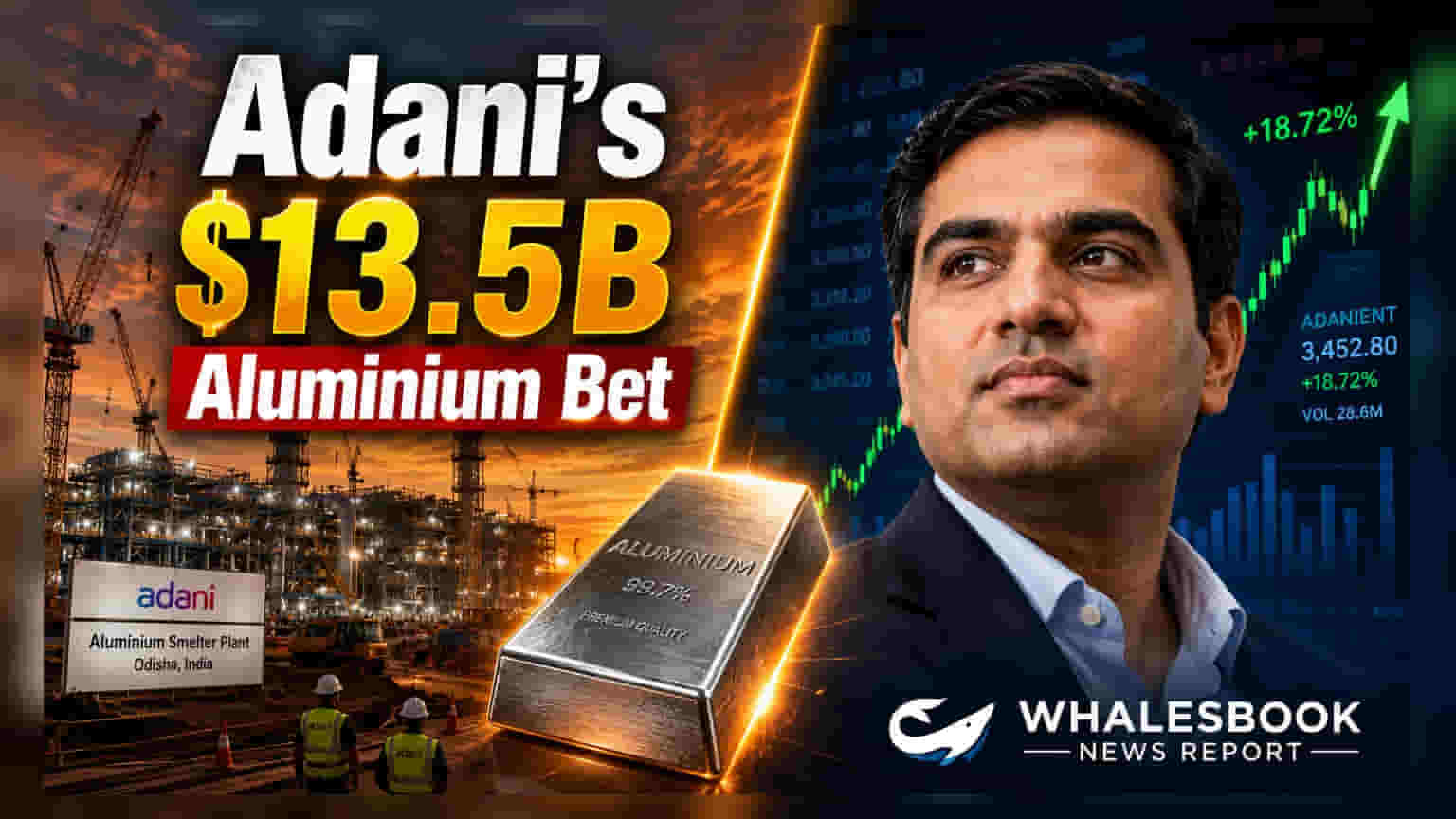
Adani Enterprises has signed a memorandum with the Odisha government to invest ₹1.08 lakh crore in an integrated aluminium project. The plan includes a large refinery and smelter in partnership with Abu Dhabi-based IHC. Investors will watch how this major capital spending impacts the company’s debt and financial flexibility given the cyclical nature of the metal industry.
What Happened
Adani Enterprises has formally entered an agreement with the Odisha state government to launch a massive greenfield aluminium project. The planned investment is ₹1.08 lakh crore (approximately $13.5 billion). The company plans to partner with Abu Dhabi-based International Holding Company (IHC) to execute this development. The infrastructure scope includes an alumina refinery with a capacity of nearly 4 million tonnes per year, an aluminium smelter with a 2 million tonnes per year capacity, and a downstream park for further processing. The operations will require a dedicated power capacity of roughly 4,000 megawatts, with plans to integrate 400 megawatts of green energy.
Strategic Business Move
This project represents a significant expansion in the company's metals portfolio, following its earlier entry into copper. By building an integrated plant, the company aims to control the entire production chain from raw material to finished product. Such integration is a standard strategy in the metals industry to reduce dependence on external suppliers and manage production costs. The partnership with a global entity like IHC often signals potential access to long-term capital or strategic expertise, which the market will evaluate as the funding structure becomes clearer.
The Capital Expenditure Challenge
For investors, the most critical aspect of this announcement is the scale of the investment. A project worth ₹1.08 lakh crore is a substantial commitment. Adani Enterprises historically funds growth through a mix of internal cash flow and debt. Since the project is in the highly capital-intensive metals sector, the company’s ability to manage its debt-to-equity ratio while keeping this project on schedule will be vital. Large-scale industrial projects in India often face long gestation periods, meaning the financial impact of this spending may not show in profit numbers for several years.
Execution and Sector Risks
While the project aims to capture a larger share of the domestic aluminium market, it faces industry-specific hurdles. Aluminium production is energy-intensive and requires consistent, low-cost power, which the project’s 4,000-megawatt plan aims to address. However, the success of such an operation depends on securing long-term bauxite mining rights and environmental clearances, which can lead to project delays. Additionally, aluminium is a cyclical commodity. Prices fluctuate based on global demand and trade policies, meaning the company will be exposed to global metal price volatility once production begins.
What Investors Should Track
Investors may monitor several key milestones over the coming months and years. First, the specific funding plan—whether it will be financed through fresh debt, equity dilution, or internal accruals—will be essential to assess the impact on the balance sheet. Second, updates on regulatory approvals, specifically environmental clearances for mining and land acquisition, will provide a clearer picture of the project's timeline. Third, management commentary on the expected commissioning date will help in estimating when the project might start contributing to the company's revenue and profit margins.