

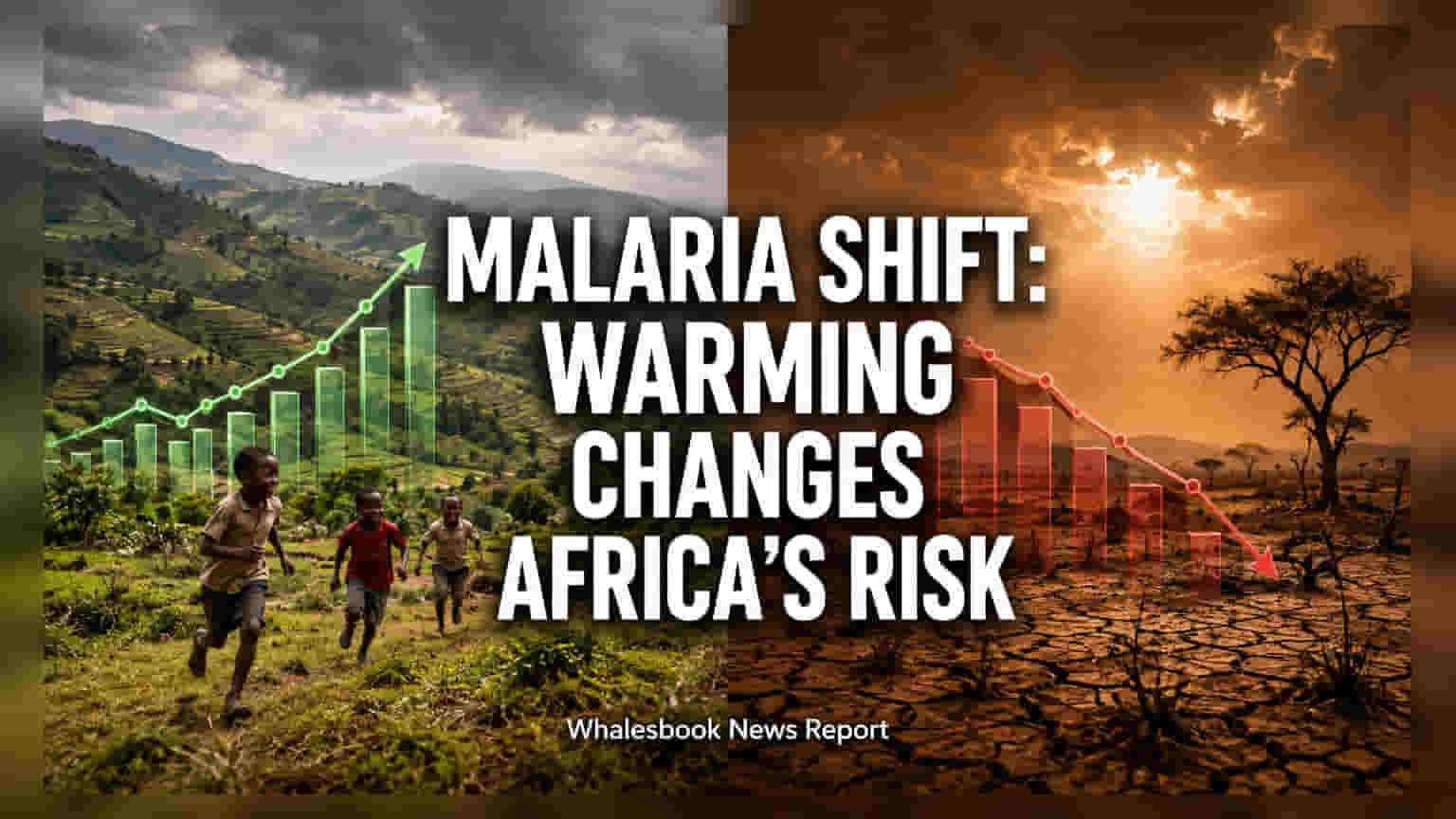
A Yale University study published in Nature reveals that rising temperatures are shifting malaria transmission toward cooler highland regions while potentially lowering it in current hot zones. This change in disease geography impacts how international health agencies and pharmaceutical companies may allocate resources for prevention and treatment across sub-Saharan Africa.
A new research study led by Yale University, published in the journal Nature on July 29, 2026, has provided a detailed assessment of how climate change is altering the prevalence of malaria in sub-Saharan Africa. Rather than a simple overall increase, the research highlights a significant redistribution of malaria risk driven by temperature changes.
The study utilized impact attribution methods to compare current malaria transmission patterns against a baseline scenario without human-caused warming. Researchers found that as global temperatures rise, cooler high-elevation zones, such as those in the East African highlands and parts of Southern Africa, are becoming increasingly susceptible to the disease. Conversely, some regions in West Africa and the Sahel, which currently experience the highest burden of malaria, may see a decline in transmission as temperatures exceed the optimal range for the parasite and mosquito vectors.
From a public health and economic perspective, these findings indicate that the geography of healthcare demand is evolving. Malaria thrives at an optimal temperature of approximately 25 degrees Celsius, with transmission activity dropping significantly below 16 degrees or above 34 degrees Celsius. As warming alters these environmental conditions, pharmaceutical companies and global health organizations may need to recalibrate their supply chains, distribution strategies, and surveillance programs for malaria vaccines, diagnostic kits, and antimalarial drugs to match the shifting patient populations.
While climate change is a critical factor, the research emphasizes that it remains a secondary driver compared to public health policy. Economic development, the strength of healthcare infrastructure, and government-led disease control programs have a more direct impact on malaria outcomes than environmental shifts alone. Therefore, the long-term effectiveness of disease eradication efforts will continue to rely heavily on institutional investment and the execution of regional health programs.
The findings serve as a marker for governments and health agencies to adjust their long-term adaptation strategies. Moving forward, the most important monitorable for stakeholders in the healthcare sector will be how individual countries adapt their local health systems to address rising risks in previously safer areas while managing the transition in regions where the disease burden may eventually decrease.