

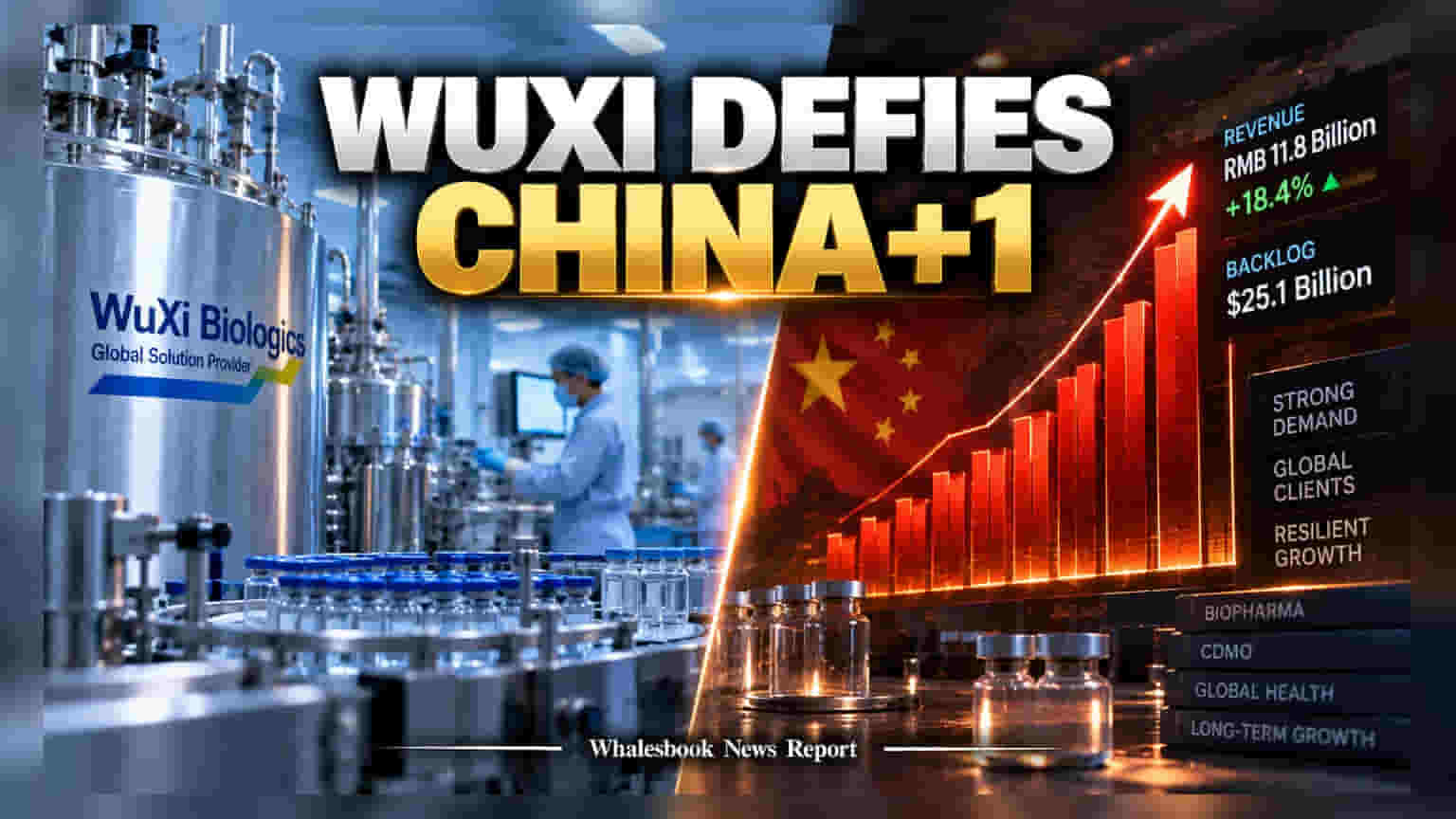
WuXi Biologics posted an 18.4% revenue increase to RMB 11.8 billion in H1 2026, with a record $25.1 billion backlog. Despite the US BIOSECURE Act, global drugmakers continue to favor established Chinese partners over shifting to Indian CDMOs, which struggle to convert inquiries into contracts due to gaps in specialized manufacturing scale.
WuXi Biologics is demonstrating financial resilience in the face of significant geopolitical pressure. For the first half of 2026, the company reported revenue of RMB 11.8 billion, representing an 18.4% increase compared to the same period in 2025. A primary indicator of the firm’s continued importance to global pharmaceutical clients is its backlog, which reached $25.1 billion as of June 30, 2026. This data suggests that despite the US BIOSECURE Act enacted in late 2025 and the inclusion of parent firm WuXi AppTec on the US Department of Defense’s 1260H list in June 2026, major drugmakers have not yet shifted their business away from established Chinese partners on a large scale.
The pharmaceutical industry has been widely discussing a strategy to diversify supply chains away from China to reduce geopolitical risk. While this shift has led to an increase in requests for proposals for Indian contract development and manufacturing organizations (CDMOs), these inquiries are not yet converting into significant commercial agreements. Global drug developers are highly risk-averse regarding their supply chains for complex therapies. They prioritize speed, reliability, and established quality standards, which leads them to maintain existing relationships with Chinese providers rather than risking clinical trial or commercial delays by switching to new partners in different regions.
Indian CDMOs face significant hurdles in bridging this gap. While the Indian sector has a strong reputation in traditional chemistry and active pharmaceutical ingredients, the barrier to entry is much higher for complex biologics. Processes such as antibody-drug conjugates (ADCs) and specialized peptide manufacturing require massive capital spending and specific technical expertise that many Indian firms are still developing. WuXi Biologics leverages its massive scale to consistently reinvest in capacity, creating a competitive advantage that smaller firms currently find difficult to match. The difference in operational size and proven track record between Chinese industry leaders and Indian counterparts remains a structural challenge for those aiming to capture this market share.
Investors tracking this space should watch for two main factors. First, the legislative environment remains volatile, with the potential for further restrictions on biotechnology procurement in the US. While clients are currently prioritizing stability over diversification, future regulatory changes could force them to reconsider their supply chain partners. Second, for Indian CDMOs, the focus will be on their ability to execute large-scale, complex projects. The key monitorable will be whether these firms can bridge the gap in technical capabilities and infrastructure to move from early-stage inquiries to winning late-stage, high-margin commercial contracts.