

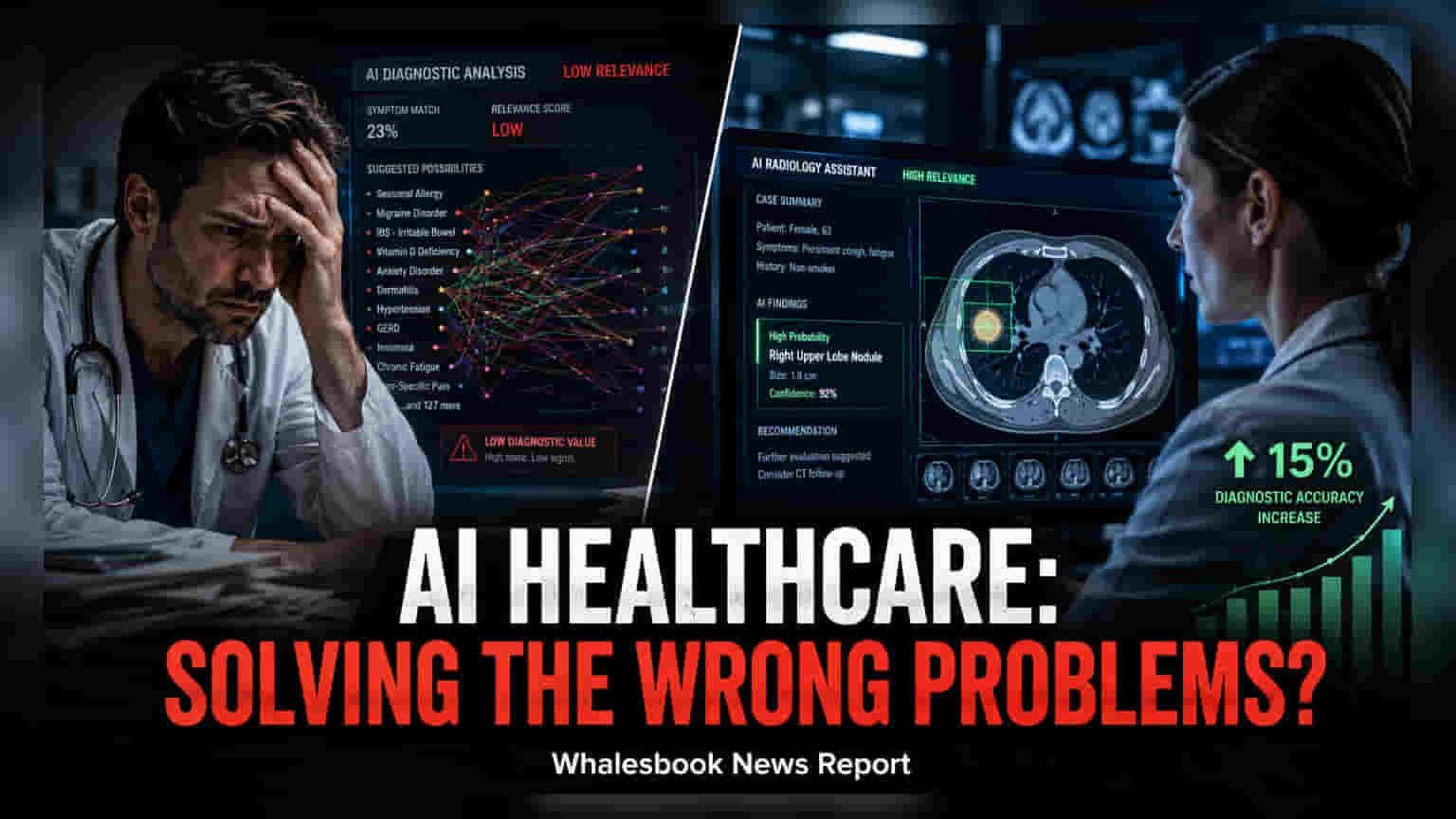
While AI development in healthcare is booming, many tools focus on available data rather than practical medical challenges. This mismatch often limits the value for practitioners, whereas targeted solutions like Qure.ai demonstrate how solving specific clinical bottlenecks can drive real-world success.
Detailed Coverage
The rapid integration of artificial intelligence into healthcare has led to a flood of new diagnostic tools, yet a significant gap remains between technological capability and clinical utility. In many cases, developers create software based primarily on the data they have on hand rather than the most urgent problems faced by doctors. This approach often results in sophisticated AI models that, while technically impressive, offer little relief for the actual daily pressures of medical professionals.
The Mismatch in Radiology and Diagnostics
Radiology serves as a clear example of this disconnect. A large portion of AI tools in this field are designed for 'segmentation'—the process of outlining organs or tumors on medical scans. While AI has demonstrated high accuracy in these tasks, busy radiologists often find that these features do not significantly speed up their workflows. The more pressing need, particularly in resource-constrained environments, is for effective triage. Radiologists need tools that can quickly prioritize critical scans among hundreds of images to ensure that life-threatening conditions are identified immediately. Developers often avoid this area because it is technologically more complex and carries higher risks if an urgent case is missed.
Why Targeted Solutions Succeed
When AI is developed with a clear understanding of clinical workflows, the impact can be substantial. For example, the Indian startup Qure.ai has gained recognition for its chest X-ray tool, which assists in tuberculosis screening. By focusing on a specific, high-need task, this tool helped increase tuberculosis case detection by 15% in the facilities where it was deployed. Another success factor is seen in 'Ambient Scribe' technology, which automatically drafts clinical notes during patient consultations. By addressing the documentation burden that consumes hours of a physician's day, this tool provides a clear, measurable benefit to hospital productivity, such as the 16,000 physician hours saved by The Permanente Medical Group in a single year.
Challenges in Implementation and Equity
Beyond the issue of utility, there is also the challenge of context. AI models that perform well in controlled testing can struggle in real-world hospital environments. Furthermore, developers sometimes fail to consider local health demographics. For instance, AI tools developed for detecting melanoma may struggle to accurately identify skin conditions in patients with darker skin pigmentation, limiting their effectiveness in regions like India. Similarly, models designed for different healthcare systems may generate excessive false alarms, which can overwhelm hospital staff rather than assist them.
Moving forward, the success of AI in healthcare will likely depend on reorienting the development process. Rather than starting with technological possibilities, developers are increasingly urged to consult directly with practitioners to identify the most critical problems that require solving. For healthcare providers and investors, the key monitorable will be whether a solution addresses a specific, measurable bottleneck in care delivery, such as documentation time or screening efficiency, rather than simply offering a generic AI-powered diagnostic feature.