 Whalesbook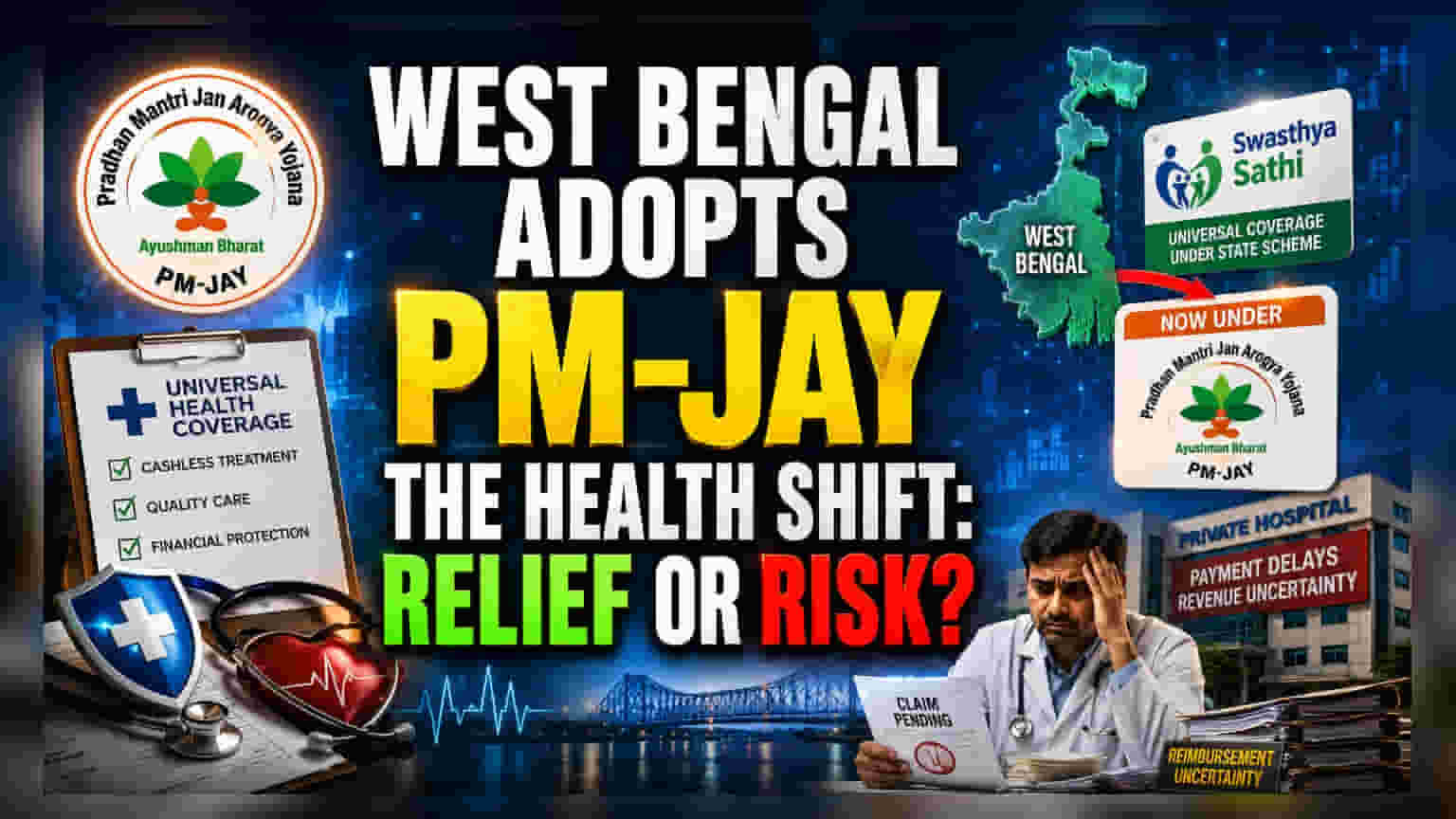


The Operational Friction
The formal adoption of the Ayushman Bharat Pradhan Mantri Jan Arogya Yojana (AB PM-JAY) by West Bengal completes the national footprint of the federal health assurance mandate. However, the administrative friction created by this transition is substantial. Integrating the state’s existing, broad-based Swasthya Sathi architecture into a federal framework presents significant IT and billing hurdles. Private hospital chains operating in the region are currently facing a period of revenue uncertainty as they navigate the complexities of shifting from a state-governed reimbursement model to a central, IT-intensive payment gateway. The lack of standardized protocols for patients already mid-treatment under Swasthya Sathi risks temporary liquidity strains for healthcare providers who must now reconcile different payment cycles and documentation requirements.
The Coverage Discrepancy
A critical analytical oversight in the public discourse is the structural difference in eligibility between the two systems. Swasthya Sathi was designed as a near-universal coverage initiative, whereas the central PM-JAY relies on specific socio-economic criteria derived from deprivation data. By shifting to the national model, the state faces the difficult task of maintaining coverage for the millions of residents who currently benefit from Swasthya Sathi but may not meet the strict federal benchmarks of the PM-JAY registry. Financial analysts are observing this transition for potential impacts on state healthcare spending, as the fiscal burden of maintaining an auxiliary state scheme alongside the federal integration may lead to budgetary reallocations that could affect procurement for medical devices and pharmaceuticals.
The Risks of Dual-System Management
From a risk management perspective, the most pressing concern is the fragmentation of service delivery. If the state attempts to run both programs concurrently, administrative overhead for hospitals will spike, potentially leading to a decrease in patient throughput. Furthermore, if Swasthya Sathi is eventually phased out or absorbed, the transition may trigger significant disputes over reimbursement rates between the government and private sector providers. Historically, private healthcare operators in other states have faced margin compression during such transitions, as central government reimbursement rates for specific procedures often fluctuate differently than those negotiated at the state level. The absence of a clear grandfathering policy for existing chronic care patients remains a glaring risk factor that could lead to medical service disruptions and potential regulatory backlash if patients are suddenly reclassified during the integration window.