 Whalesbook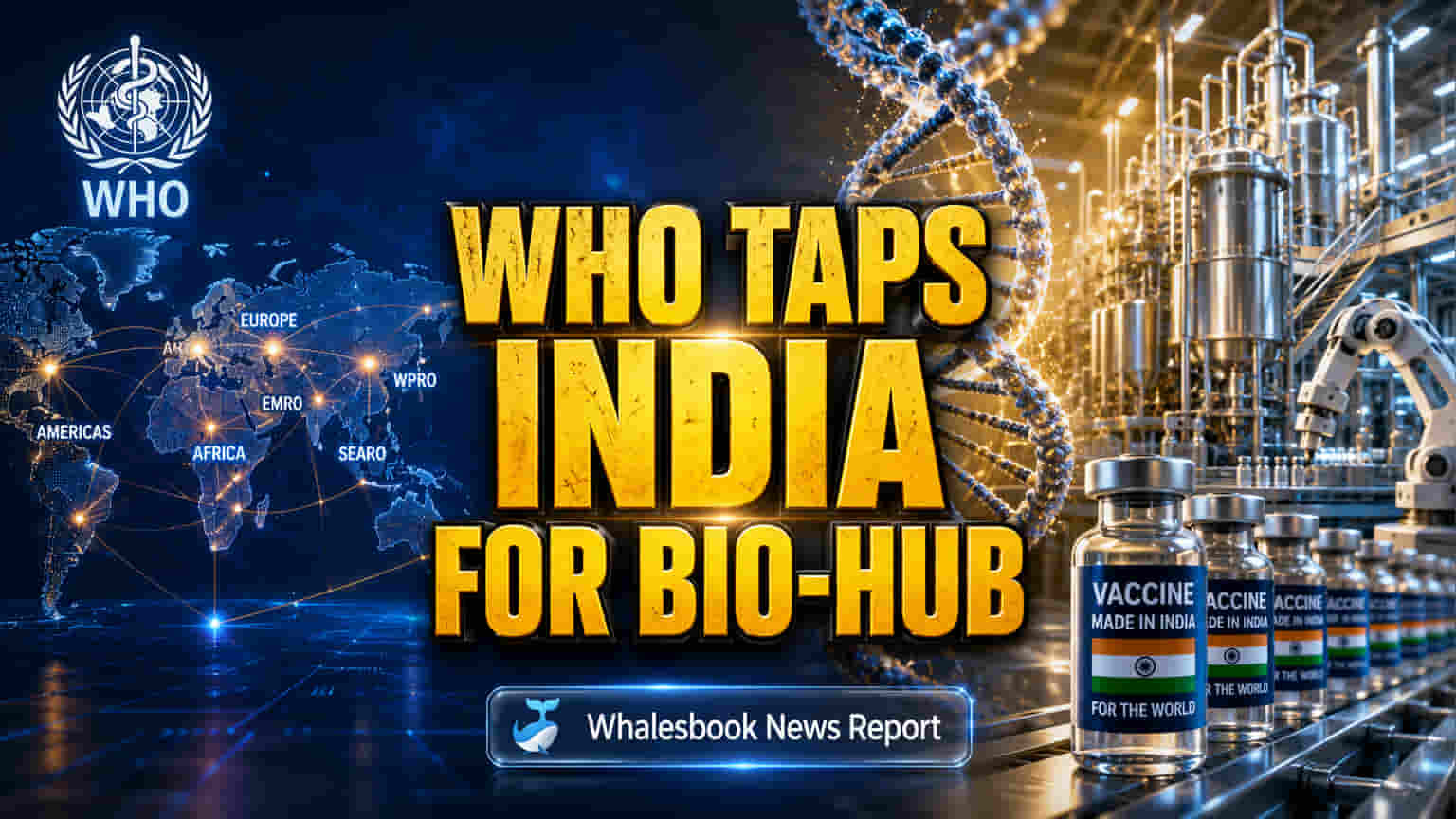


### WHO Taps THSTI for Biomanufacturing Training Hub
The World Health Organization has chosen India's Translational Health Science and Technology Institute (THSTI) in Faridabad to be a regional biomanufacturing training center. This is a key step for India's growing biotechnology sector. The designation, part of WHO's global effort to fix shortages in producing vital health technologies, makes THSTI the only center for the South-East Asia Region. This move will boost India's aim to lead in biomanufacturing, a sector expected to reach $300 billion by 2030. The global biomanufacturing market is expanding rapidly, with next-generation segments alone expected to grow to $57.6 billion by 2035, and the broader biotechnology market possibly exceeding $4.3 trillion by 2034.
Indian biotech companies like Biocon Limited are already major players. As of May 2026, Biocon had a market capitalization near ₹582.46 billion with a P/E ratio between 40.34 and 98.61, showing investor belief in the sector's future. Analysts have set a target price of ₹422.19 for Biocon, suggesting potential growth. The THSTI designation should speed up this growth by increasing the skilled workforce needed to handle India's growing biopharmaceutical output, which was valued at $101.5 billion in 2024 and is forecast to reach $297.2 billion by 2033.
### Tackling Global Skills Shortages
The WHO Biomanufacturing Workforce Training Initiative, started in 2023, aims to fix a worldwide lack of specialized skills. This problem was worsened by events like the COVID-19 pandemic, which revealed weaknesses in global supply chains. By setting up regional centers, including THSTI, WHO wants to build manufacturing capabilities that are spread out geographically and are strong. This initiative helps Low- and Middle-Income Countries (LMICs) develop local production of vaccines and biotherapeutics from technological advances.
THSTI focuses on key areas like dengue and SARS-COV-2 viruses, and antimicrobial resistance, addressing urgent global health needs. The institute will work with other centers, such as Ireland's NIBRT and China's Peking University. These centers are in regions with significant biomanufacturing infrastructure and R&D investment. India's own policies, like the BioE3 policy aiming for a $300 billion bioeconomy by 2030, and the Bio-RIDE scheme supporting R&D and biomanufacturing, create a strong national base for these international efforts. India's R&D spending is significant, estimated at $188 billion in early 2026, placing it third globally. This joint approach aims to close training gaps, as advanced biomanufacturing training has often been limited to expensive programs in developed countries.
### Challenges Ahead for India's Biomanufacturing Sector
Despite the positive outlook, India's biomanufacturing sector still faces significant challenges. Regulatory issues, with oversight from bodies like the Central Drugs Standard Control Organization (CDSCO) and the Department of Biotechnology (DBT), can cause delays. Differences in infrastructure and funding gaps, though being addressed by policies like BioE3, could still slow progress. Furthermore, rapid technological advances in biotechnology might outpace the regulatory system's ability to keep up, potentially delaying policy implementation and raising ethical questions.
THSTI's success depends on continued international cooperation and funding, and its ability to link trained professionals with the domestic industry. Competition from established centers like Ireland and China, which have deep experience and infrastructure, presents a major hurdle. The global biopharmaceutical industry also faces pressure from increasing costs and changing pricing rules, such as in the US, which could affect investment and R&D productivity everywhere.
### India's Growing Biomanufacturing Ambitions
The WHO designation is a strategic endorsement supporting India's broader goals, as outlined in policies like BioE3, to lead the global bioeconomy. The initiative is expected to greatly improve the skill and number of professionals across India's biomanufacturing chain. This includes expertise in areas like synthetic biology, biopharmaceuticals, and advanced diagnostics, essential for creating complex biological products. As countries look for manufacturing capabilities that are strong and spread out, India, through institutions like THSTI, is becoming a vital partner in global health security. The focus on practical, relevant training that fits regional needs and rules will build a more skilled workforce, directly helping India reach its goal of a $300 billion bioeconomy by 2030. The connection between international training standards and India's growing domestic infrastructure and government support should drive innovation, attract more investment, and strengthen India's position in the global biomanufacturing network.