

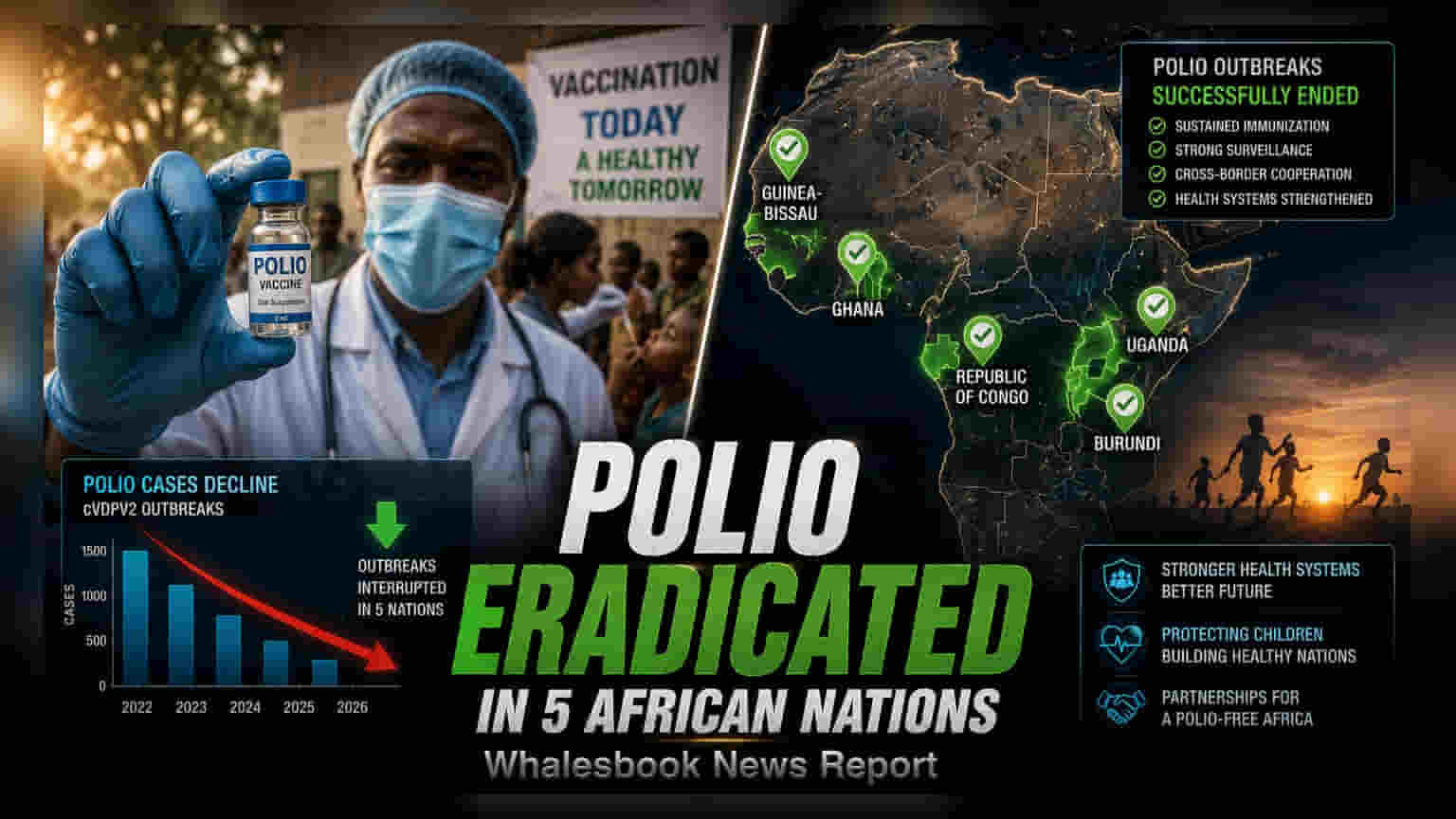
The World Health Organization has officially closed circulating poliovirus type 2 outbreaks in Burundi, Ghana, Guinea-Bissau, the Republic of Congo, and Uganda. This milestone reflects years of coordinated vaccination and surveillance efforts. While the successful interruption of transmission is a major public health achievement, officials warn that maintaining high immunity coverage remains critical to prevent future re-emergence.
The World Health Organization (WHO) Regional Office for Africa has confirmed the successful interruption of circulating poliovirus type 2 (cVDPV2) outbreaks across five nations: Burundi, Ghana, Guinea-Bissau, the Republic of the Congo, and Uganda. This declaration comes following rigorous Independent Outbreak Response Assessments (OBRA) conducted between January and June 2026, which verified that these countries have effectively contained the spread of the virus through sustained immunization and surveillance efforts.
Achieving a Health Milestone
The closure of these outbreaks is the result of years of consistent health policy execution and cross-border cooperation. National authorities in each of the five countries focused on closing immunity gaps by scaling up routine vaccination programs. This was supported by improvements in laboratory infrastructure and epidemiological investigations, which allowed health workers to detect and respond to potential cases much faster than in previous years. For countries like Ghana and Uganda, the focus was on enhancing diagnostic capabilities and ensuring that remote communities had reliable access to vaccines.
Socio-Economic Importance
For investors and global market observers, significant improvements in public health infrastructure often signal long-term stability for emerging economies. Effective disease control reduces the strain on national healthcare budgets and supports consistent workforce productivity. The strengthening of surveillance systems during these polio responses creates a broader foundation for managing other vaccine-preventable diseases, potentially lowering the total cost of healthcare delivery in these regions over the coming years. While there is no direct impact on listed stock exchanges from this news, the achievement highlights the growing efficiency of health systems in these five nations.
The Need for Continued Vigilance
Despite this progress, health officials emphasize that the work is not complete. The threat of poliovirus re-importation persists, particularly in regions where environmental or population immunity levels might drop. The recent history of polio re-emergence in other parts of the world serves as a reminder that transmission can restart if vaccination coverage falters. Experts from organizations like UNICEF and Gavi have stressed that the focus must now shift to maintaining these high levels of vigilance.
Governments and health partners are now expected to continue investing in surveillance infrastructure and routine immunization to protect these gains. The key monitorable for international health observers and policymakers will be the ability of these nations to sustain their current health systems without the intensive support that was provided during the active outbreak response phase.