 Whalesbook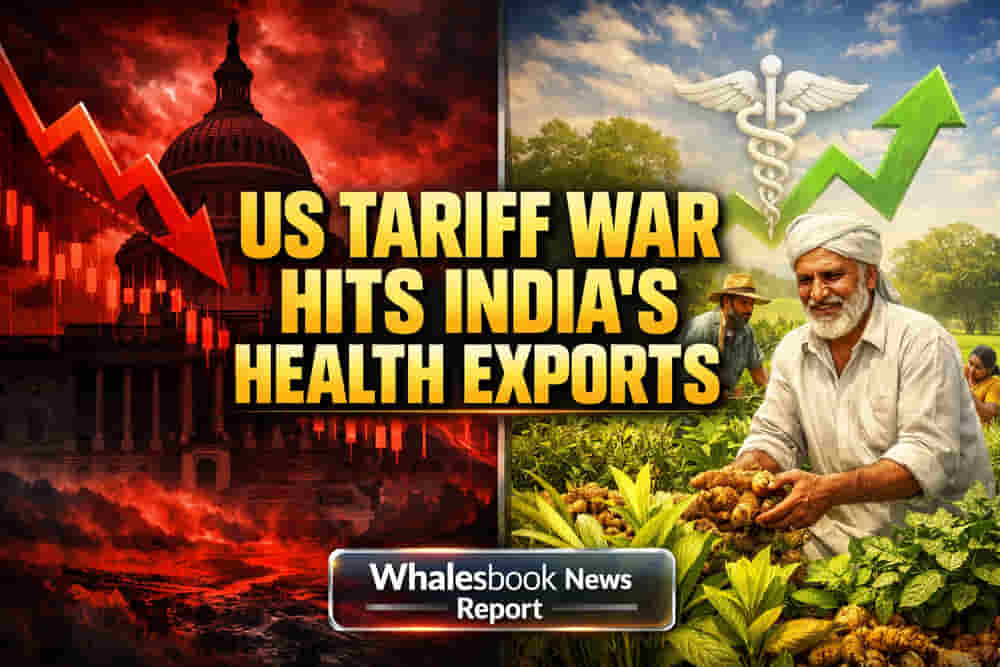
### Tariff Anomaly Creates Cost Pressure
The United States' imposition of tariffs, reaching as high as 50% on select Indian nutraceutical imports, is creating significant commercial headwinds for India's industry. This policy, which taxes molecules based on end-use rather than scientific identity, has inflated input costs by approximately 35% to 50% in certain categories. Such an increase directly impacts pricing power, erodes profit margins, and diminishes India's export competitiveness, a critical concern for an industry aiming to capture a larger share of the global market. India currently contributes less than 2% to global nutraceutical exports, despite its established capabilities. The global nutraceutical market was valued at approximately $450 billion in 2025, with India's domestic market estimated at around $22 billion in the same year.
### Strategic Uncertainty Looms
For an industry operating on thin margins and navigating stringent global regulations, this tariff anomaly introduces considerable strategic uncertainty. Markets like the U.S. and Europe prioritize trust, consistency, and scientific credibility. The current, seemingly arbitrary application of tariffs undermines these principles. This situation disadvantages India, and it poses an existential threat to smaller companies already grappling with increased costs. The U.S. trade policy, with tariffs that have fluctuated and settled at around 50% for specific Indian goods since August 2025, is driven by geopolitical factors, including India's energy trade with Russia, rather than purely trade deficits. Resolution of these tariffs is not expected before the second quarter of 2026 due to these complexities.
### Global Supply Chain Impact
The disruption extends beyond Indian exporters, impacting global health supply chains. The U.S. lacks the agro-climatic conditions necessary for the large-scale cultivation of many vital plant-based nutraceutical ingredients, such as carotenoids and botanical extracts, relying heavily on India to fill this gap. For example, key ingredients like turmeric, ashwagandha, and boswellia are intrinsically tied to Indian soil and cultivation expertise. Penalizing these essential inputs discourages investment, stifles innovation, and weakens export momentum, with ripple effects felt across the broader health ecosystem that depends on predictable cost structures. While pharmaceuticals are currently exempt from similar tariffs due to their indispensable role, nutraceuticals have not received the same consideration.
### Path to Resolution
Urgent bilateral negotiations between India's Ministry of Commerce and Industry and the U.S. Trade Representative (USTR) are crucial. Two primary avenues for resolution have been proposed. The first involves expanding Annexure III exemptions to include non-substitutable ingredients like lutein and zeaxanthin, which cannot be commercially cultivated at scale or quality in the U.S.. OmniActive Health Technologies has formally submitted this recommendation. The second option is to reclassify carotenoid preparations for human consumption under Chapter 32, alongside existing colorants. A simple definitional update would align tariffs with scientific classification rather than arbitrary end-use distinctions, mirroring the logic applied to exempt pharmaceuticals. This correction is not merely about rectifying an anomaly; it presents an opportunity. The growing global demand for nutraceuticals, driven by increased awareness of preventive wellness and an aging population, positions India for significant leadership. However, harnessing this potential requires tariff policies that prioritize scientific accuracy over semantic classifications, thereby fostering exports, encouraging investment, strengthening value chains, and solidifying India's standing as a reliable international partner in health and nutrition innovation.