

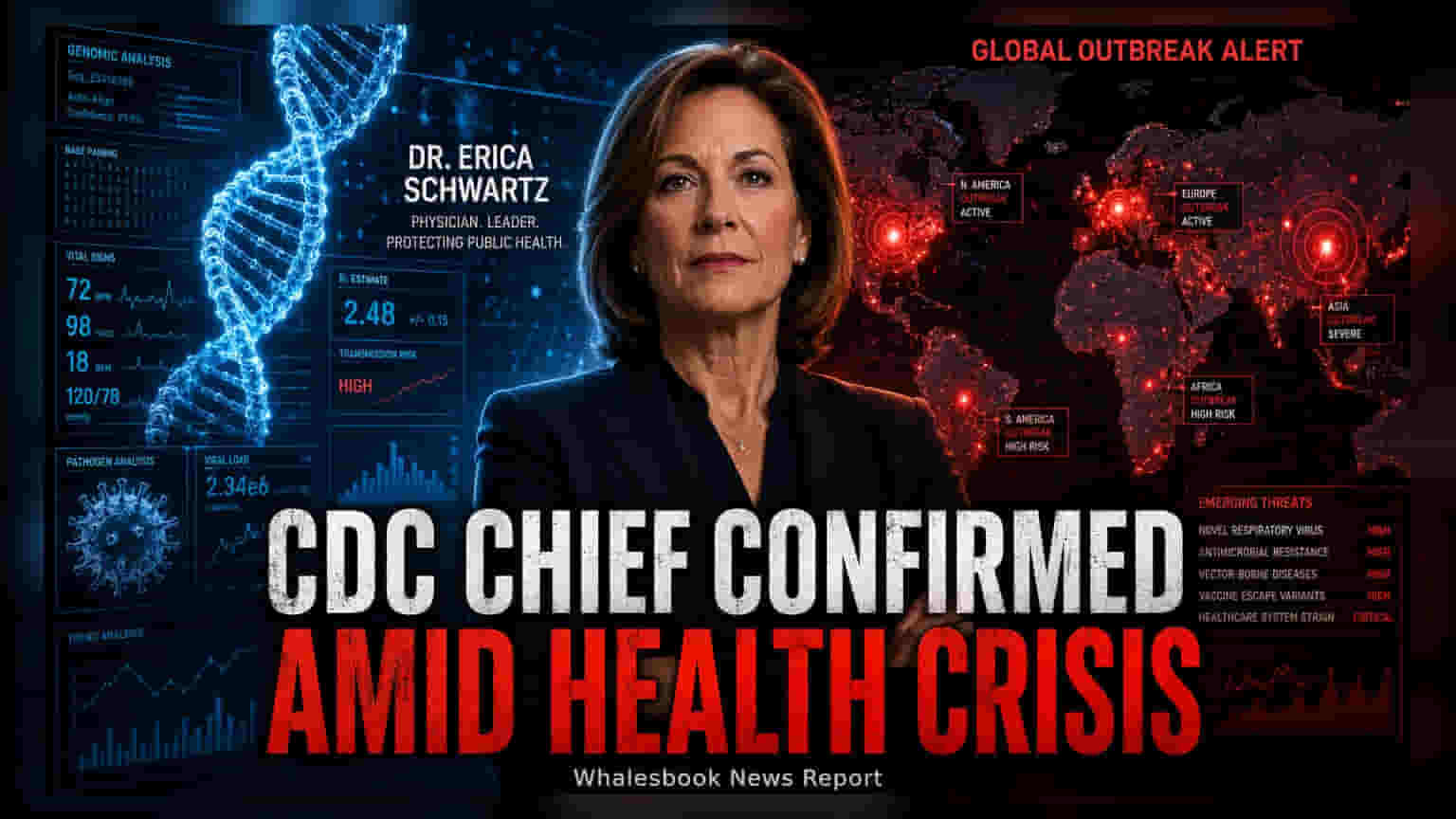
The US Senate confirmed Dr. Erica Schwartz as the CDC director on August 5, 2026, concluding nearly a year of instability. For investors, this appointment restores permanent leadership to an agency that heavily influences healthcare policies and vaccine guidance. The market focus will now turn to whether the new director can stabilize internal operations and navigate complex public health mandates.
On August 5, 2026, the US Senate confirmed Dr. Erica Schwartz as the director of the Centers for Disease Control and Prevention (CDC) in a 51-44 vote. This appointment marks the end of a year-long leadership vacuum at one of the world's most critical public health agencies, which had been operating without a permanent, Senate-confirmed head since late August 2025.
Dr. Schwartz, a retired Navy rear admiral and physician who previously served as deputy surgeon general, takes charge of an agency facing significant operational hurdles. The CDC is currently tasked with managing high-profile public health challenges, including rising rates of measles and various international disease outbreaks. Beyond these immediate health concerns, the agency has dealt with internal instability, characterized by high staff turnover and low morale during the preceding period of leadership turnover.
Impact on the Healthcare Sector
For the healthcare and pharmaceutical sectors, the presence of a permanent CDC director is a meaningful development. The CDC plays a central role in setting public health guidelines, vaccine recommendations, and pandemic preparedness protocols. A stable leadership environment is essential for these companies, as clear regulatory guidelines and government-backed health policies directly influence product adoption and market demand. When an agency lacks permanent leadership, it can create a period of uncertainty regarding national health strategies, which may impact investment decisions by companies developing vaccines, diagnostics, and related health solutions.
Managing Policy and Agency Independence
Investors and public health experts are likely to monitor the relationship between the CDC and the Department of Health and Human Services (HHS), led by Secretary Robert F. Kennedy Jr. During the confirmation process, there was significant attention on whether the agency would maintain its traditional focus on scientific data or if it would be subject to broader administrative policy agendas. Given earlier concerns about potential political interference in scientific decision-making, the market will likely track whether Dr. Schwartz can maintain the agency's independence. Any friction between administrative directives and the CDC’s scientific recommendations could influence the broader regulatory environment for the healthcare industry.
Challenges Ahead
The new director must address both external health threats and internal structural problems. With over 3,000 staff departures during the leadership vacuum, rebuilding institutional knowledge and agency morale is a pressing priority. Additionally, the CDC must manage expectations regarding declining childhood immunization rates, which remain a key monitorable for the public health sector. The success of Dr. Schwartz’s tenure will depend on her ability to navigate these diverse pressures while providing the consistent public health guidance that the market and the public rely upon.